
TL;DR

Get compact home essentials delivered free with Prime
- Fast, free delivery on millions of items
- Prime Video, Amazon Music and more included
- Member-only deals all year
Compact portable solar panels offer lightweight, efficient power in small packages. They’re perfect for camping, hiking, or emergencies, but choosing the right one depends on your needs and conditions.
Imagine standing in a remote forest, your smartphone blinking low on battery. You reach into your bag and pull out a sleek, foldable solar panel. It unfurls like a butterfly, soaking up the sun, turning rays into power faster than you expected. That’s the magic of compact portable solar panels. They’re transforming how we stay connected outdoors, whether for camping, hiking, or emergency prep.
In this guide, you’ll learn what makes these tiny powerhouses tick, recent breakthroughs that boost their performance, and practical tips to pick the perfect one for your adventures. If you crave reliable power on the go without lugging around bulky gear, this is your starting point.
Choose lightweight, foldable panels under 5 pounds for maximum portability.
Modern panels reach efficiencies up to 23%, enabling faster charging in compact sizes.
Compare panel types with a focus on durability, weight, and usability based on your activity.
Look for features like USB-C Power Delivery and built-in batteries to boost on-the-go convenience.
Latest tech advancements mean smaller, more flexible, and weatherproof panels than ever before.
What Makes a Compact Portable Solar Panel Truly Portable?
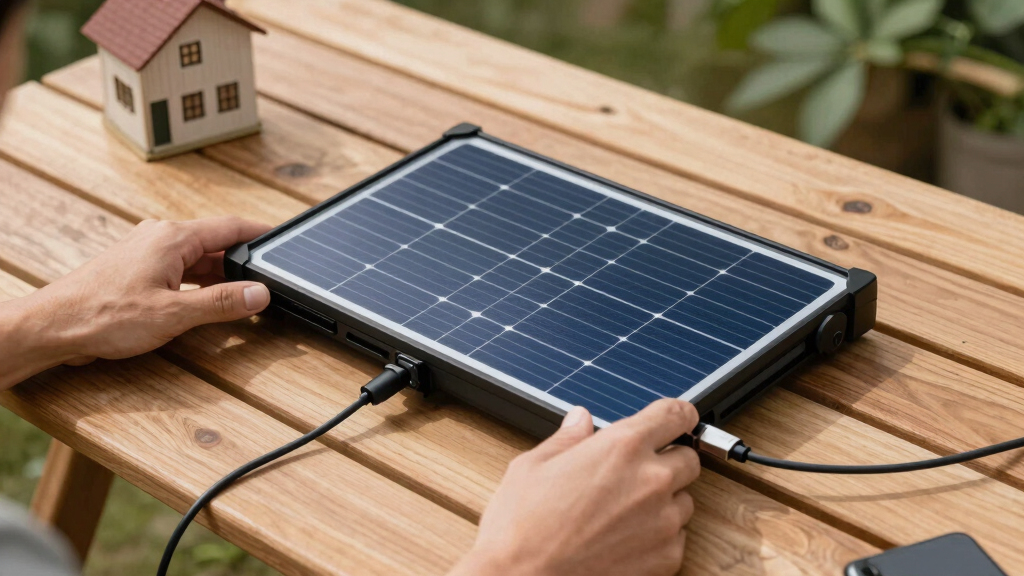
Think about weight, size, and foldability. The best panels weigh less than 5 pounds, fold neatly into your backpack, and pop up easily in seconds. For example, a 100W panel from Renogy weighs just under 4 pounds and folds into a compact case roughly the size of a lunchbox. Durable materials like weatherproof fabric and tempered glass mean you can set it down on damp grass or rocky ground without worry.
Many models include built-in stands or straps, letting you angle them toward the sun effortlessly. For instance, a foldable panel with a kickstand can be adjusted to optimize sun exposure, boosting efficiency by up to 20%. This portability means you can hike to a mountain summit or set up camp without feeling weighed down.
Understanding how size, weight, and foldability influence portability helps you make informed decisions. A lightweight, foldable panel allows for quick setup and minimal packing space, essential in dynamic outdoor environments. However, lighter panels may sometimes compromise durability or efficiency, so balancing these factors based on your activity is key. For example, a slightly heavier panel with rugged framing might last longer and withstand rough handling, making it suitable for rugged terrains.
foldable portable solar panel 100W
As an affiliate, we earn on qualifying purchases.
As an affiliate, we earn on qualifying purchases.
How Efficient Are Compact Solar Panels Today?
Efficiency measures how well a panel converts sunlight into electricity. Modern compact panels typically have efficiencies between 15% and 23%. For example, a 100W monocrystalline panel with 20% efficiency can produce about 100 watts of power under ideal conditions. This means charging a smartphone in about 30 minutes of full sun.
Recent innovations have pushed these numbers higher. Flexible panels using thin-film technology now reach 19-21%, offering more power in thinner, lighter packages. But remember, real-world conditions like clouds, dust, and angle of the sun can lower output. The higher the efficiency, the better the panel performs in limited space or less-than-ideal conditions, which can be crucial when you have limited surface area or need rapid charging. However, tradeoffs can include increased cost or reduced durability, so understanding the environment where you’ll use the panel helps determine the best efficiency-to-cost ratio for your needs.
These technological improvements mean you get more juice from smaller, lighter panels, but they also highlight the importance of matching your panel’s efficiency with your specific use case—whether it’s quick device charging or powering small appliances. For example, higher efficiency panels are more suitable for quick recharges during short outings, while slightly less efficient but more durable options might be better for extended trips in rugged conditions.
Comparison Table: Rigid vs. Foldable vs. Flexible Panels
| Feature | Rigid Panels | Foldable Panels | Flexible Panels |
|---|---|---|---|
| Weight | 10-20 lbs | 3-8 lbs | 2-5 lbs |
| Durability | Very high, weatherproof | High, with some fragility at hinges | Moderate, prone to scratches |
| Portability | Low | High, folds into a small case | High, conform to surfaces |
| Efficiency | Up to 23% | 15-20% | 15-19% |
| Best For | Stationary setups, RVs | Camping, hiking |
What Features Maximize Your Power on the Go?
Look for panels with USB-C Power Delivery, multiple ports, and built-in batteries if you want instant power and storage. For example, a panel with a 20,000mAh battery can store enough energy to charge your phone five times, even on cloudy days.
Other useful features include adjustable stands for optimal sun angle, water-resistant coatings, and lightweight handles. Imagine setting your panel on uneven terrain, angling it just right, while your phone charges in your hand—every detail counts.
Pro tip: panels with integrated smart technology can connect via Bluetooth to monitor performance, helping you adjust for maximum efficiency.
Choosing panels with these features ensures you can adapt to changing conditions, optimize energy collection, and keep your devices powered without fuss. The ability to monitor and control your panel’s output via apps or smart features can make a significant difference, especially in unpredictable outdoor environments, where maximizing every ray of sunshine is vital.
Latest Tech That Makes Compact Solar Panels Better Than Ever
New tech boosts performance and durability. Monocrystalline cells with efficiencies up to 23% mean smaller panels now produce more power. For instance, a 50W flexible panel can generate as much as a 100W rigid panel from a few years ago.
Integrated batteries and smart connectors let you store energy or monitor output via smartphone apps. Plus, flexible thin-film panels bend around curved surfaces—perfect for boats or RV roofs.
Weatherproofing has improved too, with panels designed to handle rain, dust, and rough handling, making them reliable companions on rugged adventures. These innovations reduce the need for frequent replacements and maintenance, providing peace of mind during extended outdoor use. The combination of higher efficiency, durability, and smart features means your investment in a solar panel now offers a higher return in performance and longevity, empowering you to rely on renewable energy more confidently wherever you go.
Choosing the Right Compact Solar Panel for Your Needs
Pick a panel based on your typical use. For quick device charging during day hikes, a 50W foldable panel with USB-C ports might suffice. Planning a week-long camping trip with multiple gadgets? Aim for a 100W panel with a built-in battery.
Match your power needs with panel wattage. For example, charging a tablet (10W) takes less time than powering a small fridge (100W). Budget, weight, and weather resistance also factor into your decision.
Don’t forget safety: always operate panels away from water and handle electrical connections with care, especially in wet conditions. Understanding your specific energy demands and environmental conditions will help you select a panel that balances power, portability, and durability—ensuring you have reliable energy without unnecessary bulk or expense.
Frequently Asked Questions
How do I know which portable solar panel suits my needs?
Assess your typical power requirements, like charging smartphones, tablets, or small appliances. Match that with panel wattage and features such as built-in batteries or USB ports. Consider your activity—hiking, camping, or emergencies—and pick a model that’s lightweight, durable, and easy to set up.Are portable solar panels effective in cloudy weather?
Yes, but their output drops significantly. Panels still generate power in overcast conditions, around 10-25% of peak, depending on cloud thickness. It’s wise to have a backup power plan for cloudy days, like a portable battery or generator.How long will a portable solar panel last?
Most quality panels last between 5 and 25 years. Proper maintenance—keeping the surface clean and stored in dry conditions—can extend their lifespan. Cheaper models may wear out faster, so investing in reputable brands pays off long-term.Can I replace my home power with a portable solar panel?
For small devices and emergency backup, yes. But for full home power, you’d need a large, grid-tied solar system with batteries and inverters. Portable panels are best suited for on-the-go charging and outdoor adventures.What safety precautions should I take when using portable solar panels?
Always operate panels in dry, well-ventilated areas. Avoid touching electrical connections in wet conditions. Use protective gear if handling large panels, and follow manufacturer instructions for setup and storage. Remember, safety first—especially around water and electrical components.Conclusion
When you pick a compact portable solar panel, you’re investing in freedom—power that travels with you. The right panel can turn a remote campsite into a charging station, all while feeling light as a feather. Think of it as your pocket-sized power plant, ready whenever the sun shines.
Next time you’re packing for an adventure or prepping for emergencies, remember: size matters, but so does tech. Choose wisely, and never be caught powerless again.
Halloween Picks
halloween
As an affiliate, we earn on qualifying purchases.