TL;DR
Compact solar panel kits combine small panels with essential equipment to generate and store power for camping, emergencies, or off-grid use. They’re portable, scalable, and increasingly efficient, but require careful sizing and safety considerations.
Calculate your daily energy needs carefully to size your kit properly.
Choose a kit type—folding, rigid, flexible—based on your mobility and installation environment.
Always verify what components are included in a kit—batteries, inverters, and connectors matter.
Recent tech upgrades mean more efficiency, longer lifespan, and easier expansion.
Safety and correct installation are key to getting the most out of your solar system.
What exactly is a compact solar panel kit—and why does it matter?
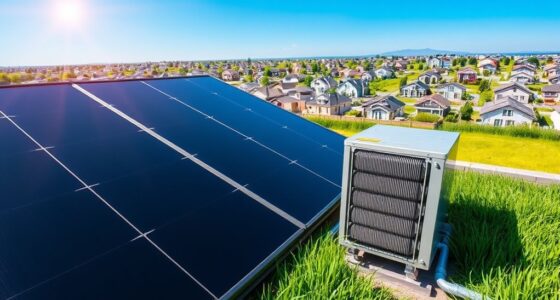
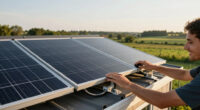
At its core, a compact solar panel kit is a ready-made bundle designed to generate and store solar power in a small footprint. Think of it as a lightweight toolbox for energy, perfect for outdoor adventures or emergency backup. These kits typically include a small solar panel, a charge controller, and either a battery or a portable power station. Some also feature inverters, cables, and mounting hardware. They matter because they turn the sun’s energy into usable power, all packed into a package that’s easy to carry and set up. For example, a camper can set up a 100-watt foldable panel on their van roof and keep devices charged without relying on noisy generators.
compact solar panel kit for camping
As an affiliate, we earn on qualifying purchases.
As an affiliate, we earn on qualifying purchases.
The main types of compact solar kits—and which one suits your lifestyle
Not all solar kits are created equal. Picking the right kind depends on your plans and environment. Here’s a quick breakdown:
- Portable folding kits: Easy to carry, fold into a small size, perfect for camping or emergency setups. Imagine a backpack-sized panel that unfolds in seconds, ready to soak up sun.
- Rigid-panel kits: Tough, efficient, and often mounted permanently on RV roofs or cabins. Think of a sleek, fixed panel that lasts for decades.
- Flexible-panel kits: Lightweight and bendable, ideal for curved surfaces like boat hulls or irregular roofs. They’re like a flexible sheet of glass—easy to install but sometimes less durable.
- Solar-generator kits: Combine panels with a battery and inverter, providing a plug-and-play solution. Perfect if you want instant power without a complex setup.
- Balcony kits: Small, grid-connected systems designed to offset household bills where regulations permit. Think of a mini power plant right outside your apartment window.
Each type has its perks and limitations. For example, a flexible panel might weigh less but degrade faster. A rigid panel offers longevity but takes up more space.
What’s in a typical compact solar kit? Don’t get caught missing parts
When shopping, it’s tempting to focus only on panel wattage. But a complete kit should include more. Typically, you’ll find:
- One or more solar panels
- Charge controller—regulates power to prevent battery damage
- Mounting hardware or fold-out stands
- Cables and adapters
- Battery or portable power station
- Inverter for AC appliances
Be cautious: Some kits omit batteries or inverters, leaving you to buy those separately. Always check the component list before buying. For example, a 150-watt panel with a charge controller and a 100Ah LiFePO₄ battery makes a much more useful system than just the panel alone.
How to size your solar kit: matching power to your daily needs
Getting the right size means doing some quick math. First, list all devices you want to run daily. For each, note the wattage and usage hours. For example, a smartphone charger (10W) used 2 hours daily consumes 20Wh. Add up all watt-hours for your devices. Suppose that totals 600Wh. Then, consider peak-sun hours—typically 4 to 6 hours in most locations. Divide your total energy needs by peak sun hours, multiplied by an efficiency factor of about 0.75 to 0.85, to get the minimum panel wattage.
For example, if you need 600Wh daily and get 5 peak hours, then: 600 ÷ (5 × 0.8) ≈ 150W. This means a 150-watt panel could meet your needs, assuming good sunlight and no shading.
The latest tech upgrades making compact solar kits smarter and more efficient
Recent tech advances have transformed small solar setups. High-efficiency cells like TOPCon and shingled designs boost output by up to 30%. Modular systems now let you expand capacity easily—start small and grow later. Better MPPT controllers harvest more energy, especially in cold or cloudy weather. Lithium iron phosphate batteries last longer—up to 10,000 cycles—while USB-C Power Delivery ports let you charge laptops directly. Bluetooth monitoring apps give you real-time data on your system’s health. And lighter, foldable panels with rugged laminates make portability a breeze. These innovations mean you get more power, more longevity, and more convenience at a lower cost.
Advantages of compact solar kits—quiet, clean, and scalable power
Compared to noisy generators, small solar kits operate silently. They produce no emissions—good for your health and the planet. You can scale up capacity by adding panels or batteries as your needs grow. They’re perfect for remote cabins, camping trips, or emergency kits. Plus, with minimal routine maintenance and no fuel costs, they save money over time. Imagine sitting on your porch, a gentle hum of sunlight generating juice for your devices—peaceful, clean, and dependable.
Limitations you should know before buying
Nothing’s perfect. Solar output depends heavily on weather, season, and shading. A cloud passing overhead can slash energy production. Small panels can’t power high-demand appliances like heaters or hot plates. Batteries add to the cost and weight. Flexible panels may wear out faster—think of them as delicate sheets compared to sturdy glass ones. Also, the rated wattage is a lab figure; real-world results are often lower. Proprietary connectors can complicate future upgrades or repairs. Knowing these limits helps prevent disappointment and ensures your system matches your expectations.
Installation tips: safe, effective setup for your solar kit
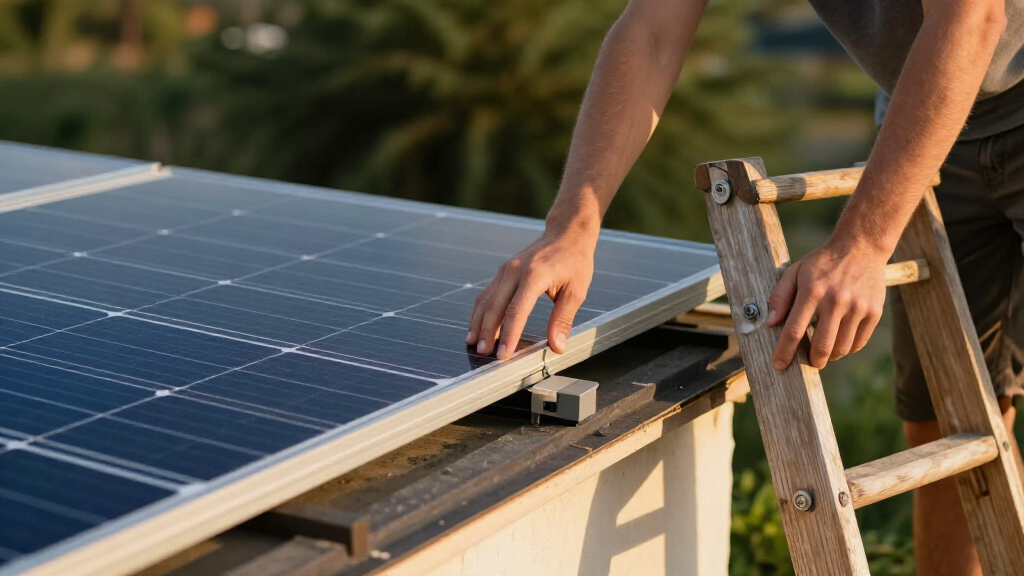
Position panels where they catch direct sunlight—think about the angle, season, and shade. Secure flexible panels firmly to avoid wind damage, especially on boats or vehicles. Keep batteries in well-ventilated, temperature-controlled areas. Use the correct gauge wiring and fuses—don’t cut corners. Avoid water exposure unless equipment is rated for outdoor use. For home balcony systems, follow local electrical codes and utility rules. A well-installed kit lasts longer and performs better. Remember, safety isn’t trivial—if you’re unsure, hire a licensed professional for complex setups.
Your most common questions—answered plainly
Q: How many watts does a compact solar kit need? It depends on what you want to power. Calculate your daily watt-hour needs, then pick a kit that provides at least 20-30% more capacity for cloudy days and future expansion.
Q: Can a 100-watt panel run my refrigerator? If it’s a small, highly efficient portable fridge, maybe—especially with a decent battery. But most standard fridges need more power and consistent sunlight.
Q: Will a panel charge my laptop directly? Yes, if the panel has a USB-C Power Delivery port or you use a compatible power bank. Make sure the panel can generate enough wattage.
Q: Do cloudy days ruin solar power? Not entirely, but output drops significantly—sometimes by 70-80%. Expect less energy, but some power is better than none.
Q: Is a battery necessary? Not always. Batteries store power for cloudy days or nighttime, but if you only need quick charging in daylight, a direct connection might suffice.