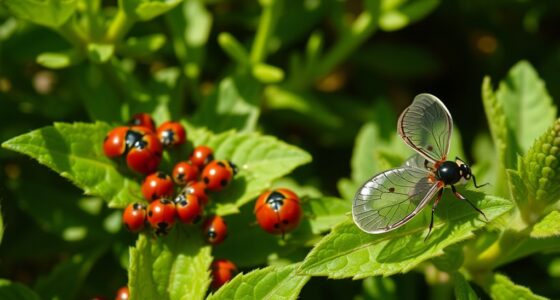
Imagine transforming your garden into a balanced ecosystem where plants support each other naturally. Companion planting offers simple yet effective ways to boost your vegetable yields, deter pests, and improve soil health—all without relying heavily on chemicals. When you understand which plants work best together, you can create a thriving space that’s both productive and resilient. Curious about specific pairings that can make your garden flourish?
Key Takeaways
- Plant marigolds with tomatoes or peppers to deter nematodes and aphids naturally.
- Grow basil near tomatoes to repel thrips and mosquitoes, enhancing pest resistance.
- Include nitrogen-fixing legumes like beans and peas to enrich soil for hungry vegetables.
- Use tall plants such as corn to provide shade for shade-loving vegetables like lettuce.
- Incorporate ground covers like nasturtiums to suppress weeds and prevent soil erosion.
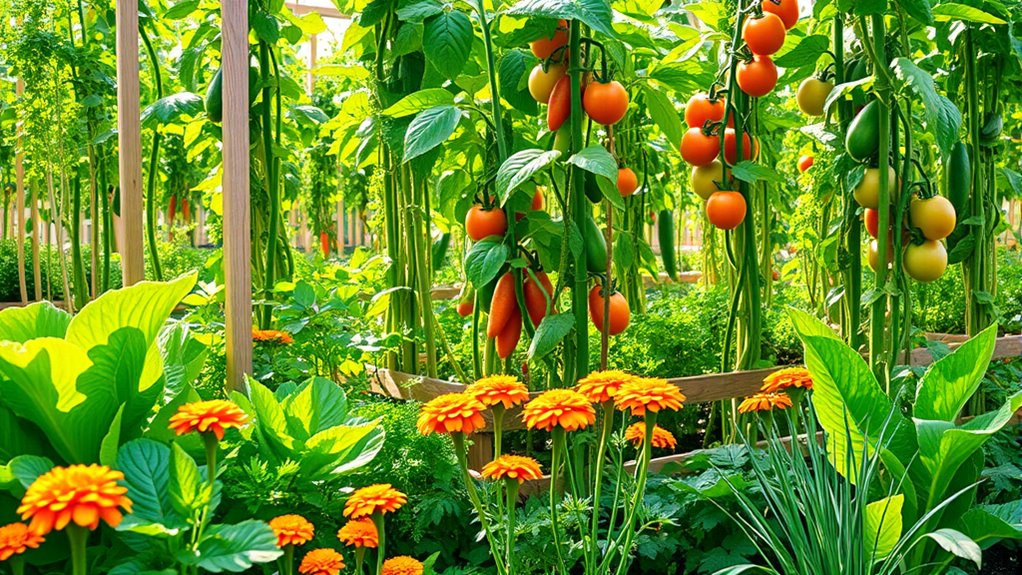
Companion planting is a strategic gardening practice that involves growing certain plants together to benefit each other. When you plan your garden this way, you can naturally reduce pests and improve soil health without relying heavily on chemicals. One of the key advantages of companion planting is its ability to enhance pest control strategies. For example, planting marigolds alongside vegetables like tomatoes or peppers can deter nematodes and aphids, thanks to their strong scent. Similarly, basil planted near tomatoes can repel thrips and mosquitoes, creating a more pest-resistant environment. By understanding which plants naturally ward off specific pests, you can design your garden to minimize damage and lower the need for pesticides. This approach not only protects your plants but also promotes a healthier environment.
Companion planting naturally reduces pests and promotes garden health through strategic plant combinations.
Beyond pest control, companion planting plays a significant role in soil nutrient management. Some plants are excellent at fixing nitrogen or improving soil structure, which benefits neighboring crops. Legumes such as beans and peas are classic examples—they have symbiotic bacteria in their roots that convert atmospheric nitrogen into a form plants can absorb. Growing these near nitrogen-hungry vegetables like lettuce or carrots allows the soil to replenish its nutrients naturally, reducing your need for synthetic fertilizers. Additionally, deep-rooted plants like parsnips can break up compacted soil, improving aeration and drainage for shallower-rooted crops. When you arrange your garden thoughtfully, you’re creating a living system where soil nutrients are cycled efficiently, and plants support each other’s growth. Incorporating aesthetic considerations in your garden design can also enhance visual appeal while supporting plant health.
You should also consider how different plants influence each other’s growth habits. For instance, tall plants like corn can provide shade for shade-loving vegetables such as lettuce, while ground covers like nasturtiums can suppress weeds and prevent soil erosion. These combinations maximize space and resources, making your garden more productive. Proper plant pairing also involves understanding plant growth cycles; planting fast-growing crops alongside slower ones can optimize space and ensure continuous harvests.
Ultimately, successful companion planting requires planning and knowledge. By selecting plants that support each other through pest control strategies and soil nutrient management, you create a balanced ecosystem in your garden. This approach reduces the need for external inputs, saves you time and money, and results in healthier, more resilient plants. As you experiment and learn which combinations work best in your environment, you’ll develop a sustainable gardening practice that yields bountiful results and enriches your gardening experience.

French Sparky Marigold Seeds for Planting – Plant & Grow Red & Orange Patula Flowers in Your Home Vegetable Garden – Heirloom Non GMO – Survival Garden Seeds (1 Pack)
Showy Colors – Grow your own French marigolds with 2-3" double blooms in fiery colors of gold, orange,…
As an affiliate, we earn on qualifying purchases.
As an affiliate, we earn on qualifying purchases.
Conclusion
Remember, a garden is only as strong as its weakest link. By choosing the right plant pairings, you’ll create a natural defense system that boosts growth and wards off pests. Companion planting isn’t just about individual plants—it’s about building a thriving ecosystem where each part helps the other. So, get your hands dirty, experiment, and watch your garden flourish. As the saying goes, “Many hands make light work,” and in gardening, many plants make a healthy, resilient garden.

Pest Defense 6 Pack Seeds for Planting – Heirloom Lavender, Hyssop, Catnip, Marigold, Petunia, Basil – Natural Pest Deterrents for Outdoor & Indoor Spaces – Survival Garden Seeds
BEAUTIFUL & FRAGRANT – Variety pack of herb and flower seeds: 300-450 Catnip seeds (Nepeta cataria), 200-350 Crackerjack…
As an affiliate, we earn on qualifying purchases.
As an affiliate, we earn on qualifying purchases.

No-Till Garden Farm and Garden Cover Crop Mix Seeds – 5 Lbs – Blend of Gardening Cover Crop Seeds: Hairy Vetch, Daikon Radish, Forage Collards, Triticale, More
🌱 Diverse 9-Seed Cover Crop Mix – Non-GMO & Heirloom – Includes Austrian Field Pea, Hard Red Winter…
As an affiliate, we earn on qualifying purchases.
As an affiliate, we earn on qualifying purchases.

20000+ Creeping Thyme Seeds for Planting, Non-GMO Ground Cover Seeds, Fragrant Lawn Alternative for Garden, Paths & Landscaping (10g / 0.35 oz)
🌱 High Germination Ground Cover Seeds – Create a lush green carpet for paths, patios, and empty garden…
As an affiliate, we earn on qualifying purchases.
As an affiliate, we earn on qualifying purchases.