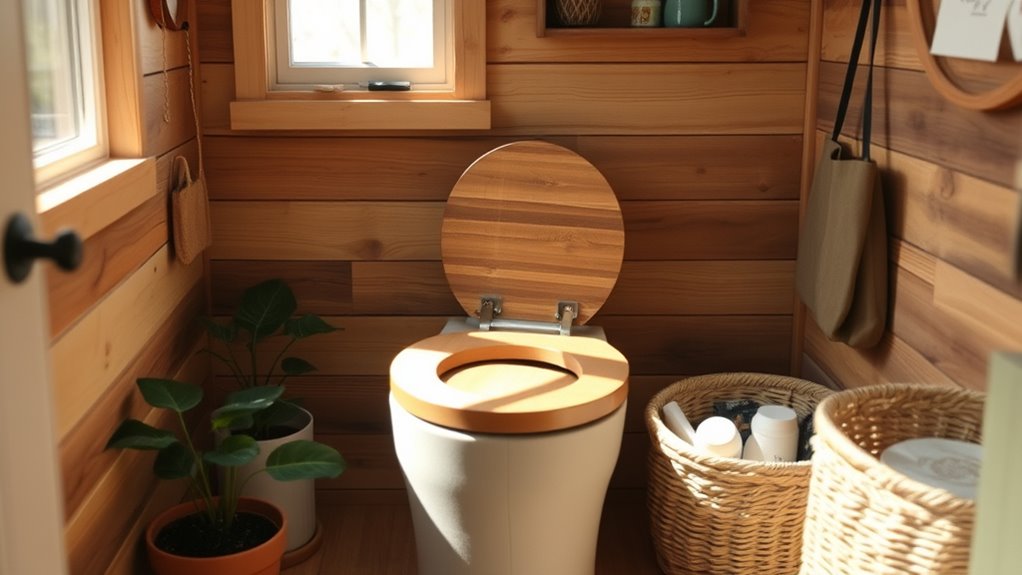

Imagine moving into a tiny home and discovering your compost toilet isn’t quite living up to expectations—odor issues, incomplete composting, or maintenance surprises. Many owners learn these lessons the hard way, wishing they’d known key tips beforehand. Proper setup, regular maintenance, and understanding the process can make all the difference in creating a safe, efficient, and odor-free system. Curious about the essential insights that could save you time and effort?

Get compact home essentials delivered free with Prime
- Fast, free delivery on millions of items
- Prime Video, Amazon Music and more included
- Member-only deals all year
Key Takeaways
- Proper ventilation and airflow are essential to prevent odors and ensure safe gas dissipation.
- Regularly add carbon-rich materials like sawdust after each use to maintain balanced composting conditions.
- Always wear gloves and wash hands thoroughly to avoid contact with bacteria or pathogens during maintenance.
- Monitor moisture levels closely; too much water can slow decomposition and cause unpleasant odors.
- Fully decomposed compost takes several months; patience and proper maintenance are key for safe garden use.
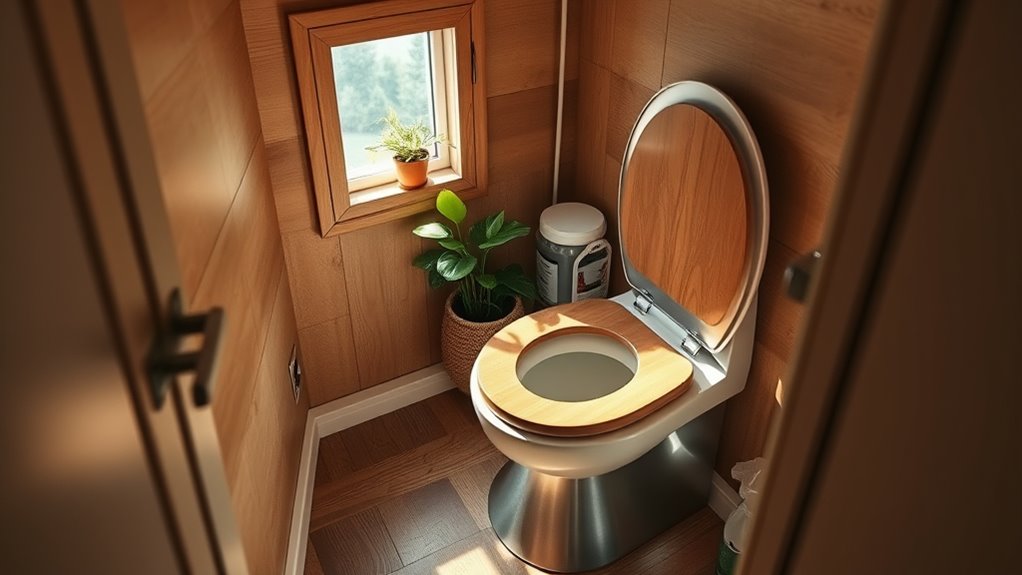
If you’re exploring eco-friendly sanitation options, compost toilets are a practical choice that can reduce water use and turn waste into valuable compost. They’re especially appealing for tiny-house owners seeking sustainable living solutions. However, before installing one, it’s essential to understand safety precautions and maintenance tips to ensure smooth operation and safe use. Proper precautions help you avoid health risks, while regular maintenance keeps the system functioning efficiently.
Safety should be your top priority when handling compost toilets. Always wear gloves when managing the waste compartment to prevent contact with harmful bacteria or pathogens. Keep a dedicated set of tools and cleaning supplies separate from other household items to avoid cross-contamination. It’s also wise to wash your hands thoroughly after each use and maintenance session. Ventilation is another critical safety aspect; ensure your compost toilet is installed in a well-ventilated area to prevent odors and the buildup of harmful gases like methane. Regularly inspect the ventilation system to ensure it’s functioning properly, and avoid sealing the system too tightly, which can cause ventilation issues.
Always wear gloves and keep ventilation clear for safe compost toilet use.
Maintenance tips are key to keeping your compost toilet in good shape over time. First, learn how to correctly add carbon-rich materials such as sawdust, peat moss, or coconut coir after each use. These materials help balance moisture levels and accelerate composting. Regularly empty the composting chamber when it reaches capacity, but do so carefully—wear gloves and a mask if needed. When removing compost, ensure it’s fully decomposed, which typically takes several months, and always handle it with care, especially if you plan to use it in gardens. Keep the toilet’s components clean by rinsing the seat and lid regularly with mild soap and water, avoiding harsh chemicals that could disrupt composting.
You should also monitor moisture levels inside the chamber; too much water slows decomposition and can cause odors, so add dry materials as needed. Additionally, check the lid seals and ventilation system periodically to prevent leaks and ensure consistent airflow. If you notice unpleasant odors or slow composting, it’s a sign you need to adjust your maintenance routine—more carbon materials, better aeration, or more frequent emptying.
As an affiliate, we earn on qualifying purchases.
Conclusion
Now that you know the basics, aren’t you glad you’re equipped to handle your compost toilet safely and efficiently? By keeping vents clear, balancing moisture, and wearing gloves, you’ll enjoy a hassle-free experience that’s good for your tiny home and the environment. Isn’t it satisfying to turn waste into something valuable? With these tips, you’re all set to make composting a simple, sustainable part of your tiny living journey.
Halloween Picks
halloween
As an affiliate, we earn on qualifying purchases.