
A DIY foldable desk is perfect for your tiny office, offering a flexible workspace that easily folds away when not in use. Using lightweight, sturdy materials like plywood or aluminum, you can create a stable surface that fits your needs. Focus on ergonomic design with adjustable heights and foldable legs for convenience. With clever hinges and locking mechanisms, you’ll maximize space and stay organized—continue to explore the details to build your ideal compact workspace.
Key Takeaways
- Use lightweight, durable materials like plywood or aluminum for easy folding and portability.
- Design foldable legs with locking hinges for stability and quick setup.
- Ensure the desk height (28-30 inches) and surface size accommodate your workspace needs.
- Incorporate ergonomic features such as rounded edges and adjustable surfaces for comfort.
- Customize the design for compact storage, including secondary fold-out surfaces or shelves.
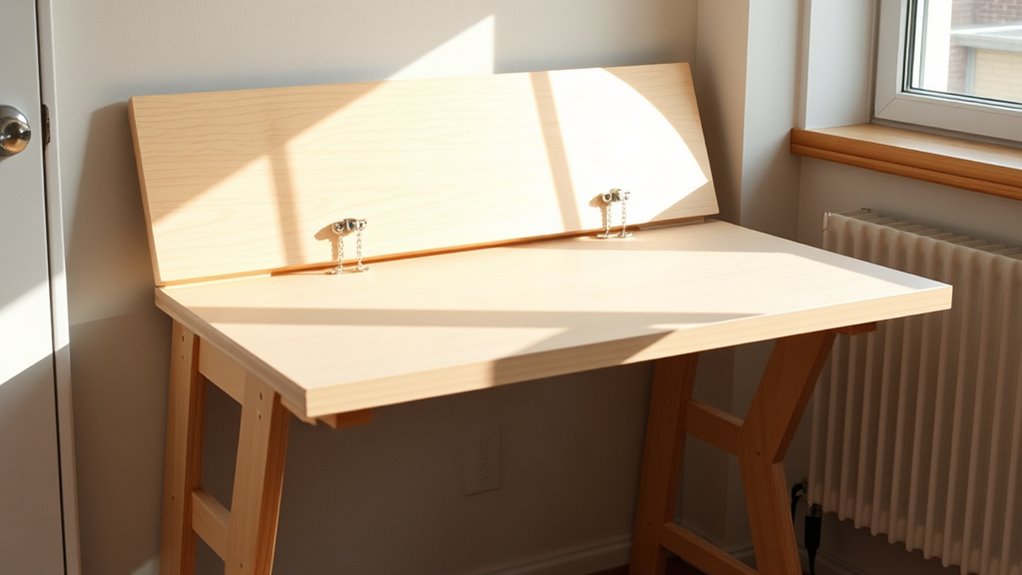
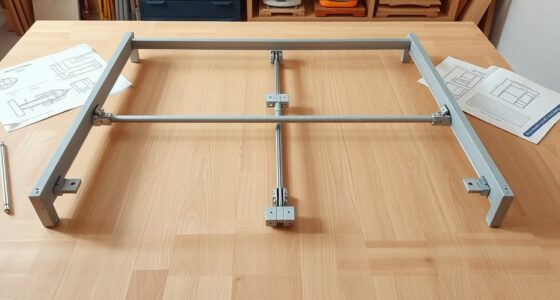
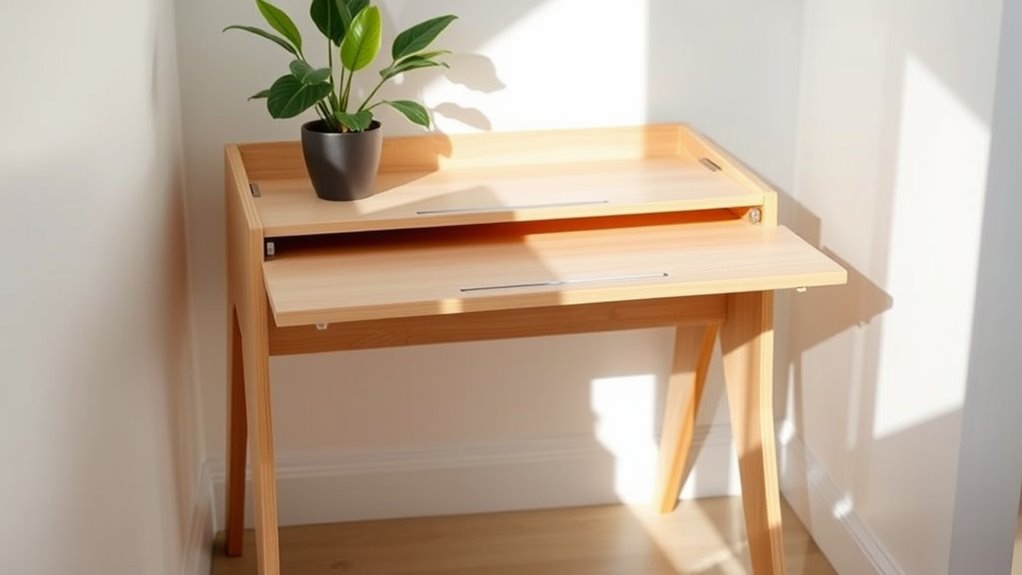
A DIY foldable desk is a practical project that lets you create a versatile workspace you can easily store away when not in use. This is especially helpful if your tiny office has limited space or if you need a flexible setup that adapts to your daily needs. When building your foldable desk, choosing the right portable materials is essential. Look for lightweight yet sturdy options like plywood, aluminum, or high-quality plastic. These materials make it easier to fold and move the desk around without sacrificing stability. You’ll appreciate how these portable materials allow you to set up your workspace quickly and pack it away just as easily, freeing up space when you’re not working. Additionally, considering ergonomic design principles ensures long-term comfort and productivity. Designing your foldable desk with ergonomics in mind is equally important. You want a setup that promotes good posture and minimizes discomfort during long work sessions. Consider the height of your desk—aim for approximately 28 to 30 inches, which is standard for comfortable seated work. Incorporate an adjustable surface if possible, so you can customize the height for standing or sitting positions. The surface should be wide enough to hold your laptop, keyboard, mouse, and other essentials, but not so large that it becomes cumbersome to fold. Rounded edges and smooth finishes can prevent injuries and make folding smoother. Think about Water Parks or other amenities that could make your workspace more enjoyable if you’re designing a space for multi-purpose use. When planning your design, think about how the ergonomic design integrates with portability. For example, using foldable legs with locking mechanisms ensures stability while working and easy folding when you’re done. Attach hinges that are strong but lightweight, like those made from aluminum or reinforced plastic, to keep the overall weight manageable. You might also consider adding a fold-out shelf or a secondary surface for additional workspace that can tuck away when not in use. This way, your desk remains compact but functional, fitting your unique needs perfectly. Incorporating ergonomic principles and portable materials into your DIY project ensures your foldable desk is both practical and comfortable. It allows you to create a workspace that supports your productivity without sacrificing space or mobility. Plus, since it’s a DIY project, you can customize every detail—height, surface size, and folding mechanism—to match your preferences. Whether you work from a small apartment or a shared office, a well-designed foldable desk helps you maximize your space, stay comfortable, and stay organized. Once you’ve built your desk, you’ll wonder how you ever worked without it, enjoying a clutter-free environment tailored perfectly to your needs.
Frequently Asked Questions
What Materials Are Best for Weather Resistance?
For weather resistance, you should choose materials like treated cedar, outdoor-grade plywood, or composite materials that withstand moisture. Apply weatherproof finishes such as sealants or paint designed for outdoor use to protect the surface. Use rust-resistant hardware like stainless steel or galvanized screws to prevent corrosion. These choices help your foldable desk stay durable and functional, even in harsh weather conditions.
How Much Weight Can the Desk Support?
Your foldable desk can typically support up to 50 pounds, ensuring it handles daily tasks like laptops and books without issue. This weight capacity depends on the materials used and construction quality, which directly impact its structural integrity. For ideal support, reinforce joints and choose sturdy materials like plywood or metal. Knowing this helps you safely plan your workspace, making your tiny office both functional and reliable.
Can the Desk Be Customized for Specific Sizes?
Yes, you can customize the desk for specific sizes using adjustable height and modular components. You’ll find that these features allow you to tailor the desk to your space and ergonomic needs easily. By adjusting the height and swapping or adding modular parts, you guarantee the desk fits perfectly in your tiny office. This flexibility makes it a practical choice for creating a personalized workspace that maximizes comfort and functionality.
What Safety Precautions Should Be Taken During Assembly?
During assembly safety, always wear safety glasses to protect your eyes from debris and handle tools carefully. To avoid accidents, read all instructions thoroughly before starting, and make sure your workspace is clear of clutter. Use the right tools for each task, and keep them in good condition. Remember, tool precautions like unplugging power tools when not in use and keeping blades covered help prevent injuries, making your DIY project safer and more enjoyable.
How Do I Maintain the Desk’s Foldability Over Time?
To keep your desk foldable over time, regularly check and maintain the hinges. You should perform hinge maintenance by tightening any loose screws and inspecting for damage. Also, hinge lubrication is essential; apply a light lubricant periodically to ensure smooth movement. Avoid overloading the desk, which can strain the hinges. Proper care, including cleaning and lubrication, will prolong the desk’s foldability and keep it functioning smoothly.
Conclusion
With your new foldable desk, you’ve created a versatile oasis in your tiny office, like a secret garden hidden behind a simple door. It transforms your space from cluttered chaos to a sleek, functional haven whenever you need it. Now, your workspace can unfold as easily as a blooming flower, ready to support your creativity and productivity. Embrace this DIY project as a small step toward making your compact office feel bigger, brighter, and perfectly tailored to you.