
Many believe that building a DIY solar greenhouse heater can substantially extend your growing season, but the truth depends on how effectively you design and implement it. While passive solar principles and proper insulation are key, there’s more to take into account to make it truly efficient. If you’re interested in reducing energy costs and boosting plant growth during colder months, understanding these techniques could make a notable difference in your gardening efforts.
Key Takeaways
- Use passive solar design and thermal mass to absorb and store heat during the day for nighttime warmth.
- Incorporate thermal insulation materials like foam boards or bubble wrap to prevent heat loss overnight.
- Enhance heat retention with reflective surfaces to maximize sunlight absorption and direct more energy into the greenhouse.
- Position solar heaters near south-facing windows for optimal sun exposure and maximum heating efficiency.
- Tailor the heater design to your climate and greenhouse size for sustainable, long-lasting temperature extension.

If you want to keep your greenhouse warm naturally, DIY solar heaters are an effective and eco-friendly solution. They harness the sun’s energy to extend your growing season without relying on electricity or fossil fuels. The key to maximizing their efficiency lies in incorporating good thermal insulation and leveraging passive heating principles. When designing your homemade heater, focus on creating a system that minimizes heat loss and captures as much solar energy as possible.
Thermal insulation plays a critical role in maintaining the warmth inside your greenhouse. By insulating the walls, windows, and even the heater itself, you prevent heat from escaping during chilly nights. Materials like foam boards, bubble wrap, or reflective insulations can act as barriers against heat transfer, ensuring the warmth generated by your solar heater stays inside longer. Proper insulation means you won’t need to constantly supply additional heat, making your DIY setup more efficient and cost-effective.
Good insulation keeps your greenhouse warm longer, making your DIY solar heater more efficient and cost-effective.
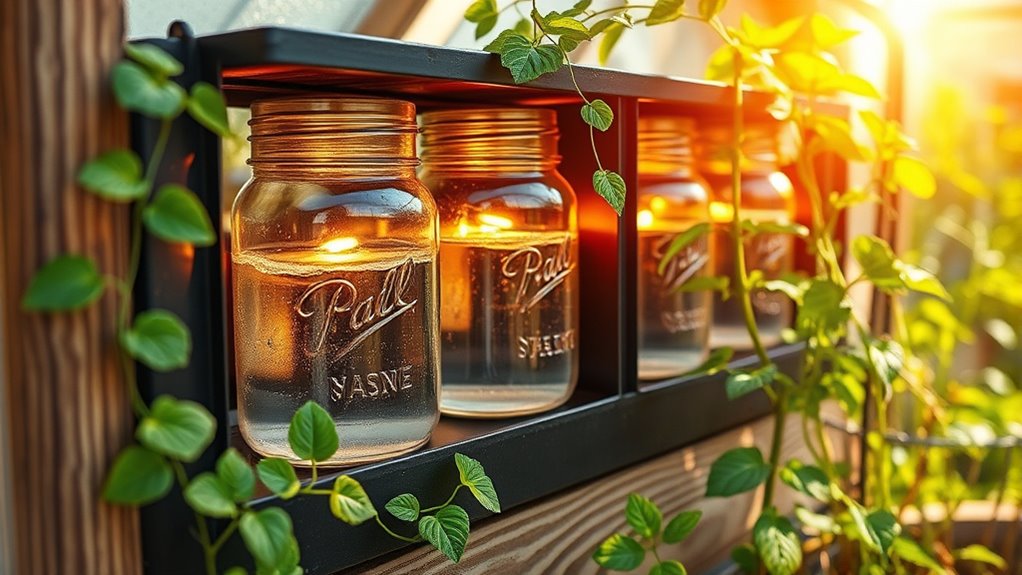
Passive heating is another essential concept to incorporate into your design. It involves capturing and storing solar energy during the day so it can be released gradually when temperatures drop. You can achieve this by building a solar air heater or water-based system that absorbs sunlight through dark-colored surfaces or water tanks. These materials act as thermal masses, absorbing heat during the day and releasing it slowly overnight. Positioning your heater in a strategic location—preferably where it receives maximum sunlight—also enhances passive heating. For example, placing the heater near south-facing windows ensures it captures the most sunlight possible, which then gets stored in thermal mass and radiates warmth into your greenhouse.
Additionally, making use of reflective surfaces can boost your heater’s performance. Painting the interior of your heater with reflective paint or lining it with reflective foil directs more sunlight onto your thermal mass, increasing heat absorption. Combining this with good insulation around the entire structure reduces heat loss, creating a more stable warm environment inside your greenhouse.
Finally, remember that the design and materials you choose should be tailored to your specific climate and greenhouse size. A well-insulated, passive solar heater can markedly extend your growing season, allowing you to start seedlings earlier and grow crops later into the year. By focusing on thermal insulation and passive heating principles, you’ll create an efficient, sustainable heating solution that leverages the sun’s power naturally—saving you money and reducing your ecological footprint. Incorporating high-quality materials for insulation and thermal mass can further improve your heater’s effectiveness and longevity.
Top picks for "solar greenhouse heater"
Open Amazon search results for this keyword.
As an affiliate, we earn on qualifying purchases.
Conclusion
By building your own solar heater, you’re planting the seeds of sustainability and hope. Each ray of sunlight becomes a symbol of your commitment to eco-friendly growth, transforming your greenhouse into a sanctuary of life and resilience. As you harness nature’s energy, you’re not just extending your growing season — you’re nurturing a greener future. Let your DIY passion shine brightly, illuminating the path toward a more sustainable and fruitful garden.