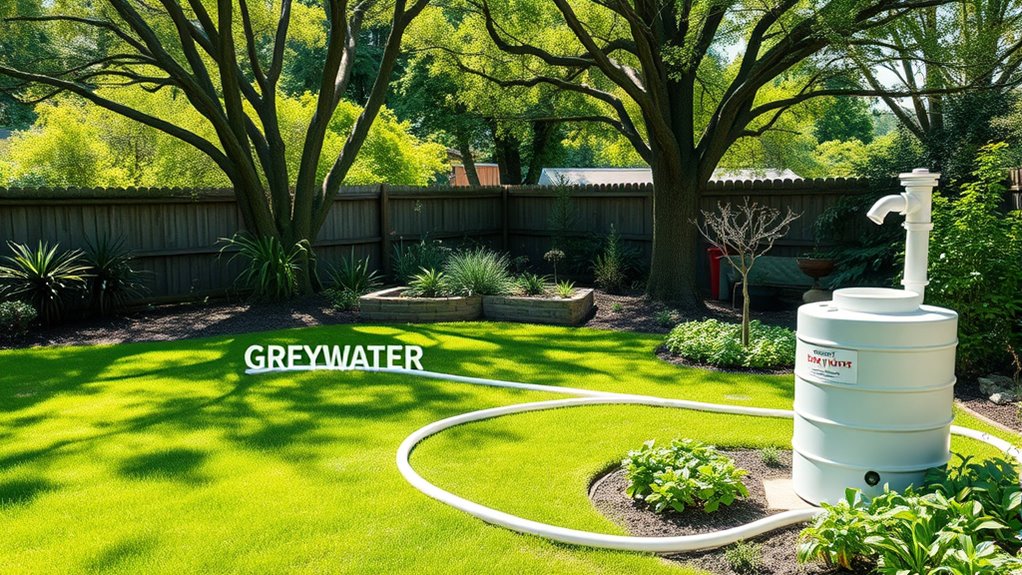

Imagine designing a garden that thrives on recycled water, much like a carefully engineered puzzle. Greywater irrigation can be an effective way to conserve water and sustain plants, but without understanding legal rules and proper layouts, your efforts could backfire. Laws about greywater vary widely, and overlooking them risks health hazards and fines. To successfully implement a system that’s both safe and efficient, it’s essential to grasp these regulations and plan your setup accordingly.

Get compact home essentials delivered free with Prime
- Fast, free delivery on millions of items
- Prime Video, Amazon Music and more included
- Member-only deals all year
Key Takeaways
- Check local regulations to determine permissible greywater sources and suitable application areas before installation.
- Design the system to prevent backflow, contamination, and ensure safe routing to gardens or landscaping.
- Regularly inspect and maintain filters, pipes, and drainage components for safety and efficiency.
- Position greywater systems away from vegetable gardens and play areas, adhering to cultural and health guidelines.
- Use approved filtration and diversion methods to comply with legal standards and promote environmental sustainability.
Greywater irrigation offers a sustainable way to reuse household wastewater for watering plants and gardens. By redirecting water from sinks, showers, and washing machines, you can reduce your water bills and lessen the strain on local water resources. However, before you set up a greywater system, it’s essential to understand the household regulations that govern its use in your area. Many regions have specific rules to ensure safety and environmental protection, so checking with local authorities or health departments is a crucial first step. These regulations might specify which sources of greywater are permissible, how it should be stored, and where it can be safely applied. Failing to adhere to these rules can lead to fines or health hazards, so thorough research and compliance are vital.
Once you’ve confirmed the legal requirements, you’ll want to focus on system maintenance to keep your greywater setup safe and efficient. Regular inspection is necessary to prevent clogs, leaks, or bacterial growth that could pose health risks or damage your system. Ensure that filters are cleaned frequently and that pipes are checked for cracks or blockages. Proper maintenance also involves monitoring the quality of the greywater, especially if you notice any foul smells or discoloration, which could indicate contamination. Installing a simple filtration system at the source can extend the lifespan of your pipes and reduce the need for frequent repairs. It’s a good idea to keep a maintenance schedule, so you don’t overlook routine tasks that keep your system running smoothly. Additionally, understanding cultural considerations can help ensure your greywater practices are accepted and effective within your community.
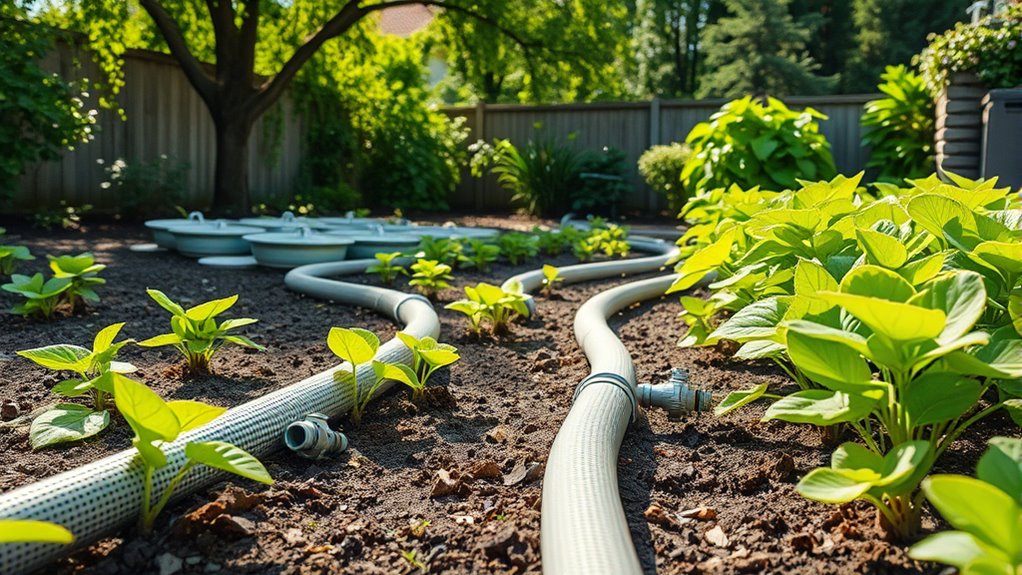
Designing your greywater layout isn’t just about connecting pipes; it’s about creating a safe, effective system that aligns with household regulations. You’ll want to consider where to divert greywater from your household fixtures, how to route it to your garden, and how to prevent backflow or contamination. Using mulch basins, drip irrigation, or subsurface systems helps reduce odor and prevent contact with people or animals. Positioning your system away from vegetable gardens or areas where children play is also critical. When designing the layout, keep accessibility in mind for ongoing maintenance and troubleshooting. Proper planning minimizes risks and ensures your greywater system remains compliant and functional over time.
greywater filtration system for irrigation
As an affiliate, we earn on qualifying purchases.
As an affiliate, we earn on qualifying purchases.
Conclusion
By understanding your local regulations and carefully designing your greywater system, you create a sustainable solution that benefits both your garden and the environment. When you connect your fixtures properly and position components for easy maintenance, safety and efficiency naturally follow. It’s no coincidence that well-planned greywater systems thrive longer and require fewer issues—because thoughtful layout and compliance truly make all the difference. Embrace these guidelines, and your eco-friendly irrigation will flourish effortlessly.
Columbus Day / Indigenous Peoples' Day Picks
long weekend sales
As an affiliate, we earn on qualifying purchases.