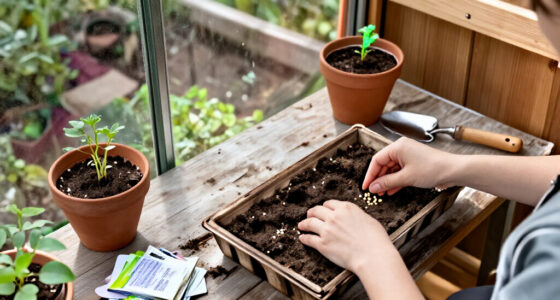

Like the ancient gardeners who transformed barren land with patience and natural methods, you can convert your lawn into a thriving garden without chemicals. Instead of relying on herbicides or synthetic treatments, you have eco-friendly options that gradually weaken grass and weeds while enriching the soil. Curious about how to start this process effectively and sustainably? Keep exploring these natural techniques to create a resilient garden space that benefits both your landscape and the environment.

Get compact home essentials delivered free with Prime
- Fast, free delivery on millions of items
- Prime Video, Amazon Music and more included
- Member-only deals all year
Key Takeaways
- Use sheet composting with cardboard or newspaper to smother grass naturally.
- Apply a thick layer of compost and organic materials to block sunlight and kill grass over time.
- Promote soil health through composting, aeration, and organic layering to convert lawn into fertile garden soil.
- Incorporate native plants to outcompete weeds and create a sustainable, low-maintenance garden.
- Avoid chemicals by relying on natural methods like layering, composting, and supporting native plant growth.
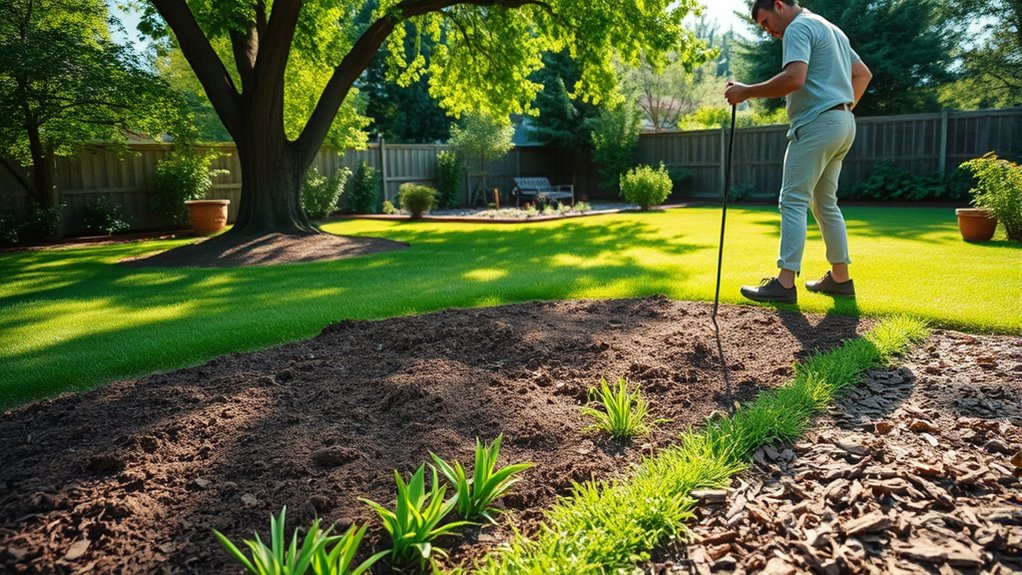
Transforming your lawn into a thriving garden is a rewarding way to maximize your outdoor space and create a beautiful, productive environment. Instead of using harsh chemicals to kill grass, you can adopt natural, eco-friendly methods that prepare your soil for planting while supporting local ecosystems. One effective approach involves integrating native plants into your garden design. Native plants are adapted to your region’s climate and soil conditions, making them more resilient and easier to care for. By choosing native species, you reduce the need for supplemental watering and fertilizers, and you help sustain local pollinators and wildlife. Incorporating native plants can be your first step toward a sustainable, low-maintenance garden that naturally suppresses weeds and improves soil health.
Transform your lawn into a resilient, eco-friendly garden with native plants that support local ecosystems and reduce maintenance.
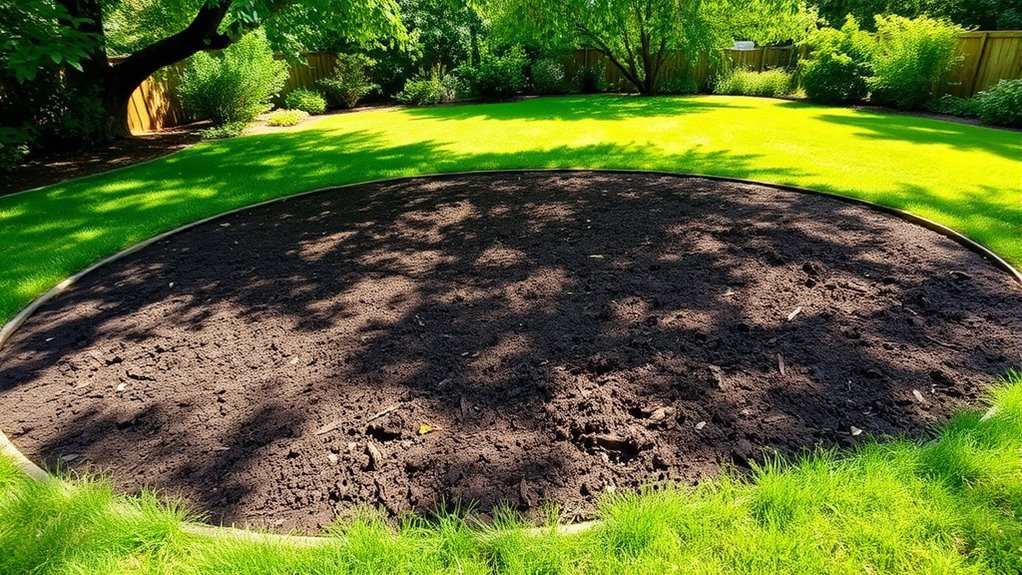
To prepare your lawn for planting without chemicals, focus on composting techniques that enrich your soil naturally. Composting is a simple yet powerful method to recycle kitchen scraps, yard waste, and organic materials into nutrient-rich compost. By spreading a thick layer of compost over your existing grass, you create a natural barrier that blocks sunlight and gradually decomposes, killing the grass beneath. This process, often called sheet composting or lasagna gardening, transforms your lawn into fertile soil over time. As the compost breaks down, it adds vital nutrients and improves soil structure, making it easier for your native plants to thrive once you start planting.
You can also layer organic materials, such as cardboard or newspaper, under the compost to smother existing grass and weeds effectively. These materials block sunlight, preventing photosynthesis and causing the grass to weaken and die naturally. Once the grass is dead, you can remove or chop up the remaining sod and mix the compost into the soil, creating an ideal foundation for your new garden beds. This method requires minimal effort and avoids the use of chemicals that could harm your soil or surrounding environment. Additionally, understanding the importance of soil health can guide you in choosing the best practices for a sustainable lawn transformation.
In addition to composting, maintaining proper soil moisture and aeration helps accelerate the transition from lawn to garden. Water your composted area regularly to keep microbial activity high and ensure even decomposition. Over time, your lawn will become a rich, loamy soil that supports healthy native plants. This natural process not only kills grass without chemicals but also enhances biodiversity and fosters a resilient garden ecosystem. As you implement these techniques, remember that patience is key—your transformed lawn will flourish with consistent effort, sustainable practices, and a focus on native plants that are best suited for your local environment.
Products Worth Considering

Levoit Vital 100S-P Air Purifier with Washable Pre-Filter

eufy E25 Robot Vacuum and Mop with HydroJet Roller Mop, 20,000 Pa Suction

Philips Hue Bridge Pro Smart Lighting Hub
As an affiliate, we earn on qualifying purchases.
Conclusion
By converting your lawn to a garden naturally, you’re not only creating a healthier space but also supporting local biodiversity. Did you know that gardens improved with organic methods can host up to 30% more native insects and birds? This shows how chemical-free lawn conversions boost ecosystems. So, by smothering grass with compost or newspaper, you’re building a vibrant, sustainable garden that benefits both your environment and your well-being.