TL;DR

Get compact home essentials delivered free — and shop member deals
- Fast, free delivery on millions of items
- Access to Prime Big Deal Days deals on October 6–7
- Prime Video, Amazon Music and more included
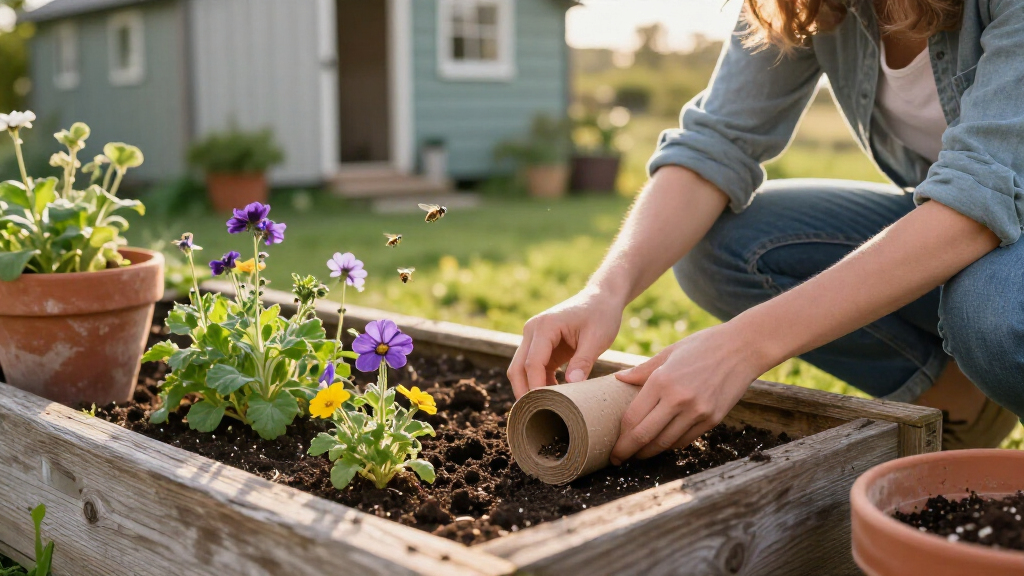
A Hunker report describes cutting empty toilet paper tubes in half to make biodegradable seed-starting cups for bee-friendly flowers. The method reuses cardboard and can help gardeners start pollinator plants, though the right sowing time depends on the flower and local frost conditions.
Hunker has published a gardening guide showing how to turn empty toilet paper tubes into seed-starting cups for flowers visited by bees and other pollinators. The approach reuses untreated cardboard that can break down in soil, while giving gardeners a simple way to start flowers indoors before planting them outside when conditions are suitable.
The guide recommends cutting one cardboard tube in half to make two short cups. Gardeners then make several half-inch vertical cuts at one end of each piece and fold the tabs inward to form a base. Each cup is filled with seed-starting mix and planted according to the instructions on the seed packet. The cups can sit in a shallow tray, such as a reused lettuce tray or shoebox lid.
After watering the mix, place the tray on a sunny windowsill or under a grow light. The report says seedlings are generally ready to move outdoors when they are a few inches tall and have developed their first true leaves. It advises planting after the last frost has passed, with a hole roughly twice as wide as the tube and about as deep. The seedling can be planted with its cardboard cup, then covered with soil and watered.
For its demonstration, YouTube creator Charlotte, in a video from LifesFood cited by Hunker, uses cosmos, calendula, daisies and hollyhocks. The report also names zinnias, black-eyed Susans and garden phlox as possible pollinator-friendly choices. It recommends checking each seed packet because some flowers are best sown in spring and others in fall.
A Second Use for Cardboard Tubes
The method links a common household leftover with an accessible way to grow flowers that provide food for pollinators. Rather than discard the tubes, gardeners can use them to start seeds and plant the cups directly into the ground, avoiding the need to remove a seedling from a separate container. Hunker says the untreated cardboard is biodegradable and breaks down in soil.
The practical value depends on choosing flowers suited to the garden and planting them at the right time. A tube itself does not attract bees; the flowers grown from the seeds are the part intended to support pollinators. The report offers a small-scale gardening idea, not evidence that this technique alone changes bee populations or replaces wider habitat measures.
As an affiliate, we earn on qualifying purchases.
From Seed Tray to Garden
The steps in the report follow a familiar indoor seed-starting sequence: prepare small containers, sow seeds in growing mix, provide water and light, then transplant the seedlings after they have developed. Using a cardboard tube as the container allows the seedling to remain inside it during planting. The guide presents this as a reuse option because the tube is untreated cardboard and can decompose in the soil.
Flower choice and timing matter. Hunker lists several examples, but blooming schedules vary by plant and growing conditions. The report suggests looking for nectar-rich flowers and says bees favor yellow, blue, purple or white blooms. Gardeners should still follow the seed packet and local guidance on frost dates and sowing seasons; the article does not give region-specific planting dates.
“Toilet paper tubes make ideal seed starters”
— Hunker, summarizing the toilet paper tube method
Results Depend on Local Conditions
The report does not provide comparative tests showing how seedlings grown in cardboard tubes perform against those started in other containers. It also does not establish how quickly the tubes break down under different soil and moisture conditions. Growth will depend on the chosen plant, available light, watering and local weather.
There is no single planting date for the listed flowers: the source says some can be sown in spring after frost danger has passed, while others are better planted in fall. It does not specify the publication date, a particular location or the expected size of any benefit to local bee populations.
Planting After Seedling Growth
Gardeners who try the method can follow the seed packet for sowing depth and timing, keep the seed-starting mix moist, and move seedlings outside once they are established and frost risk has passed. After planting, they can water the seedlings and allow the selected flowers to grow and bloom. The Hunker report describes a household gardening technique; it does not announce a planned follow-up or measure results from readers using it.
Key Questions
How many seed starters can one toilet paper tube make?
According to Hunker’s instructions, one tube makes two cups when cut in half.
Which flowers does the report suggest?
The demonstration uses cosmos, calendula, daisies and hollyhocks. Hunker also lists zinnias, black-eyed Susans and garden phlox as options for a pollinator-friendly garden.
When should the seedlings be planted outside?
The report says to wait until seedlings are a few inches tall with their first true leaves, and to plant spring-sown seedlings outdoors after the last frost has passed. Check the seed packet for the timing that applies to the specific flower.
Can the cardboard tube go into the ground with the seedling?
Yes. Hunker says to place the seedling outdoors with its tube, then fill the hole with soil and water. The report describes the tubes as untreated, biodegradable cardboard.
Source: rss
Halloween Picks
halloween
As an affiliate, we earn on qualifying purchases.