
When comparing east-west arrays to south-facing installations, you seek the best balance between efficiency, energy output, and long-term investment. You want to understand how these configurations perform not just at peak sun, but throughout the day and over years. You might be surprised to find that the seemingly less ideal east-west setup can offer a compelling ROI, especially when site constraints and energy needs are factored in. The details could change your perspective entirely.
Key Takeaways
- East-west arrays provide steadier energy output throughout the day, potentially increasing overall daily production in certain locations.
- South-facing panels generally yield higher peak sunlight efficiency, maximizing energy during midday peaks.
- ROI for east-west setups can surpass south-facing arrays when considering total daily energy, especially in shaded or oblique sites.
- Proper site conditions, such as shading and orientation, significantly influence the surprising profitability of east-west configurations.
- Strategic combination or orientation switching can optimize ROI, depending on specific energy needs and shading challenges.

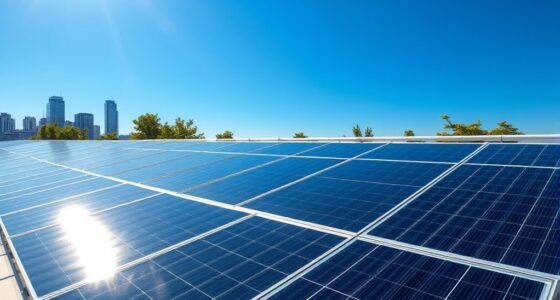
When choosing the best orientation for your solar panels, understanding the differences between east-west arrays and south-facing setups is essential. Your decision impacts solar panel efficiency and overall energy production, so it’s worth examining how each configuration performs under typical conditions. A south-facing array generally captures the most sunlight throughout the day, especially in the Northern Hemisphere, maximizing energy output during peak hours. This setup tends to be the most efficient in terms of solar panel efficiency because it receives consistent, direct sunlight from morning to late afternoon, leading to higher energy yields per panel. However, it’s important to also consider shading considerations, as trees, buildings, or other obstructions can cast shadows at certain times, potentially reducing efficiency. Proper placement and trimming around panels help mitigate shading issues, ensuring you get the maximum benefit from a south-facing orientation.
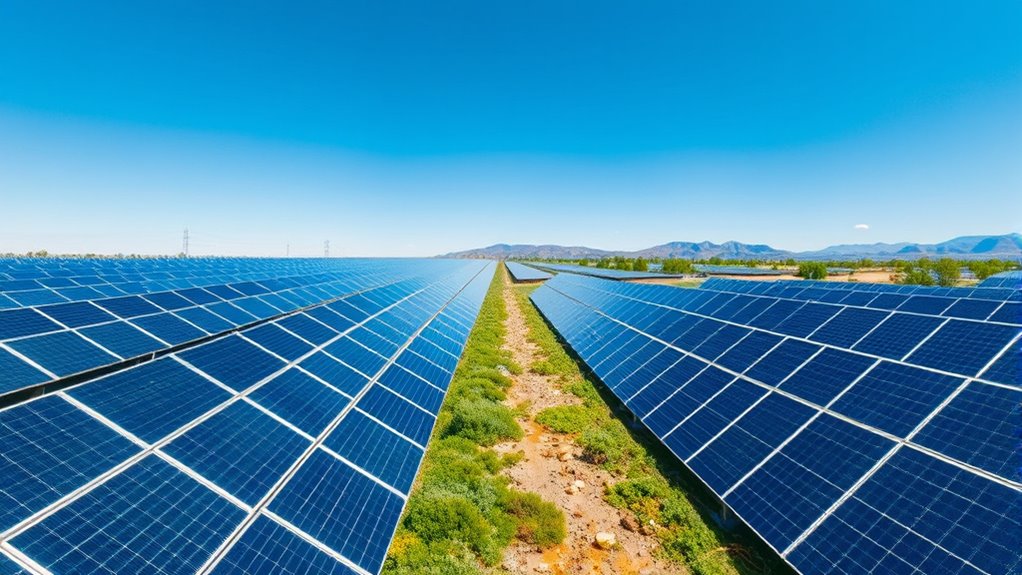
On the other hand, east-west arrays offer a different set of advantages. Instead of focusing on maximizing peak energy production all at once, these arrays are designed to generate more evenly distributed power throughout the day. This means you’ll have a steadier flow of energy from morning to evening, which can be beneficial if your household demands consistent power or if you’re trying to offset energy costs during peak hours. While the solar panel efficiency in east-west setups might be slightly lower during midday compared to south-facing arrays, they can outperform in overall daily energy production when considering the total hours of sunlight. Shading considerations are also vital here; because east-west panels tend to be more spread out, shading on part of the array doesn’t necessarily impact the entire system as severely as it might with a concentrated south-facing setup.
Ultimately, your choice depends on your specific energy needs and site conditions. If you want maximum efficiency for the highest possible energy yield during peak sunlight hours, a south-facing array is usually the best choice. But if your goal is a more balanced, steady output that reduces reliance on batteries or grid power during different times of the day, east-west arrays can be a smart alternative. Both configurations have their merits, and understanding their differences in solar panel efficiency and shading considerations helps you make an informed decision. Consider your property’s orientation, shading obstacles, and energy consumption patterns to determine which setup aligns best with your goals, ensuring a more effective and reliable solar power system.
Top picks for "east west array"
Open Amazon search results for this keyword.
As an affiliate, we earn on qualifying purchases.
Conclusion
So, don’t dismiss east-west arrays just yet. They might not chase the high noon sun, but they deliver a relentless, steady stream of energy all day long—like having your own solar powerhouse that never takes a break. This consistent output can boost your ROI more than you’d expect, even surpassing south-facing setups in some cases. Embrace the unexpected, and watch your solar investment become the superhero of energy savings!