
It’s no coincidence that many homeowners worry about solar panel fires, especially when headlines sometimes highlight rare incidents. While electrical fires can happen, they’re uncommon when systems are installed correctly and maintained properly. Understanding the facts behind these risks can help you make informed decisions and avoid unnecessary fear. Want to learn how safe solar energy truly is and what steps you can take to protect your home?

Get compact home essentials delivered free with Prime
- Fast, free delivery on millions of items
- Prime Video, Amazon Music and more included
- Member-only deals all year
Key Takeaways
- Solar panel fires are rare and usually caused by faulty wiring, poor maintenance, or manufacturing defects.
- Regular inspections and professional installation significantly reduce fire risk.
- Fire safety features like disconnect switches and proper ventilation enhance system safety.
- Immediate evacuation and calling emergency services are crucial if signs of fire or smoke appear.
- Proper awareness and maintenance can prevent most fire hazards, ensuring safe solar energy use.
Have you ever wondered what steps you can take to prevent fires caused by solar panels? While solar energy offers many benefits, it’s natural to be concerned about potential fire hazards. The good news is, with proper fire prevention measures and preparedness, you can greatly reduce the risk and respond effectively if an emergency arises. Knowing how to handle solar panel fires isn’t just about safety; it’s about peace of mind for your home and loved ones.
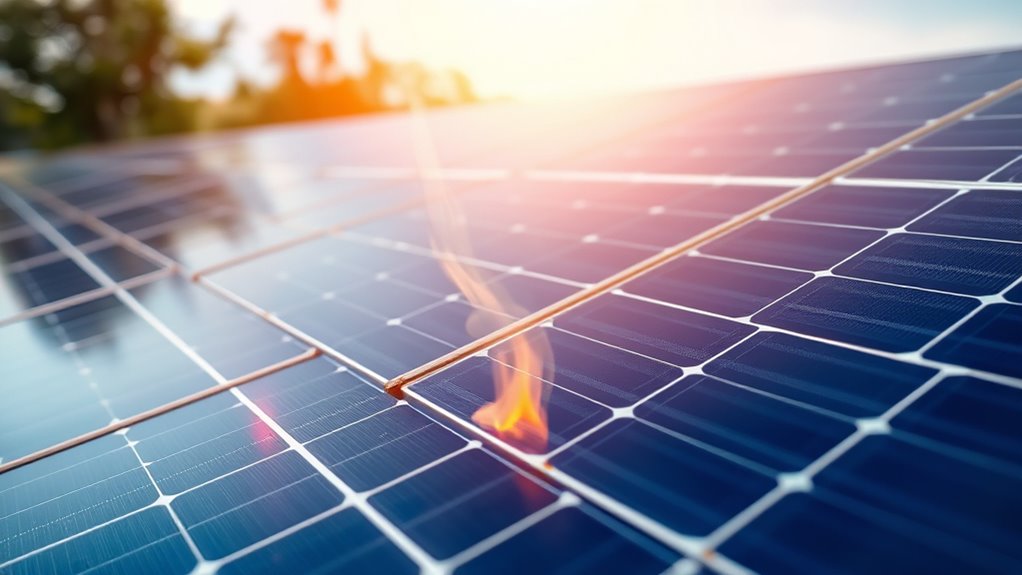
First, understanding fire prevention starts with regular maintenance and inspections. When you install solar panels, choose reputable professionals who follow safety standards. Regularly check for damaged wiring, loose connections, or corrosion, as these issues can increase fire risk. Keep an eye on the panels for signs of overheating, such as scorch marks or melting components. Clear debris, leaves, and snow from the panels, since accumulated material can trap heat and cause problems. Ensuring proper ventilation around your system also helps prevent overheating. Additionally, many modern airless paint sprayers incorporate safety features that can help prevent electrical fires by disconnecting power during malfunctions. By proactively maintaining your solar setup, you keep potential fire hazards in check and ensure the system operates safely.
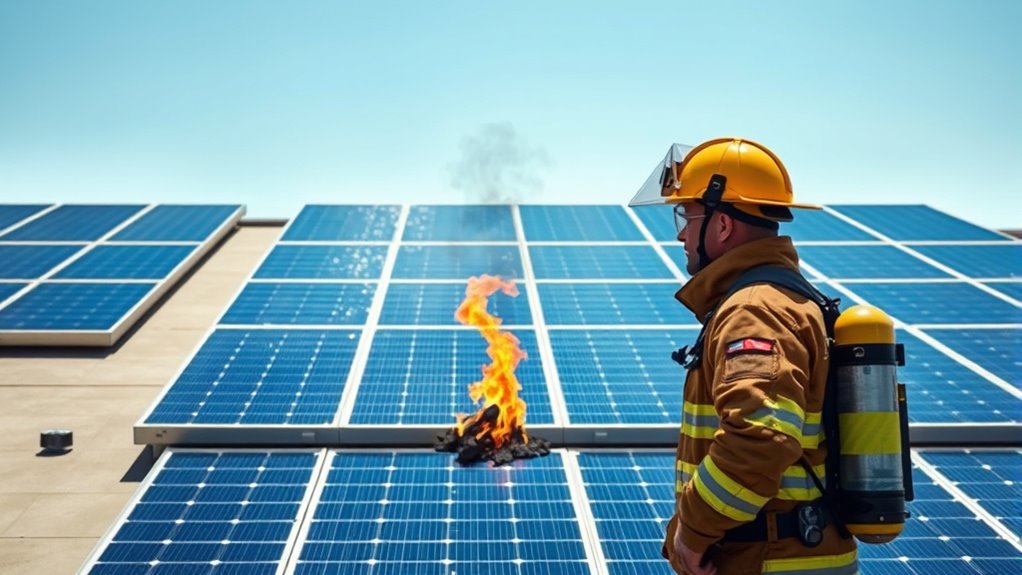
Knowing how to respond in an emergency is equally important. If you spot smoke, a burning smell, or visible flames around your solar panels, act quickly. Your first priority should be your safety and that of everyone in the house. Evacuate the premises if necessary and call emergency services immediately. Do not attempt to extinguish a solar panel fire yourself unless you’re trained and equipped, as electrical fires require specific extinguishing agents like CO2 or dry chemical extinguishers. Inform first responders about the presence of solar panels so they can strategize their response effectively. Having a fire escape plan that includes your solar system helps ensure everyone knows what to do in case of an emergency. Keep a fire extinguisher nearby, regularly check its status, and ensure it’s rated for electrical fires.
Furthermore, consult with your solar installer or manufacturer about fire safety features and protocols. Some systems have built-in safety mechanisms, like disconnect switches or fire prevention technology, that can be activated during emergencies. Educate yourself and your family on these safety features and ensure everyone knows how to respond. Staying informed about potential risks and safety procedures means you’re better prepared to minimize damage and protect lives. While the fear of solar panel fires shouldn’t overshadow their benefits, taking these fire prevention and emergency response steps ensures you’re ready to handle any situation confidently. Proper planning and vigilance make a significant difference in keeping your home safe and secure.
Products Worth Considering

Philips Hue Starter Kit with Bridge Pro and 4 A19 E26 Smart Bulbs

Philips Hue Smart Light Starter Kit with Bridge and 4 White and Color A19 Bulbs

Hisense 43-Inch S5 DécoTV Series 4K UHD Smart Fire TV with Hi-QLED Color, Dolby Vision and Atmos (43S5QF, 2026 Model)
As an affiliate, we earn on qualifying purchases.
Conclusion
Remember, an ounce of prevention is worth a pound of cure. By staying informed, ensuring proper maintenance, and working with qualified professionals, you can markedly reduce the risk of solar panel fires. Don’t let fear overshadow facts—solar energy is a safe, reliable power source when you take the right precautions. Stay vigilant, follow safety guidelines, and enjoy the peace of mind that comes with knowing you’re harnessing clean energy responsibly.