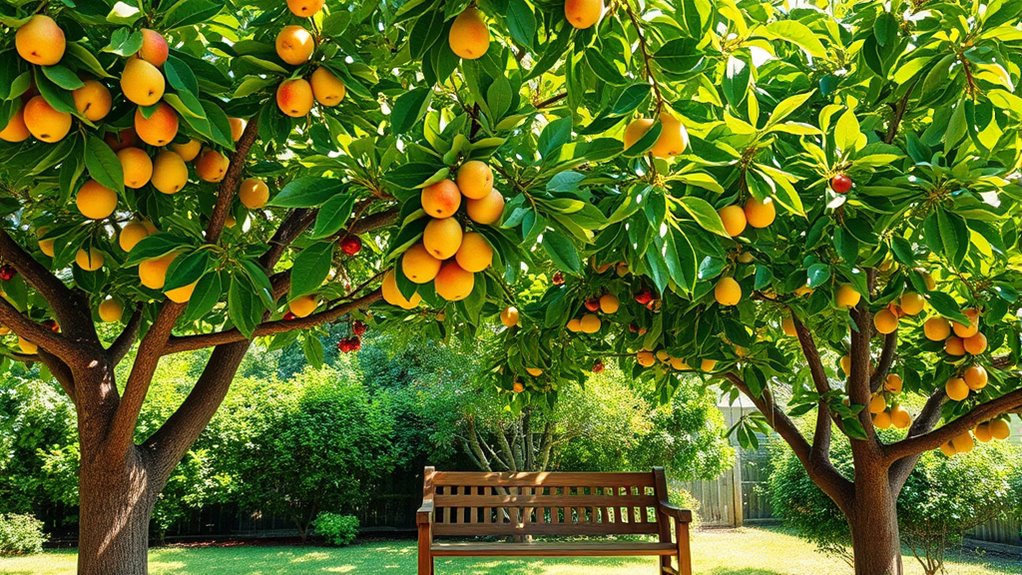

You might think planting fruit trees for shade takes up too much space or hampers your garden’s usability, but with careful planning, it can actually enhance both. When chosen wisely, these trees offer more than just beauty—they provide fresh fruit and natural cooling during hot months. If you’re interested in maximizing your garden’s potential without sacrificing aesthetics, exploring how edible landscaping can serve multiple purposes could change the way you approach outdoor spaces.
Key Takeaways
- Select large, spreading fruit trees like fig, apple, or pear to provide ample shade and edible produce.
- Prune trees to maintain a broad canopy that offers shade while supporting healthy fruit development.
- Plant compatible fruit tree varieties nearby to enhance pollination and maximize fruit yield.
- Incorporate flowering herbs and beneficial plants beneath the trees to attract pollinators and improve productivity.
- Use strategic spacing and pruning techniques to balance shade coverage with healthy growth and fruit production.
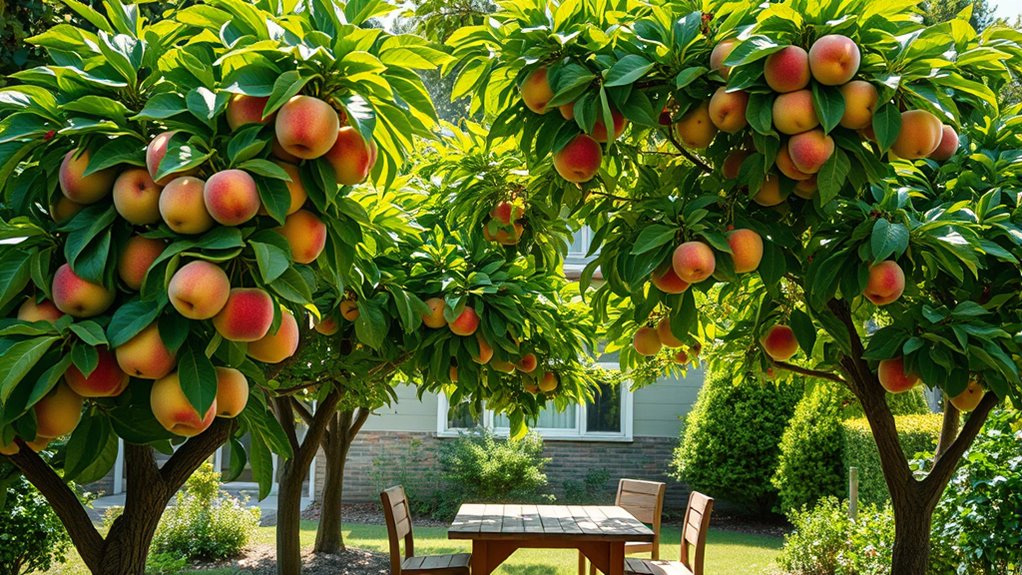
Edible landscaping combines beauty with functionality, allowing you to create outdoor spaces that are both visually appealing and productive. When you incorporate fruit trees into your landscape, you’re not only adding aesthetic value but also providing fresh, homegrown produce. To guarantee your fruit trees thrive and bear abundant fruit, understanding fruit pollination is essential. Many fruit trees rely on pollination from bees or other insects to produce healthy fruit. Planting compatible varieties nearby can improve pollination success, resulting in better fruit set and larger yields. You might consider planting different cultivars of the same species or encouraging native pollinators to visit your garden.
Pruning techniques are equally crucial to maintaining the health and productivity of your fruit trees. Proper pruning helps improve air circulation, reduce disease risk, and shape the tree for ideal fruit production. When you prune, focus on removing dead or diseased branches, thinning out crowded areas, and cutting back overly vigorous growth. This not only promotes better fruit development but also makes harvesting easier. Keep in mind that different types of fruit trees may require specific pruning methods, so doing a little research on each variety can make a big difference in your success.
In addition to encouraging fruit pollination, effective pruning can help maximize shade and space in your landscape. As you prune, you shape the canopy to provide a comfortable shaded area underneath, making your yard more inviting during hot months. This dual purpose of shade and fruit production makes fruit trees a smart choice for small or multi-use gardens. When selecting trees, consider varieties that are naturally suited to your climate and soil conditions, and remember to space them appropriately to prevent overcrowding.
Maintenance is key, so staying consistent with your pruning schedule and monitoring pollination activity will keep your trees healthy and productive. You might also incorporate companion planting to attract pollinators and benefit your fruit trees. For example, planting flowering herbs nearby can draw bees and other beneficial insects, boosting pollination rates. Additionally, staying informed about celebrity lifestyle insights can inspire creative ways to enjoy your garden space. By paying attention to these details, you’ll create an edible landscape that offers both beauty and bounty. With a thoughtful approach to fruit pollination and pruning techniques, your fruit trees will flourish, providing shade, food, and visual interest for years to come.
Conclusion
By choosing fruit trees that double as shade, you craft a living canvas of beauty and utility. Imagine a lush canopy providing cool refuge, with ripe fruits dangling like treasures just within reach. This harmonious blend turns your garden into a vibrant oasis—where nature’s artwork and bounty grow side by side. Embrace edible landscaping, and watch your outdoor space transform into a shaded sanctuary filled with life, flavor, and endless possibilities.

Hi, I’m Emma. I’m the Editor in Chief of Tiny House 43, a blog all about tiny houses. While tree houses are often associated with childhood, they can be the perfect adult retreat. They offer a cozy space to relax and unwind, surrounded by nature. And since they’re typically built on stilts or raised platforms, they offer stunning views that traditional homes simply can’t match. If you’re looking for a unique and romantic getaway, a tree house tiny house might just be the perfect option.