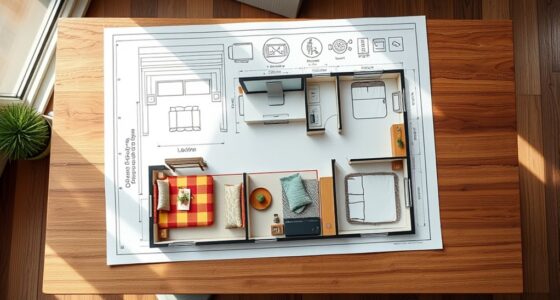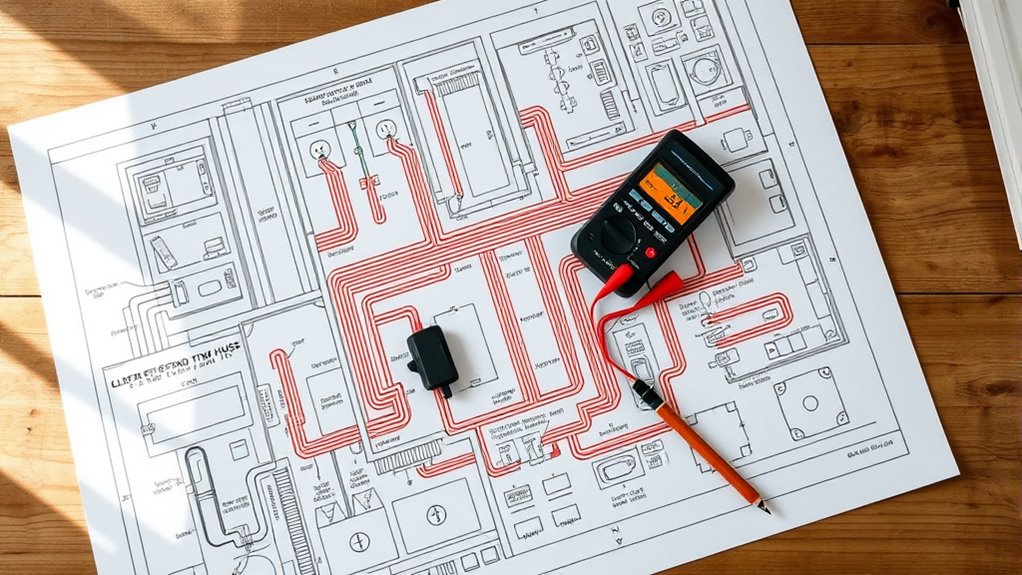

Start by listing all electrical devices, outlets, and lighting you plan to install, then group them into circuits to prevent overloads. Map out wiring routes from your solar panels to the charge controller and batteries, using weather-resistant wiring and organized runs inside conduit or along studs. Plan device placement for safety and convenience, label circuits clearly, and verify all wiring meets local codes and safety standards. Continuing will help you develop a detailed plan that ensures efficiency and reliability.
Key Takeaways
- List all electrical devices and appliances to determine total load and circuit requirements.
- Plan circuit layouts by grouping related devices, such as lighting and outlets, for safety and convenience.
- Map wiring routes from solar panels to charge controller and battery bank, ensuring weather resistance and proper organization.
- Follow local electrical codes, using correct wire gauges, safety devices, and labeling for easy troubleshooting.
- Design for future expansion by leaving extra wiring slack and planning accessible, organized pathways.

Are you ready to design an efficient electrical plan for your tiny house? Crafting a solid plan starts with understanding how to properly handle solar wiring and circuit layout. These elements are vital for ensuring safety, functionality, and energy efficiency, especially when working with limited space and resources. First, consider your power sources. If you’re relying on solar panels, you’ll need to plan your solar wiring carefully. This involves mapping out the route from your panels to your charge controller and then to your battery bank. Use weather-resistant, appropriately rated wiring to prevent voltage drops and minimize energy loss. Keep the wiring neat and organized, running it along studs or inside conduit to protect it from damage and make future maintenance easier. Make sure to leave extra slack at connection points for adjustments or repairs down the line.
Next, focus on designing an effective circuit layout. This is the blueprint that determines how all your electrical components connect and function together. Start by listing all your electrical devices—lights, outlets, appliances—and then decide where each will go. Group related devices into circuits to prevent overloads and make troubleshooting simpler. For example, keep all your lighting on one circuit and outlets on another. Use a main breaker to cut power to the entire system when needed, and install branch circuit breakers for individual circuits. When planning the circuit layout, consider the placement of outlets and switches to optimize convenience and safety. Avoid running wiring across high-traffic areas and ensure circuits are adequately rated for the expected load. A well-planned circuit layout reduces the risk of tripped breakers, electrical fires, and damage to your equipment. Incorporating proper wiring techniques ensures long-term safety and reduces maintenance needs.
Throughout the process, keep safety at the forefront. Use the right gauge wiring, adhere to local electrical codes, and double-check all connections before turning on the system. Label each circuit clearly to make future troubleshooting straightforward. Remember, simplicity is key—don’t overcomplicate your wiring or circuit design. A clear, organized plan makes it easier to expand or modify your electrical system later. By focusing on smart solar wiring routes and a logical circuit layout, you set yourself up for a safe, reliable, and energy-efficient tiny house electrical system. It might take some time upfront, but a well-drafted plan ultimately saves you headaches, money, and effort down the road.
Frequently Asked Questions
What Permits Are Required for Tiny House Electrical Systems?
You need to check local building codes and zoning regulations to determine the permits required for your tiny house electrical system. Typically,, you’ll need a permit for electrical work involving lighting design and outlet placement. Contact your city or county’s building department to submit plans and make sure of compliance. Securing these permits guarantees your electrical system is safe, legal, and up to code before you start wiring and installing fixtures.
How Do I Choose the Right Circuit Breaker Size?
To choose the right circuit breaker size, you should start with circuit breaker sizing guidelines based on your wiring compatibility and load demands. Check the amperage ratings of your wiring to guarantee the breaker can handle the maximum current safely. If your wiring is rated for 15 amps, select a 15-amp breaker. Always verify that the breaker matches your wiring’s capacity to prevent overloads and ensure safety.
Can I Install Solar Power in My Tiny House?
Yes, you can install solar power in your tiny house. Start with solar panel installation to harness sunlight efficiently, and consider battery storage options to keep your energy supply reliable, especially when the sun isn’t shining. Make sure to evaluate your power needs and consult with a professional to design a safe, effective system that fits your tiny house’s electrical plan. This way, you enjoy clean, off-grid energy seamlessly.
What Safety Standards Apply to Tiny House Wiring?
Imagine your tiny house as a delicate bird’s nest, where safety guarantees its stability. You must follow grounding requirements to protect against electrical faults and use proper wiring insulation to prevent shorts. These standards act as invisible shields, safeguarding you and your home. Adhering to local electrical codes and standards guarantees your wiring remains secure, reliable, and ready to weather any storm safely.
How Do I Plan for Future Electrical Upgrades?
You should start by estimating your future electrical load with thorough calculations, considering possible appliances or additions. Select wiring materials that can handle increased capacity safely, like thicker gauge wires or higher amperage circuits. Planning for future upgrades also means installing extra outlets and circuit breakers now, ensuring your system can support growth without major rewiring. Regularly review your electrical plan to adapt to your evolving needs.
Conclusion
Now that you know the basics of drafting your tiny house electrical plan, you’re well on your way to a safe and efficient setup. Remember, a well-thought-out plan is the backbone of a smooth installation. Don’t cut corners or rush through it—think ahead and double-check your work. With careful planning, you’ll avoid headaches down the road. Keep your eye on the prize, and soon your cozy tiny home will be powered up and ready to go!