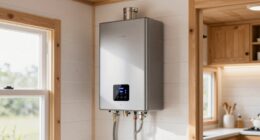
Energy efficiency has a big impact on tiny living by helping you lower energy costs and reduce environmental harm. With a smaller space, you can more easily insulate, install solar panels, and use energy-saving appliances. This means less dependence on grid power and healthier surroundings. Overall, it makes your home more sustainable and affordable. If you want to see how these strategies work together, keep exploring ways to maximize your tiny home’s efficiency.
Key Takeaways
- Smaller spaces are easier to insulate and manage, reducing overall energy consumption.
- Solar power integration in tiny homes decreases reliance on grid energy and lowers utility costs.
- Effective insulation and sealing prevent energy leaks, maintaining comfortable indoor temperatures efficiently.
- Strategic design features, like window placement and shading, minimize heat transfer and enhance energy conservation.
- Overall, energy-efficient systems in tiny homes promote sustainability, lower bills, and increase energy independence.
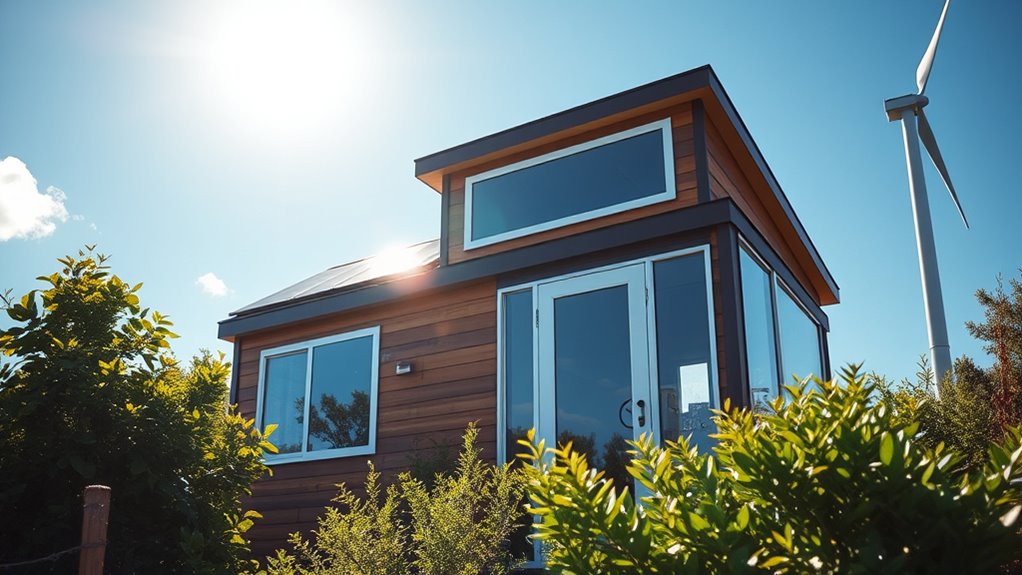
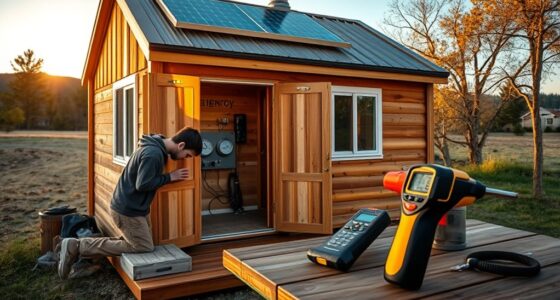
Living tiny often means embracing a simpler lifestyle, but it also offers a unique opportunity to boost your home’s energy efficiency. When you downsize, every square foot counts, making it easier to implement strategies that reduce your energy consumption and lower utility bills. One of the most effective ways to do this is by harnessing solar power. Installing solar panels on your tiny home allows you to generate your own electricity, decreasing your dependence on the grid. With a smaller roof area, you can focus on high-efficiency solar systems that provide enough power for your daily needs. Over time, this investment pays off by cutting energy costs and reducing your carbon footprint. Additionally, many tiny homeowners take advantage of solar battery systems to store excess energy for cloudy days or nighttime use, further enhancing their energy independence.
Beyond solar power, attention to insulation techniques plays a vital role in maximizing energy efficiency in tiny living spaces. Proper insulation keeps your home warm in winter and cool in summer, reducing the need for constant heating or cooling. Since tiny homes often have fewer walls and windows, you can use specific insulation materials like spray foam, rigid foam boards, or reflective barriers that maximize insulation value while minimizing bulk. These materials help prevent heat transfer, ensuring your tiny home stays comfortable year-round without overworking your HVAC system. Correct installation is key—sealing gaps, cracks, and seams ensures no energy leaks occur. You might also consider insulating floors and ceilings, especially in areas that may be exposed to drafts or temperature fluctuations. Combining effective insulation with strategic window placement and shading can further improve energy retention. Incorporating vetted insulation techniques, such as spray foam or rigid foam boards, can significantly boost your energy efficiency.
Living tiny gives you the advantage of easier maintenance and upgrades, so you can quickly adapt your home to new energy-efficient technologies. Installing energy-efficient appliances and LED lighting complements your efforts, but the backbone remains in how well you insulate and generate power. By focusing on these key areas, you’re not only reducing your environmental impact but also creating a more comfortable, cost-effective living space. The compact size makes it easier to monitor and manage your energy use, encouraging habits that promote sustainability. Whether you’re just starting out or looking to optimize your existing tiny home, integrating solar power and advanced insulation techniques is essential. These investments will help you enjoy the benefits of tiny living while keeping energy costs low and your home eco-friendly.

ECO-WORTHY 1.6KWH Complete Solar Panel Kit 400W 12V for RV Off Grid: 400W Solar Panels + 40A MPPT Charge Controller +12V 100Ah Lithium Battery + Solar Power Inverter + Bluetooth Module
[Ideal Output] The ideal daily power output is 1.6KWH (under 4 hours sunlight), perfectly suitable for RV, shed,…
As an affiliate, we earn on qualifying purchases.
As an affiliate, we earn on qualifying purchases.
Frequently Asked Questions
How Does Energy Efficiency Influence Tiny Home Resale Value?
Energy efficiency boosts your tiny home’s resale value by making it more attractive to buyers. When your home is energy-efficient, it stands out in the market, increasing its appeal and perceived value. Buyers prioritize lower utility costs and sustainability, so your tiny home with good insulation, energy-saving appliances, and solar options will sell faster and at a better price. Overall, energy efficiency profoundly enhances your tiny home’s market appeal and resale potential.
What Are the Initial Costs for Upgrading Tiny Homes to Be Energy-Efficient?
Surprisingly, upgrading your tiny home to be energy-efficient doesn’t break the bank. You’ll likely spend around $3,000 to $8,000 initially, installing solar panels and insulation upgrades. While it may seem like a hefty investment, these upgrades can markedly reduce your energy bills long-term. Plus, the benefits of sustainable living and increased comfort make the cost well worth it, turning your tiny home into an eco-friendly haven.
Do Energy-Efficient Tiny Homes Qualify for Specific Government Incentives?
Yes, energy-efficient tiny homes often qualify for government incentives and tax credits. You can take advantage of these benefits to offset your initial upgrade costs, making eco-friendly features more affordable. Check local and federal programs, as they may offer rebates or tax credits for installing solar panels, energy-efficient appliances, or insulation. These incentives encourage sustainable living and help you save money while reducing your environmental impact.
How Does Energy Efficiency Impact Indoor Air Quality in Tiny Living Spaces?
You might not realize it, but energy efficiency can dramatically improve your tiny home’s indoor air quality. By installing proper ventilation and using energy-efficient systems, you guarantee stale air is replaced with fresh, clean air, preventing mold, odors, and pollutants from building up. This balance keeps your living space healthier, more comfortable, and safe, turning tiny living into a truly invigorating experience. Don’t overlook how essential good ventilation is for your well-being.
Can Energy-Efficient Features Reduce Maintenance Needs in Tiny Homes?
Yes, energy-efficient features can reduce your maintenance needs in tiny homes. By choosing appliances with better durability, you decrease frequent repairs or replacements. Additionally, insulation benefits help keep your home’s temperature stable, reducing strain on HVAC systems and preventing issues caused by moisture or temperature fluctuations. This means fewer breakdowns, lower repair costs, and less upkeep overall, making your tiny living experience more hassle-free and cost-effective.

Sweetcrispy 3.2 Cu.Ft Mini Fridge with Freezer Small Refrigerator Single Door Adjustable Thermostat Energy-efficient Low Noise, Compact Fridge for Bedroom, Office, Dorm (Black)
Compact and Convenient: With a compact design(17.5’’*17.7’’*31.5’’(W*D*H)), the single-door mini fridge has more capacity than a double-door small…
As an affiliate, we earn on qualifying purchases.
As an affiliate, we earn on qualifying purchases.
Conclusion
So, as you embrace tiny living and boost your energy efficiency, you might find yourself ironically spending less—yet gaining so much more. It’s almost humorous how reducing your space and energy use doesn’t mean sacrificing comfort but actually amplifies it. In the end, the tiniest home can hold the biggest impact—on your wallet, the environment, and your way of life. Turns out, small can be mighty, especially when it’s energy-efficient.
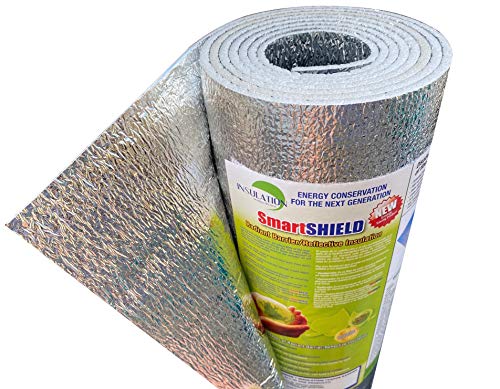
INSULATION MARKETPLACE SmartSHIELD -3mm 16inx10Ft ReflectiveINSULATION roll, Foam Core Radiant Barrier, ThermalINSULATION Shield – Engineered Foil
EXTREMELY EFFECTIVE – reflect 95% of radiant energy, perfect RADIANT BARRIER.
As an affiliate, we earn on qualifying purchases.
As an affiliate, we earn on qualifying purchases.

Off Grid Solar Power Simplified: For Rvs, Vans, Cabins, Boats and Tiny Homes
As an affiliate, we earn on qualifying purchases.
As an affiliate, we earn on qualifying purchases.