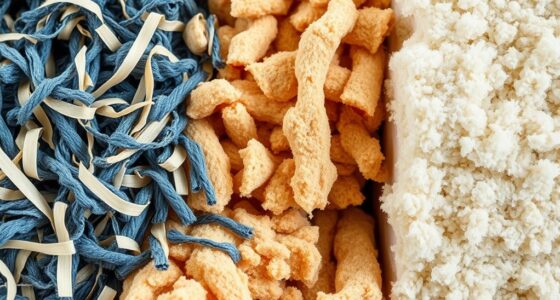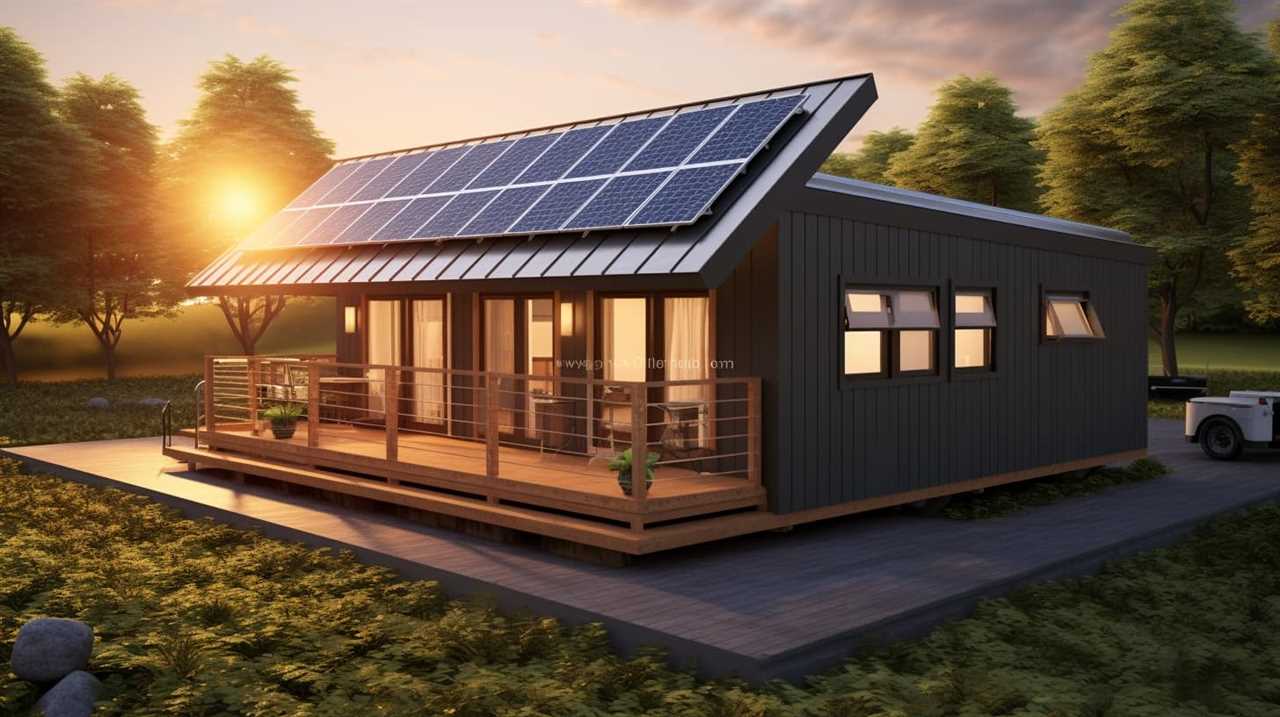

To build a tiny home, focus on essential materials like sustainable insulation such as spray foam or sheep’s wool to guarantee efficient temperature control. Choose durable, eco-friendly flooring like bamboo, reclaimed wood, or cork. For walls, use lightweight yet sturdy options like SIP panels or recycled metal siding; opt for double-glazed windows and metal or green roofs for energy savings. Paying attention to these materials helps create a cost-effective, eco-responsible home—discover more tips for a sustainable build below.
Key Takeaways
- Choose sustainable insulation options like spray foam, cellulose, or sheep’s wool for thermal efficiency and eco-friendliness.
- Select durable, attractive flooring such as bamboo, reclaimed wood, or cork for longevity and sustainability.
- Use lightweight, eco-friendly wall, roof, and window materials like SIP panels, recycled metal siding, and double-glazed windows.
- Prioritize materials that balance cost, performance, and environmental impact to ensure durability and eco-conscious living.
- Install all materials properly to maximize lifespan, energy efficiency, and overall sustainability of the tiny home.
Building a tiny home requires careful planning and the right materials to guarantee durability, efficiency, and comfort. One of the most critical aspects is insulation, as it helps regulate temperature and reduces energy costs. When choosing insulation, look for cost-effective options that don’t sacrifice performance. Materials like spray foam or rigid foam boards can provide excellent thermal resistance without breaking the bank. These options are easy to install in tight spaces and offer superior insulation properties, helping you keep your tiny home warm in winter and cool in summer. Additionally, consider sustainable insulation alternatives such as cellulose or sheep’s wool, which are environmentally friendly and provide natural benefits like breathability and moisture control. Balancing cost and sustainability ensures your tiny home remains eco-friendly and budget-conscious. Incorporating innovative lifestyle solutions can further enhance comfort and energy efficiency in your tiny space.
Next, selecting sustainable flooring options is essential for creating an environmentally responsible tiny home. You want flooring that’s durable, attractive, and easy to maintain, but also sourced ethically. Bamboo flooring stands out as a popular choice because it’s rapidly renewable, hard-wearing, and adds a modern aesthetic. Reclaimed wood is another excellent sustainable option; it’s both eco-friendly and full of character, giving your tiny home a warm, rustic feel. Cork flooring is also worth considering, as it’s renewable, soft underfoot, and provides natural insulation. These sustainable flooring options not only reduce your ecological footprint but also add to the overall comfort and style of your tiny home. When installing, make sure the materials are properly sealed to prevent moisture damage and prolong their lifespan.
In addition to insulation and flooring, you’ll want to prioritize materials for the walls, roof, and windows. For walls, lightweight yet sturdy materials like SIP panels or recycled metal siding work well. Roofing options like metal or green roofs can extend your tiny home’s lifespan and improve energy efficiency. For windows, choose double-glazed units that maximize natural light while minimizing heat transfer. All these materials should be selected with an eye toward sustainability, durability, and cost-effectiveness. Combining these elements creates a tiny home that’s not only comfortable and functional but also environmentally conscious and financially sensible. Carefully choosing your materials ensures your tiny home will stand the test of time while remaining affordable and eco-friendly.
Top picks for "essential material tiny"
Open Amazon search results for this keyword.
As an affiliate, we earn on qualifying purchases.
Frequently Asked Questions
What Are the Best Insulation Options for Tiny Homes?
You should choose insulation types like spray foam, rigid foam, or fiberglass batts for your tiny home. Eco-friendly options, such as sheep’s wool, cellulose, or cork, are also great because they’re sustainable and non-toxic. These materials help keep your tiny home warm in winter and cool in summer, while reducing your environmental impact. Make sure to contemplate your climate and budget when selecting the best insulation options for your project.
How Do I Choose Eco-Friendly Building Materials?
Like a wise old sage once said, “Choose green.” To pick eco-friendly building materials, focus on sustainable sourcing and material durability. Look for certifications like FSC or LEED to guarantee responsible harvesting. Opt for reclaimed wood, bamboo, or recycled steel, which reduce environmental impact and last long. By making thoughtful choices, you craft a tiny home that’s kind to the planet and built to stand the test of time.
What Safety Materials Are Essential During Construction?
You need personal protective gear like gloves, goggles, and masks to stay safe during construction. Fire safety equipment, such as extinguishers and smoke alarms, is also crucial to prevent and respond to fires quickly. Always wear your protective gear when handling tools or hazardous materials, and keep fire safety items accessible. These safety materials help protect you and ensure a safer building process for your tiny home.
Which Financing Options Are Available for Tiny Home Materials?
You can explore tiny home loans and various material financing options to fund your project. Tiny home loans are specifically designed for small-scale builds, often with flexible terms. Material financing options include personal loans, credit lines, or store credit accounts, which help cover essential materials. By comparing these options, you can find affordable ways to finance your tiny home materials, ensuring you stay within budget and complete your build smoothly.
How Can I Reduce Costs on Necessary Building Supplies?
Like finding a hidden gem, reducing your costs on building supplies is rewarding. To save, use cost-saving techniques like comparing prices and choosing versatile materials. Take advantage of bulk purchasing options; buying in larger quantities often means discounts. Reuse or repurpose materials whenever possible, and shop at salvage yards or clearance sales. These strategies help you stretch your budget and build your tiny home efficiently without sacrificing quality.
Conclusion
As you gather these essential materials, you’re laying the foundation for a dream that’s as solid as a rock. Think of your tiny home as a canvas, and each material as a brushstroke shaping your perfect space. With careful choices and a bit of ingenuity, you’ll craft a cozy, efficient home that reflects your unique style. Remember, the right materials are your secret ingredients for turning your tiny house vision into a beautiful reality.