To protect your tiny home, choose durable exterior paint designed for weather resistance, such as high-quality, UV-protected, and water-resistant options. Opt for light or neutral colors to reflect heat and extend paint life. Proper surface prep is key: clean thoroughly, sand rough patches, and apply a weatherproof primer. Seal joints with protective coatings to prevent moisture damage. Continuing with these tips will help you maintain your tiny home’s appearance and longevity for years to come.
Key Takeaways
- Choose high-quality, weather-resistant exterior paints with UV protection to withstand harsh outdoor conditions.
- Prepare surfaces thoroughly with cleaning, sanding, and applying a weatherproof primer for better adhesion.
- Select light or neutral colors to reflect sunlight and reduce heat absorption, enhancing energy efficiency.
- Seal and protect painted surfaces with weatherproof coatings or sealants for added moisture and UV resistance.
- Regularly clean and touch up chipped or faded paint to maintain durability, appearance, and long-term protection.
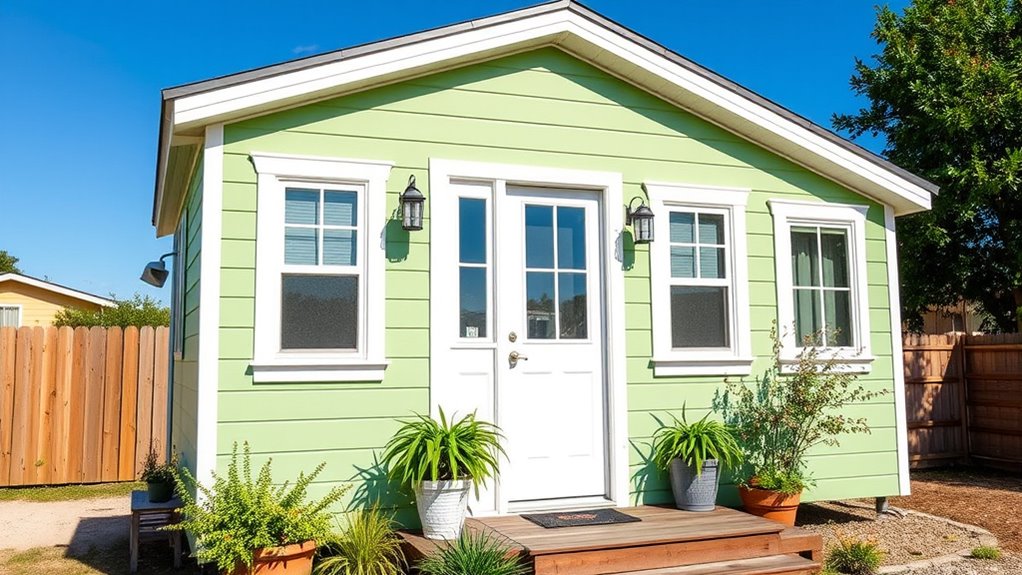
Thinking about freshening up your tiny home’s exterior? The right paint can transform its look and protect it from harsh weather. When choosing paint, you’ll want to focus on two key aspects: color selection and paint durability. Your color choices set the tone and style of your tiny home, making it stand out or blend seamlessly with your surroundings. Bright hues can make your home appear cheerful and inviting, while neutral tones offer a more understated, timeless appeal. Keep in mind that color selection isn’t just about aesthetics; it can influence how much heat your home absorbs. Lighter colors reflect sunlight, helping to keep your tiny home cooler, especially in warmer climates. Darker shades, on the other hand, absorb heat, which might be beneficial in colder areas. Whichever palette you pick, guarantee the colors you choose are compatible with exterior paints designed for outdoor use and weather resistance.
Paint durability is just as essential as your color choice. Your tiny home is exposed to extreme weather conditions—rain, snow, wind, and intense sunlight—all of which can wear down inferior paints quickly. To guarantee your paint lasts, opt for high-quality exterior paints formulated specifically for durability. These paints contain additives that resist cracking, peeling, and fading, even after prolonged exposure to the elements. When selecting paint, look for options with UV protection and water resistance. This not only preserves the vibrant look of your chosen colors but also extends the lifespan of your paint job. Applying a good primer before painting can also enhance durability, helping the paint adhere better and providing an extra layer of protection.
A proper prep job is essential for maximizing both color longevity and paint durability. Clean the surface thoroughly, remove any peeling paint, and sand rough patches. Applying a weatherproof primer designed for your specific exterior material will improve adhesion and provide a smoother finish. Consider opting for a weatherproof coating or sealant to add an additional protective layer over your paint. This extra step guards against moisture intrusion and UV damage, which are among the leading causes of paint failure in outdoor environments. Regular maintenance, like cleaning your tiny home’s exterior and touching up chipped spots, will keep your paint looking fresh and resilient for years to come. With the right combination of color selection and durable paint, your tiny home will not only look great but also stand up to the elements, maintaining its charm and value.
Frequently Asked Questions
How Often Should I Reapply Weatherproofing on My Tiny Home?
You should reapply weatherproofing on your tiny home every 1 to 3 years, depending on your maintenance schedule and weatherproofing techniques. Regular inspections help identify any areas needing touch-ups, especially after harsh weather. If you notice peeling, cracking, or leaks, reapply sooner. Using high-quality sealants and protective finishes guarantees your tiny home remains protected longer. Staying proactive with maintenance keeps your home durable and weather-resistant year-round.
What Are the Best Colors for Small Home Exteriors?
Bright whites and soft pastels can make your tiny home feel larger, creating a fresh, airy vibe. Dark hues like navy or charcoal add sophistication and depth, while vibrant reds or blues energize the space. Consider color psychology and seasonal changes; lighter shades work well in summer to reflect heat, and warmer tones suit winter’s coziness. Choose colors that reflect your style and blend beautifully with your surroundings.
Can I Use Eco-Friendly Paint on My Tiny Home?
Yes, you can definitely use eco-friendly alternatives on your tiny home. These paints are formulated with natural ingredients, making them safer for you and the environment. Just make certain the eco-friendly paint you choose offers good paint durability to withstand weather conditions. Look for options with strong protective qualities, so your tiny home stays well-maintained while reducing your ecological footprint. Eco-friendly paints are a smart choice for sustainable, long-lasting exterior finishes.
How Do I Prevent Paint From Fading Over Time?
Think of your tiny home’s paint as a shield that needs constant reinforcement. To prevent fading, choose high-quality paint with excellent paint durability and UV resistance. Always apply a good primer and finish with a weatherproof topcoat. Regularly inspect, clean, and touch up your paint, especially after harsh weather. Providing proper sun protection guarantees your paint stays vibrant longer, keeping your tiny home looking fresh and lively for years to come.
What Tools Are Best for Painting Tiny Home Exteriors?
You should choose high-quality brushes suited for exterior painting, like synthetic or natural bristles, based on your paint type. Use a primer tailored for your siding material to guarantee proper adhesion and durability. A combination of angled brushes for detailed work and wider rollers for larger surfaces makes the job easier. Proper tools help you achieve a smooth finish, protect your tiny home, and make the painting process more efficient.
Conclusion
Choosing the right exterior paint and weatherproofing for your tiny home can boost its durability and curb appeal. Did you know that properly sealed and painted exteriors can last up to 15 years with proper maintenance? By investing in quality materials and regular upkeep, you safeguard your tiny home from harsh weather, saving money in the long run. Remember, a well-protected exterior not only looks great but also ensures your cozy space stays safe and sound for years to come.