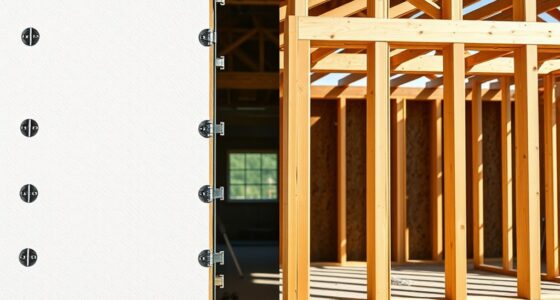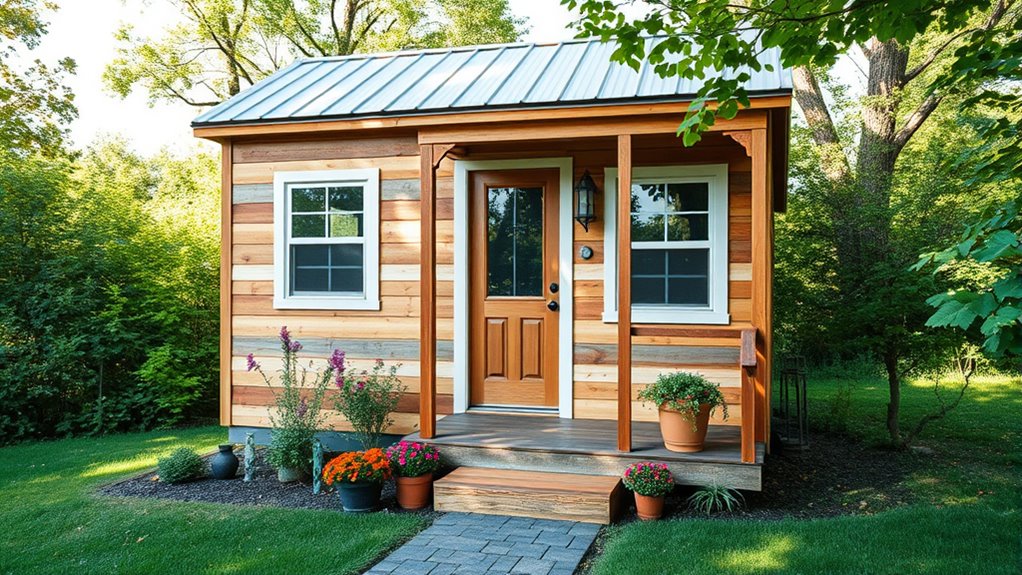

Start by selecting vintage siding materials like reclaimed wood or distressed metal to boost your tiny home’s charm. Prep the exterior by sealing gaps, improving insulation, and cleaning surfaces. Plan your solar panel integration, choosing lightweight options that suit the siding type, and guarantee proper mounting on the roof or walls. You can also paint or stain siding to match solar frames, creating a cohesive look. Keep exploring for detailed steps to perfect your tiny home’s exterior upgrade.
Key Takeaways
- Assess the current exterior condition, including siding, roof, and foundation, to identify renovation priorities.
- Choose vintage siding materials like reclaimed wood or distressed metal for aesthetic appeal and durability.
- Plan solar panel integration by evaluating roof orientation, shading, and selecting lightweight, low-profile panels.
- Prepare the surface by sealing gaps, reinforcing structure, and ensuring proper insulation for longevity and efficiency.
- Execute exterior upgrades with attention to seamless integration of vintage siding and solar components, enhancing style and sustainability.
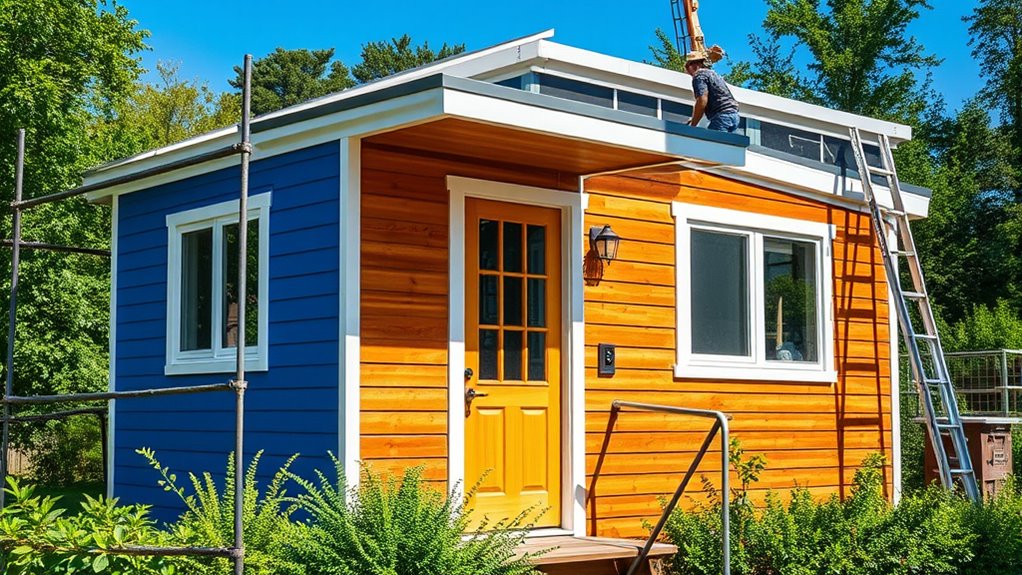
Renovating the exterior of your tiny home can dramatically boost its curb appeal, durability, and energy efficiency. One of the most impactful changes you can make is updating the siding. Vintage siding offers a charming, nostalgic aesthetic that instantly gives your tiny home character and uniqueness. If you’re aiming for a rustic or retro look, consider reclaimed wood or distressed metal siding. These materials not only look great but also age beautifully, adding to the home’s visual appeal over time. Vintage siding can also be relatively affordable, especially if you source reclaimed materials or repurpose existing ones, making it a practical choice for a budget-conscious renovation.
Updating your tiny home with vintage siding adds charm, durability, and affordability to your exterior renovation.
Once you’ve chosen your siding, think about how to enhance energy efficiency and modernize your tiny home further. Solar panel integration is a smart step. Installing solar panels on your roof or siding allows you to generate clean energy, reduce utility bills, and lessen your carbon footprint. Modern solar solutions are more efficient and easier to install than ever before, and they can be seamlessly incorporated into vintage siding with careful planning. For instance, mounting solar panels on a metal or composite siding can provide a sturdy base and a sleek appearance. If your vintage siding has an aged or textured look, framing the panels with trim or using mounting brackets designed for uneven surfaces can make the integration look intentional and stylish.
Before installing solar panels, evaluate your roof’s orientation and shading. South-facing roofs usually offer the best exposure to sunlight. You should also consider the weight capacity of your roof and whether additional reinforcement is necessary. When choosing solar panels, opt for lightweight, low-profile models that won’t detract from your home’s vintage aesthetic. For a more cohesive look, some homeowners paint or stain their vintage siding to match the color of their solar panels or framing, creating a harmonious blend of old and new. Additionally, energy-efficient upgrades can further improve your tiny home’s sustainability and reduce energy costs.
While working on siding and solar installation, ensure your tiny home’s exterior is well-sealed and protected. Repair any cracks or gaps to prevent water intrusion and increase insulation. Proper sealing will also extend the life of your vintage siding and safeguard your investment in solar technology. Overall, combining vintage siding with solar panel integration not only elevates your tiny home’s visual charm but also boosts its sustainability and energy independence. With thoughtful planning and execution, you can create a cozy, stylish, and eco-friendly tiny home that stands out in your neighborhood.
Frequently Asked Questions
What Are the Best Materials for Tiny Home Exteriors?
You should choose sustainable siding options like reclaimed wood, metal, or fiber cement, which are eco-friendly and durable. Weather-resistant finishes, such as high-quality paint or sealants, safeguard your tiny home from the elements. These materials not only enhance the look but also guarantee longevity and low maintenance. Opting for these sustainable siding and weather-resistant finishes keeps your tiny home stylish, resilient, and environmentally conscious.
How Much Do Exterior Renovations Typically Cost?
Worried about your budget? Exterior renovations for tiny homes typically cost between $3,000 and $10,000, depending on the scope and materials. To keep costs manageable, do a detailed cost estimation and plan your budget carefully. You can save by choosing cost-effective materials or DIY projects. Proper budget planning guarantees you get the look you want without overspending, making your tiny home both beautiful and affordable.
Can I Do Exterior Upgrades Myself or Hire Professionals?
You can definitely handle some exterior upgrades yourself, especially if you enjoy DIY projects and have basic skills. However, for complex tasks like roofing or siding, hiring professional services guarantees quality and safety. Consider your experience level and the project’s scope. Doing simple upgrades on your own can save money, but when in doubt, consulting professionals guarantees the best results and long-term durability.
How Do I Ensure Renovations Meet Local Building Codes?
Picture your tiny home shining with new siding and a fresh coat of paint, but first, you must check local building codes. You verify your renovations meet the rules by obtaining the necessary building permits and understanding inspection requirements. Visit your local building department’s website or contact them directly to confirm what’s needed. Following these steps guarantees your project stays compliant and avoids costly surprises during inspections.
What Are Eco-Friendly Options for Tiny Home Exteriors?
You can make your tiny home eco-friendly by integrating solar panels to harness renewable energy and reducing your carbon footprint. Consider using sustainable materials like reclaimed wood or recycled metal for the exterior to minimize environmental impact. Installing rainwater harvesting systems helps conserve water and supports off-grid living. These options not only promote sustainability but also contribute to lower utility costs and a smaller ecological footprint for your tiny home.
Conclusion
Now that you’ve explored these exterior renovation tips, your tiny home will stand out like a beacon in a sea of houses. Remember, each upgrade you make is like adding a brushstroke to a masterpiece—building something uniquely yours. With a little effort and creativity, you’ll turn your tiny house into a welcoming retreat that reflects your style. So roll up your sleeves and start transforming your space—your perfect tiny home is just a renovation away.