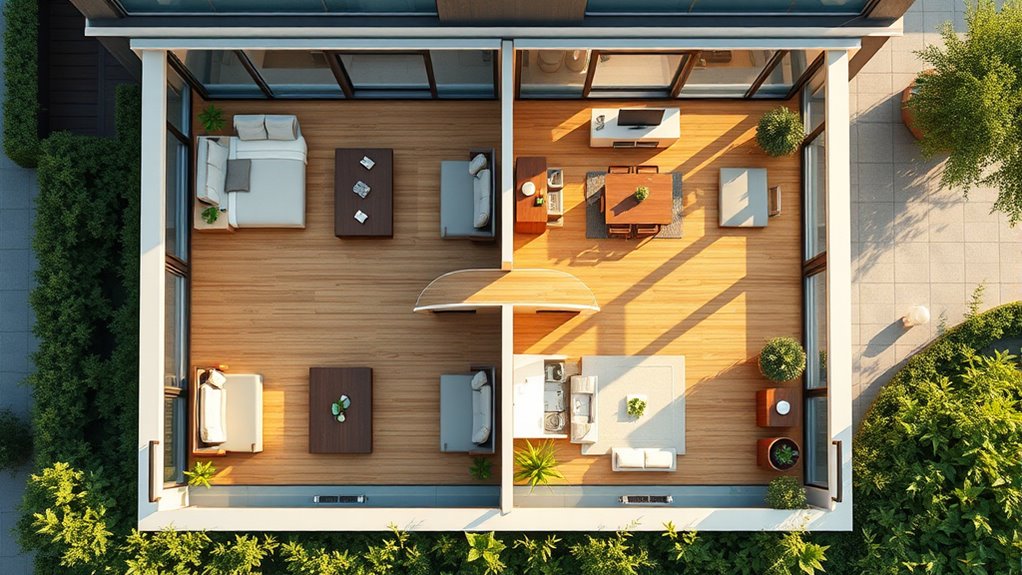

When designing the perfect floorplan for two, focus on creating flexible spaces with natural light by strategically placing windows and including layered artificial lighting. Incorporate outdoor landscaping that extends your living area with views and outdoor features like patios or gardens, enhanced by landscape lighting. Balance practicality and style by choosing functional layouts that boost comfort and aesthetics, ensuring your home feels inviting and well-connected. Keep exploring to discover how thoughtful lighting and landscaping can transform your space seamlessly.
Key Takeaways
- Prioritize shared living spaces that promote intimacy and functionality, such as a combined kitchen and living area.
- Incorporate natural light through strategic window placement to enhance mood and create a sense of openness.
- Design outdoor landscaping that extends indoor living, providing private outdoor retreats and visual harmony.
- Use layered artificial lighting to ensure consistent brightness and ambiance tailored to different activities.
- Focus on practicality and style by balancing comfort, aesthetics, and ease of movement throughout the floorplan.

Creating the perfect floorplan for two people requires careful planning to maximize space, comfort, and functionality. When designing your layout, pay close attention to how interior lighting can transform your environment. Natural light is essential; it makes spaces feel larger, more inviting, and energizing. Position windows strategically to capture sunlight throughout the day, especially in common areas like the living room and kitchen. Consider installing large, unobstructed windows or glass doors that open onto outdoor spaces, bringing in daylight and creating a seamless connection with the outdoors. To supplement natural light, incorporate layered artificial lighting—such as ceiling fixtures, task lighting, and soft ambient lamps—to guarantee your home remains bright and welcoming at all hours. Thoughtful lighting design not only enhances the aesthetic but also improves functionality, making daily routines easier and more comfortable. Additionally, understanding how lighting design influences mood and productivity can help you create a more harmonious living space.
Maximize natural light with strategic windows and layered artificial lighting for a bright, inviting home.
Outdoor landscaping plays a significant role in creating a harmonious living environment. A well-designed outdoor space extends your living area, providing a private retreat where you can relax or entertain. When planning your outdoor landscaping, think about how it complements your indoor layout. For example, a patio or deck accessible from the main living area encourages outdoor dining and socializing, making your home feel larger and more connected. Incorporate greenery to add visual appeal and tranquility—plants, shrubs, and small trees can soften hardscapes and create privacy. You might also include features like a small garden or a water element to add serenity and aesthetic interest. Proper landscaping can shield your home from wind and noise, enhancing comfort and privacy for you and your partner.
Balancing indoor lighting with outdoor landscaping creates a cohesive flow between your interior and exterior spaces. For instance, landscape lighting can illuminate pathways, highlight features, and extend the usability of your outdoor area after sunset. This integration encourages you to enjoy both spaces during different times of the day, enriching your living experience. When designing your floorplan, consider how the outdoor landscaping will look from inside—views through windows should be inviting, with well-maintained greenery and thoughtfully placed lighting that enhances curb appeal. This synergy between interior lighting and outdoor landscaping ensures your home feels unified, functional, and tailored to your lifestyle.
Ultimately, designing a floorplan for two means paying attention to details that boost comfort and style. Proper interior lighting and smart outdoor landscaping aren’t just aesthetic choices—they’re essential for creating a space that feels open, cozy, and harmonious. By thoughtfully planning these elements, you’ll craft a home that’s not only beautiful but also practical and tailored to your everyday needs.
Frequently Asked Questions
How Can I Optimize Storage in a Small Two-Person Home?
You can optimize storage in your small two-person home by choosing multi-use furniture that serves dual purposes, like beds with drawers or fold-out desks. Incorporate vertical storage solutions such as tall shelves, wall-mounted cabinets, and hooks to maximize space without clutter. Keep surfaces clear and organize items vertically to create a sense of openness. These strategies help utilize every inch efficiently, making your home feel spacious and functional.
What Are the Best Privacy Solutions for Shared Spaces?
Privacy in shared spaces isn’t just a luxury; it’s your sanctuary. You can create instant retreats with dividing curtains or movable screens that transform open areas into private zones in seconds. Use these solutions to block noise, add visual separation, and give each person their personal space without permanent walls. With clever placement, you’ll feel like you have a whole house, even in a cozy two-person home.
How Do I Incorporate Future Expansion Into the Design?
You should incorporate future expansion by using modular furniture and flexible walls, allowing your space to adapt easily. Modular furniture can be rearranged or added to as your needs grow, while flexible walls enable you to reconfigure rooms without major renovations. Planning for these features now guarantees your home remains functional and customizable, making it simple to expand or reconfigure as your lifestyle or family size changes over time.
What Are Energy-Efficient Layout Considerations for Two?
Think of your home as a living organism, thriving on harmony with its environment. To optimize energy efficiency, focus on solar orientation—position key rooms to catch the sun’s warmth and light. Incorporate natural ventilation by designing windows and vents that encourage airflow, reducing reliance on AC. These considerations create a breezy, bright space that saves energy and feels alive, turning your home into a sustainable sanctuary for two.
How Can Noise Be Minimized Between Shared Rooms?
To minimize noise between shared rooms, you should implement soundproofing strategies like adding acoustic panels or thick rugs. Use room separation techniques such as installing sturdy doors with seals or creating physical barriers like partial walls. Consider positioning noisy appliances or activities away from shared walls. These efforts help reduce sound transfer, creating a quieter, more comfortable environment for both of you.
Conclusion
With the right floorplan, your shared space becomes a symphony where every note harmonizes perfectly. Think of it as crafting a cozy nest where love and practicality dance hand in hand, creating a sanctuary that’s uniquely yours. When you design with intention, your home transforms into a canvas of comfort and connection. So, embrace the process, and watch your dream layout bloom into a beautiful haven—your very own haven for two to thrive.