
Your foundation choice heavily influences your tiny house’s stability over time. If you select the wrong type for your soil and moisture conditions, it can lead to uneven settling, cracks, or even collapse. Properly analyzing soil and managing moisture through grading and barriers helps prevent issues. Matching the foundation to your site guarantees durability and safety. Keep exploring to discover more about how to build a solid foundation for lasting stability.

Get compact home essentials delivered free with Prime
- Fast, free delivery on millions of items
- Prime Video, Amazon Music and more included
- Member-only deals all year
Key Takeaways
- Proper foundation selection ensures the tiny house remains stable and safe over time.
- Soil stability influences foundation type choice and long-term structural integrity.
- Moisture management prevents foundation deterioration caused by water infiltration and soil shifting.
- Different foundation types respond uniquely to site conditions, affecting durability and stability.
- Incorporating drainage and moisture barriers enhances foundation longevity and prevents future issues.

Choosing the right foundation is essential for guaranteeing your tiny house remains stable and secure, especially since the foundation directly supports the structure’s weight and stability. The foundation you select impacts how well your tiny house stands up over time, particularly regarding soil stability and moisture management. When you’re deciding on a foundation, you need to contemplate how stable the ground is where you plan to build. Soil that shifts, erodes, or compacts unevenly can lead to structural problems down the line. If the soil isn’t stable enough, your tiny house may settle unevenly, causing cracks, misalignment, or even collapse. Conducting a thorough soil test helps you understand its load-bearing capacity and whether it’s suitable for your chosen foundation type.
Choosing the right foundation ensures your tiny house’s long-term stability and safety.
Moisture management is equally critical in foundation selection. Excess moisture in the ground can weaken soil and promote shifting or settling. If you ignore moisture control, water might seep into the foundation, leading to rot, mold, or corrosion—especially if you opt for wood or metal components. Proper drainage is essential; grading the site to direct water away from your tiny house prevents pooling that can destabilize the foundation. You might also consider installing moisture barriers or vapor retarders beneath your foundation to keep water vapor from seeping into the structure. These measures help maintain a dry environment, preserving the integrity of your foundation and reducing the risk of future issues caused by moisture-related decay. Additionally, understanding how soil stability and moisture levels interact can help you select the most suitable foundation type for your site. Incorporating strategies for moisture control and drainage can further protect your foundation from water-related damage. Installing bike generators for sustainable energy solutions around your tiny house can also be part of your eco-conscious planning. Investing in proper drainage systems can greatly enhance your foundation’s longevity and stability.
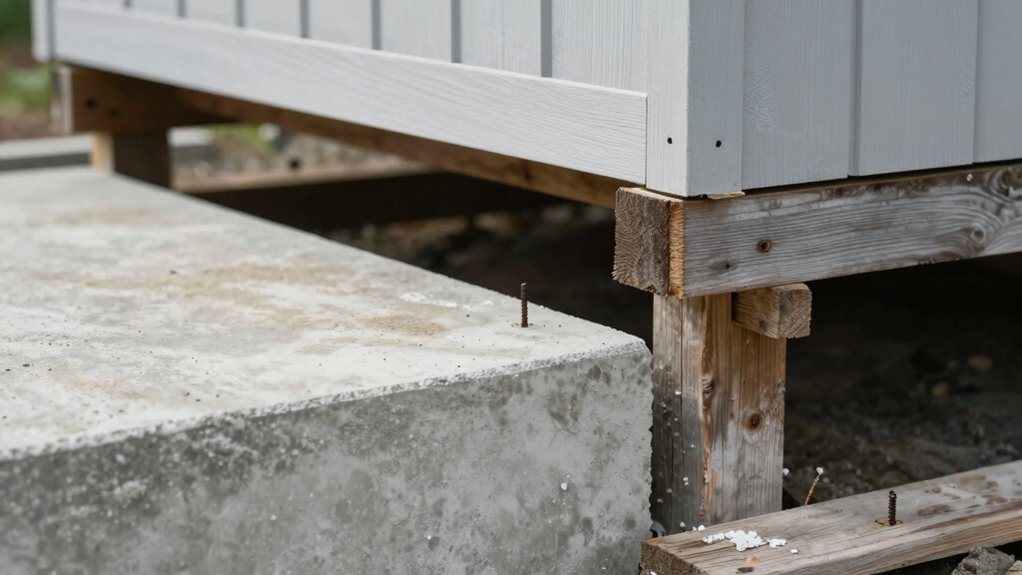
Different foundation options respond differently to soil stability and moisture conditions. Pier and beam foundations lift your tiny house above the ground, making them suitable for uneven or less stable soils, but they still require proper footings and moisture barriers. Concrete slabs provide a solid, stable base, but only if the soil beneath is stable and well-drained. Crawl spaces can offer good ventilation and moisture control, but they need proper sealing and drainage systems. Each choice requires careful assessment of soil characteristics and moisture levels to guarantee long-term stability.
Ultimately, your goal should be to match your foundation to the specific conditions of your building site. Investing time in understanding soil stability and moisture management doesn’t just protect your tiny house now—it guarantees its stability for years to come. Proper foundation decisions prevent costly repairs, structural issues, and safety concerns, giving you peace of mind as you enjoy your tiny house lifestyle.
tiny house foundation repair kit
As an affiliate, we earn on qualifying purchases.
As an affiliate, we earn on qualifying purchases.
Frequently Asked Questions
How Does Climate Impact Foundation Selection for Tiny Houses?
Climate profoundly influences your foundation choice because weather resistance and soil stability vary with conditions. In areas prone to heavy rainfall or flooding, you should select a foundation that resists moisture, like a pier or concrete slab. Conversely, in dry, stable climates, a simpler foundation might suffice. Understanding your local soil stability and climate patterns helps you choose a foundation that keeps your tiny house secure and durable long-term.
Are Certain Foundations More Eco-Friendly Than Others?
Yes, some foundations are more eco-friendly than others. You can choose foundations made from eco-friendly materials like recycled concrete, crushed stone, or sustainably sourced wood. These options support sustainable construction by reducing environmental impact. By selecting such foundations, you contribute to a greener tiny house, minimize waste, and promote long-term sustainability. Making mindful choices in foundation materials helps you build a tiny home that’s both stable and environmentally responsible.
How Often Should Tiny House Foundations Be Inspected?
You should inspect your tiny house foundation at least once a year to guarantee its stability. Regular foundation maintenance helps catch issues early before they worsen. Keep an eye on cracks, shifts, or unevenness, especially after severe weather or settling. Inspection frequency depends on your foundation type and local conditions, but annual checks are a good rule of thumb to maintain long-term stability and prevent costly repairs down the line.
Can Foundation Type Affect Tiny House Resale Value?
Think of your tiny house as a ship; the foundation is its hull. The type you choose directly impacts resale value by influencing foundation durability and structural integrity. A solid, well-built foundation reassures buyers, showcasing quality craftsmanship and stability. Conversely, a subpar foundation can raise concerns about long-term durability. So, selecting the right foundation isn’t just about stability—it’s about ensuring your tiny house remains a valuable, sought-after vessel for years to come.
What Are Cost Differences Between Foundation Options?
You’ll find that foundation materials like concrete, pier blocks, or gravel vary in cost, with concrete generally being the most expensive. Installation costs also differ: concrete pours require skilled labor and equipment, increasing expenses, while pier or gravel foundations are simpler and quicker to install, saving you money. Overall, choosing a lighter, less complex foundation can considerably reduce your initial investment and installation costs, making your tiny house more affordable upfront.
Conclusion
Think of your tiny house as a delicate ship sailing on unpredictable waters. The foundation you choose acts as its hull—strong, steady, and built to weather storms. Just as a sturdy hull keeps a ship afloat through rough seas, the right foundation guarantees your tiny home remains stable over time. Pick wisely, and your tiny house will stand tall and proud, no matter what tidal changes come your way. Your journey’s stability depends on it.
Halloween Picks
halloween
As an affiliate, we earn on qualifying purchases.