To maintain fruit trees in limited spaces, use grafting to combine desirable traits and save room, then prune regularly to improve airflow and sunlight while controlling size. Monitor for pests like aphids and scale, applying integrated management methods. Proper watering and organic fertilization support healthy growth, while mulching conserves moisture. Combining these strategies keeps your trees productive and healthy. Keep exploring for more tips on optimizing your mini orchard’s success.
Key Takeaways
- Use grafting techniques to combine multiple fruit varieties on one tree, maximizing space efficiency.
- Regularly prune to improve air circulation, sunlight exposure, and control tree size in confined areas.
- Implement integrated pest management to prevent infestations and maintain healthy, productive trees.
- Apply space-saving solutions like trellises or vertical planting to optimize limited growing areas.
- Ensure proper watering and fertilization tailored to small spaces to promote healthy growth and fruit production.
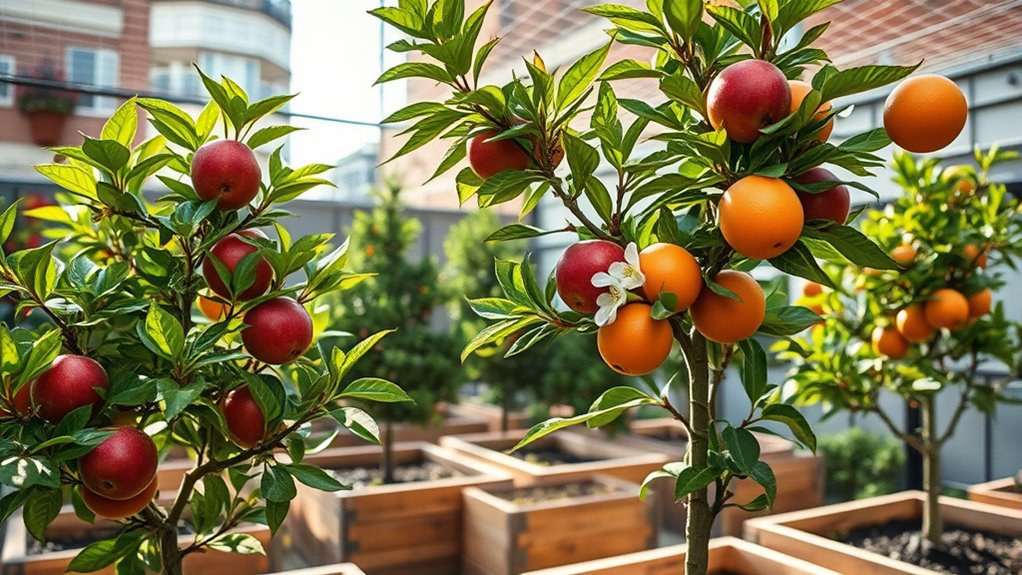
Maintaining fruit trees is essential for healthy growth and bountiful harvests. When you’re working with limited space, every step you take counts in guaranteeing your trees thrive. One of the most effective ways to maximize your space and improve your fruit trees’ productivity is through proper grafting techniques. Grafting allows you to combine the best qualities of different varieties onto a single rootstock, which can help you grow multiple types of fruit on one tree. This not only saves space but also enhances disease resistance and fruit quality. To get started, choose compatible rootstocks and scions, and learn how to make clean cuts to secure good graft unions. Proper grafting boosts your chances of success, making your small orchard more productive and diverse. Additionally, practicing mindful pruning ensures that you are maintaining your trees in a way that promotes healthy growth and resource efficiency.
Alongside grafting, pest management plays a crucial role in maintaining healthy fruit trees. In confined spaces, pests can spread rapidly, causing significant damage if not controlled promptly. You need to stay vigilant for common pests like aphids, scale insects, and fruit borers, which can weaken trees and diminish fruit quality. Regular inspection helps you catch infestations early. Use integrated pest management strategies, combining biological controls such as beneficial insects with organic or chemical treatments when necessary. Keep the area around your trees clean, remove fallen fruit and debris, and prune dead or diseased branches to reduce hiding spots for pests. These practices create an environment less hospitable to unwanted invaders and help you minimize pesticide use.
Pruning is another key aspect in maintaining small-space fruit trees. Proper pruning improves air circulation, sunlight exposure, and overall tree health. It also helps you control the size of your trees, making maintenance easier and harvesting safer. When pruning, remove overcrowded branches and those pointing inward to open up the canopy. This not only promotes better pest management but also enhances fruit production by directing energy into the remaining healthy branches. Combining pruning with grafting ensures your trees stay manageable and productive over the years. Moreover, understanding space-saving solutions can help optimize your limited area for maximum yield.
Finally, watering and fertilizing tailored to your limited space are vital. Avoid overwatering, which can lead to root rot, and ensure your trees receive appropriate nutrients to support growth and fruit development. Use mulch to conserve moisture and suppress weeds, and apply organic fertilizers to boost soil health. With careful attention to grafting techniques, pest management, pruning, and nutrition, you can create a thriving mini orchard that produces plenty of fruit despite space constraints. Every effort you put into maintaining your fruit trees will pay off with delicious harvests and the satisfaction of nurturing thriving plants in a small but productive setting.

Garden Grafting Tool Kits, ZALALOVA 2 in 1 Pruning Tools Including Grafting Knife Replacement Blades Grafting Tapes Rubber Bands and Labels for Plant Branch Vine Fruit Tree Cutting
PROFESSIONAL GARDENING GRAFTING TOOLS: Including 2 in 1 grafting pruning tools, 3 replaceable blades, a grafting knife, a…
As an affiliate, we earn on qualifying purchases.
As an affiliate, we earn on qualifying purchases.
Frequently Asked Questions
Can Fruit Trees Thrive in Containers on Small Balconies?
Yes, fruit trees can thrive in containers on small balconies if you choose the right varieties and focus on urban gardening. Select containers with good drainage and ample space for roots. Use quality soil and guarantee your tree gets enough sunlight. Regular watering and fertilizing are essential. With proper container selection and care, you’ll enjoy fresh fruit even in limited spaces, making your balcony a fruitful urban oasis.
What Are the Best Dwarf Varieties for Limited Space?
You should choose dwarf varieties like dwarf apple and miniature peach for limited spaces. These trees stay compact, making them perfect for small balconies or containers. Dwarf apple trees produce delicious fruit without growing too tall, while miniature peaches offer sweet harvests in a tiny form. Both varieties thrive in pots with proper care, sunlight, and regular watering, ensuring you enjoy fresh fruit even in limited space.
How Often Should I Prune Small Fruit Trees?
Think of pruning as giving your small fruit trees a gentle haircut. You should prune them annually, ideally in late winter or early spring before new growth begins. Follow a steady pruning schedule to prevent overgrowth and keep growth management in check. Regular pruning encourages healthy fruit production and maintains their size, making sure your mini orchard stays manageable and productive without becoming unruly.
Are There Specific Soil Types for Compact Gardening?
For compact gardening, you should choose soil with good drainage and nutrient content, like loamy or sandy soil. You’ll need soil amendments, such as compost or organic matter, to improve fertility. Also, monitor pH levels and perform pH adjustment with lime or sulfur if necessary, to maintain the soil within the ideal range for your plants. This guarantees healthy growth and maximizes space efficiency in your small garden.
How Do I Protect Fruit Trees From Pests in Tight Spaces?
Oh, the joy of tiny orchards—where pests thrive like party crashers. You can protect your fruit trees by choosing pest-resistant varieties and implementing natural pest control methods. Regularly inspect for bugs, encourage beneficial insects, and use organic sprays sparingly. Think of it as a covert operation—your goal to keep pests at bay without turning your garden into a chemical battleground. Small space, big pest-fighting game!

Berry&Bird Mini Pruning Shears for Gardening Curved Blades Hand Pruners with Wooden Handle Garden Scissors Snips Stainless Steel Trimming Small Clippers Bonsai Compact Size Sheaering Tool
Reduce Hand Strain: The pruning shears have a built-in high-resilient steel spring, which opens automatically and is easy…
As an affiliate, we earn on qualifying purchases.
As an affiliate, we earn on qualifying purchases.
Conclusion
Think of your limited space as a tiny garden castle, where each fruit tree is a brave knight. With careful pruning, watering, and nurturing, you guide these knights to stand tall and produce bountiful treasures. Just like a castle needs a strong foundation, your trees thrive when you give them attention. Keep tending your garden kingdom, and soon, you’ll enjoy a lush, fruitful harvest—proof that even small spaces can become lush, magical orchards.

Bonide Captain Jack's Fruit Tree Spray, 32 oz Concentrate, Insect & Disease Control Spray for Organic Gardening
Control diseases and insects in your garden with Captain Jack’s Fruit Tree Spray Concentrate! Use on a variety…
As an affiliate, we earn on qualifying purchases.
As an affiliate, we earn on qualifying purchases.

SPONDWILD 3 Pack 3 Gallon Hanging Strawberry Planter Bags, 12 Holes PE Grow Bags with Bottom Drainage, Reusable Vertical Planters for Small Space Gardening(Green)
180G PE Durability: Heavy-duty 180G PE material (sturdier than felt) is waterproof, washable, and reusable—resists tearing even when…
As an affiliate, we earn on qualifying purchases.
As an affiliate, we earn on qualifying purchases.