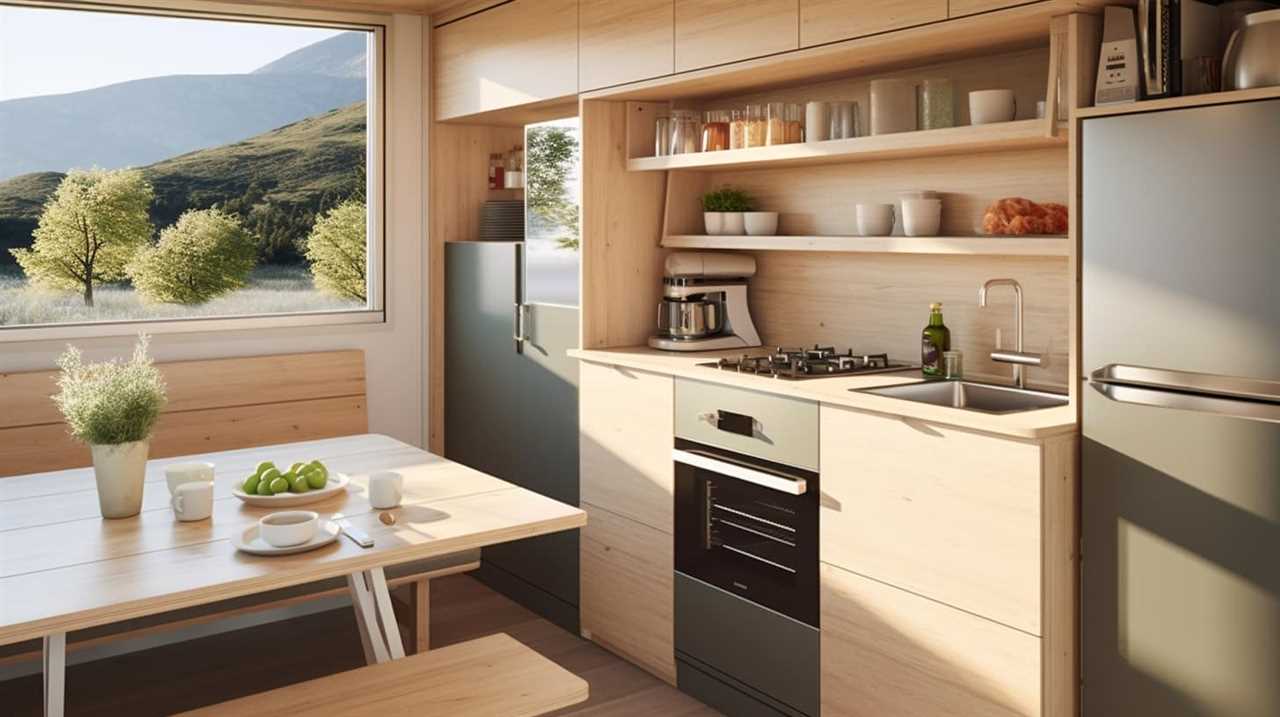
Many tiny house dwellers overlook that improper greywater management can harm your property and the environment. You might assume all greywater is safe to reuse, but without proper filtration and handling, it can carry harmful chemicals or pathogens. Knowing the do’s and don’ts can save you from costly mistakes and health risks. Curious about how to set up a safe, sustainable greywater system that works for your tiny home?

Get compact home essentials delivered free with Prime
- Fast, free delivery on millions of items
- Prime Video, Amazon Music and more included
- Member-only deals all year
Key Takeaways
- Use clean water sources like sinks and showers, avoiding laundry and dishwashing greywater.
- Install proper filtration and drainage systems to prevent soil contamination and pest attraction.
- Limit greywater to non-edible plant irrigation and toilet flushing, avoiding direct soil application without treatment.
- Choose biodegradable, plant-safe cleaning products to protect landscaping and wildlife.
- Carefully plan and maintain the system to prevent clogs, contamination, and health hazards.
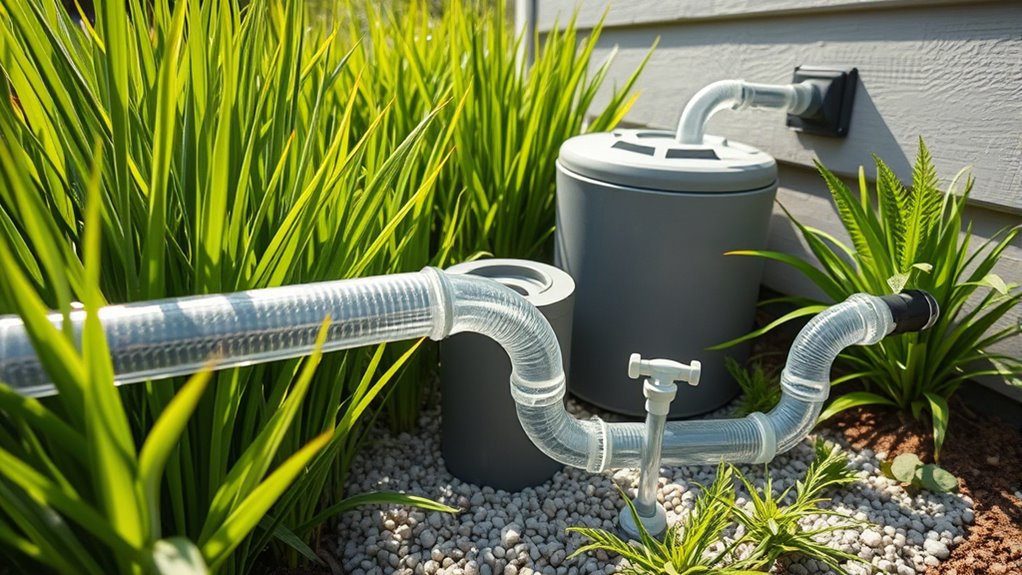
If you’re building or living in a tiny house, managing water efficiently is vital, and greywater systems offer an effective solution. These systems help you reuse water from sinks, showers, and washing machines, reducing your reliance on external water sources and minimizing waste. One of the best ways to supplement greywater recycling is through rainwater harvesting. By collecting rainwater from your roof, you can considerably decrease your dependence on municipal water, especially in areas where water is scarce or expensive. Rainwater harvesting systems are straightforward to install and maintain, capturing water in barrels or cisterns, which can then be filtered and used for non-potable purposes, including flushing toilets or watering plants. When combined with greywater reuse, rainwater harvesting creates a sustainable cycle that maximizes water conservation in your tiny home.
However, it’s vital to plan your greywater system carefully to avoid contamination and health hazards. Using composting toilets in your tiny house can help reduce greywater volume since they don’t produce liquid waste that needs disposal through greywater systems. This setup minimizes the risk of greywater contamination and simplifies your overall water management. Composting toilets turn waste into compost with minimal water use, which means less greywater and a smaller environmental footprint. When you do use greywater, ensure it’s from clean sources like sinks and showers rather than from laundry or dishwashing, which may contain detergents and food particles that can harm plants or clog your system.
Don’t forget to install your greywater system with proper filtration and drainage. Avoid discharging greywater directly onto the ground without treatment, as this can lead to soil contamination and attract pests. Instead, design a controlled greywater garden or use subsurface drainage to filter and disperse water safely. Be cautious with the types of soaps and cleaning products you use—opt for biodegradable, plant-safe options to prevent harming your landscaping or wildlife. Also, steer clear of using greywater for edible plants unless you’re sure it’s free of harmful chemicals and pathogens.
greywater filtration system for tiny house
As an affiliate, we earn on qualifying purchases.
As an affiliate, we earn on qualifying purchases.
Conclusion
By following these do’s and don’ts, you’ll craft a greywater system that’s both safe and eco-friendly, much like the wise practices of old. Remember, treating your greywater properly prevents contamination and keeps your tiny house sustainable. Don’t forget, as the ancients knew, “A clean water source is a healthy home.” Stay diligent, use biodegradable products, and your greywater system will serve you well, just like a trusty, well-maintained steed.
Columbus Day / Indigenous Peoples' Day Picks
long weekend sales
As an affiliate, we earn on qualifying purchases.