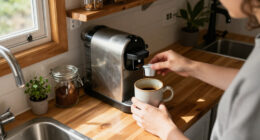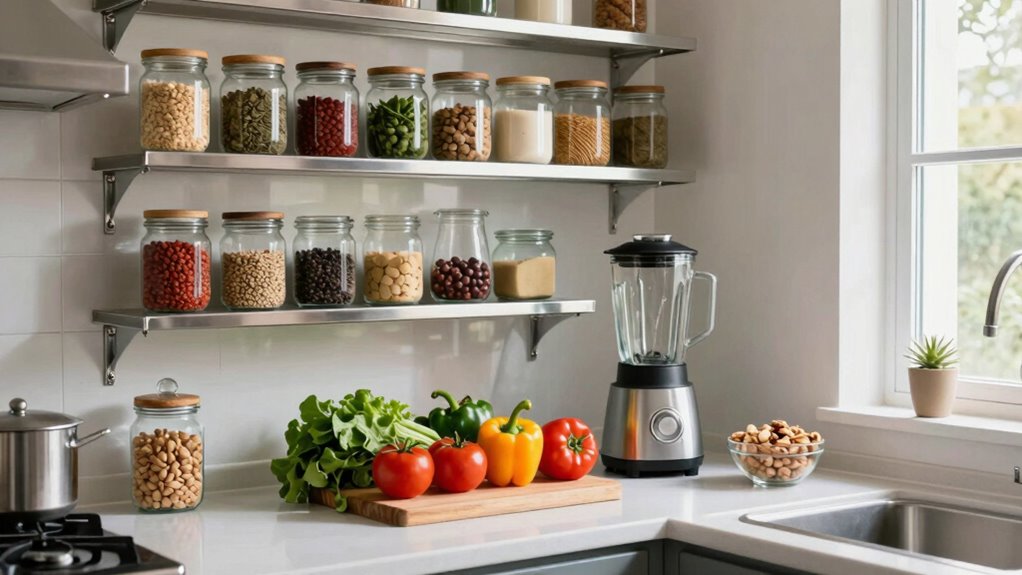

To build healthy food routines in a compact kitchen, focus on smart organization and efficient storage. Designate specific spots for prepped ingredients, snacks, and tools to keep everything tidy and accessible. Streamline your space gradually as you learn what works best. Regularly reassess your setup to stay optimized and less overwhelmed. With a few strategic tweaks, you can turn your small kitchen into a wellness-friendly zone—keep going to discover more tips to make it happen.

Get compact home essentials delivered free with Prime
- Fast, free delivery on millions of items
- Prime Video, Amazon Music and more included
- Member-only deals all year
Key Takeaways
- Prioritize meal prep by batch-cooking and portioning to save time and ensure healthy options are always available.
- Designate specific storage spots for ingredients and prepped foods to stay organized and streamline routines.
- Optimize kitchen layout by placing frequently used items within easy reach to reduce clutter and decision fatigue.
- Regularly declutter and reassess storage needs to maintain an efficient, tidy space that supports healthy habits.
- Incorporate small organizational adjustments to make healthy routines manageable within limited space.
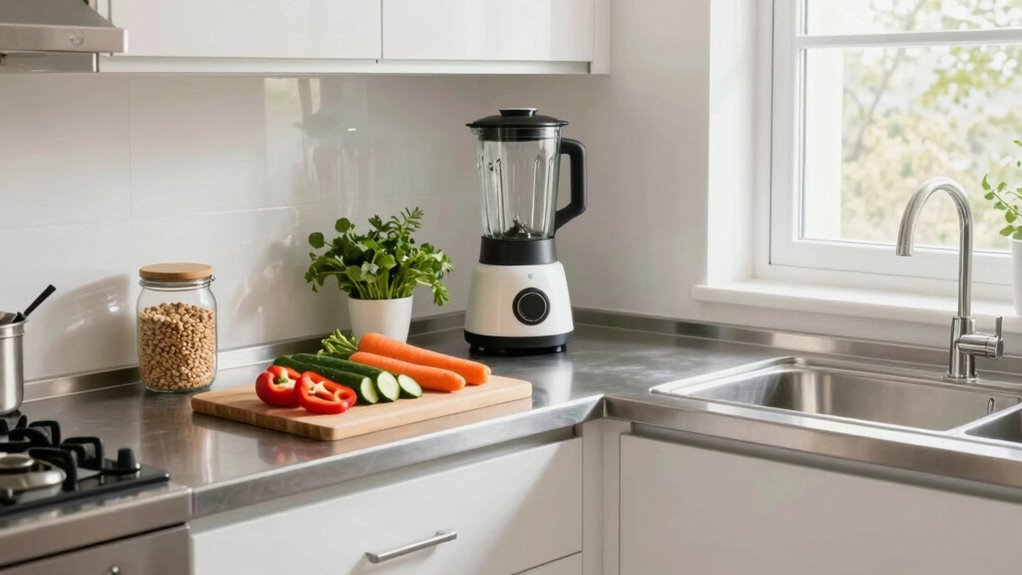
Creating healthy food routines in a compact kitchen might seem challenging, but with a few strategic adjustments, it becomes entirely doable. The key lies in optimizing your space and establishing routines that make nutritious eating effortless. One of the most effective ways to do this is through meal prep. By dedicating a small amount of time each week to preparing ingredients or entire meals, you reduce daily cooking stress and guarantee you always have healthy options on hand. You can chop vegetables, cook grains, or portion out snacks ahead of time, which makes it easier to assemble balanced meals quickly when hunger strikes. Meal prep also helps you avoid last-minute temptations for less nutritious options, keeping your routine aligned with your health goals. Incorporating storage solutions into your routine makes meal prep more efficient. When you have designated spots for ingredients and prepped foods, you’re more likely to stick to your healthy eating plan. Plus, a tidy, organized kitchen reduces the mental barriers that often lead to skipping meal prep or resorting to takeout. To keep things manageable, start small—perhaps with a dedicated drawer for snacks or a specific shelf for grains—and gradually expand your system as you get comfortable. Regularly declutter and reassess your storage to ensure it meets your evolving needs.
Meal prepping saves time, reduces stress, and keeps healthy snacks within reach in your small kitchen.
Ultimately, building healthy food routines in a compact kitchen hinges on smart planning and organization. Meal prep becomes your best ally, helping you save time and stay consistent. Storage solutions make this process smoother and more sustainable by keeping your space functional and clutter-free. When you combine these strategies, you transform your small kitchen into a hub for nutritious, flavorful meals that support your health and wellness goals, all without feeling cramped or overwhelmed.
small kitchen food storage containers
As an affiliate, we earn on qualifying purchases.
As an affiliate, we earn on qualifying purchases.
Frequently Asked Questions
How Can I Maximize Storage in a Small Kitchen?
To maximize storage in your small kitchen, focus on smart storage solutions like wall-mounted shelves, magnetic strips for utensils, and stackable containers. Keep countertops clutter-free to enhance kitchen aesthetics and create a sense of space. Use under-cabinet space efficiently with hooks or pull-out drawers. Incorporating these ideas helps you organize better, making your kitchen functional and visually appealing, even with limited space.
What Are Quick Healthy Meal Ideas for Limited Space?
You can whip up quick, healthy meals by focusing on meal prep with versatile ingredients like pre-chopped veggies, cooked grains, and lean proteins. Use your limited space efficiently by prepping snack ideas such as fruit, nuts, and yogurt in small containers. These options save time, reduce clutter, and keep your nutrition on track, even in a compact kitchen. Just plan ahead and keep essentials within easy reach!
How Do I Keep Fresh Produce Fresh Longer?
Did you know that properly storing fruits and vegetables can extend their freshness by up to two weeks? To keep produce fresh longer, focus on fruit preservation by storing berries and grapes in breathable containers, and keep leafy greens in perforated plastic bags. For vegetable storage, avoid storing potatoes with onions, and keep root vegetables in a cool, dark place. Proper storage techniques help you reduce waste and enjoy healthy snacks longer.
What Compact Appliances Help With Healthy Cooking?
You can maximize your healthy cooking in a compact kitchen with versatile appliances like a blender and a juicer. A blender helps you create smoothies, soups, and sauces, offering great versatility. Meanwhile, a juicer extracts fresh juices packed with nutrients, encouraging healthy habits. These appliances don’t take up much space and support a variety of nutritious meals, making them perfect for keeping your kitchen efficient and health-focused.
How Can I Organize My Pantry Efficiently?
You might find it funny how a simple drawer or shelf can transform your pantry. Organize your space by grouping similar items, like spices, in clear containers or spice racks for quick access. Use labeled bins for meal prep ingredients, keeping everything tidy and visible. Regularly declutter to avoid overstuffing. This way, your pantry stays efficient, making healthy cooking easier and more enjoyable in your compact kitchen.
Conclusion
By organizing your space and planning ahead, you can easily build healthy eating habits even in a small kitchen. For example, imagine setting up a dedicated shelf for fresh produce and prepping weekly meals in advance. Jane, a busy professional, transformed her compact kitchen into her wellness hub by incorporating simple storage solutions and quick recipes. With a little effort, you too can enjoy nutritious meals daily, proving that size doesn’t limit your healthy lifestyle.
Fall Picks
fall essentials
As an affiliate, we earn on qualifying purchases.