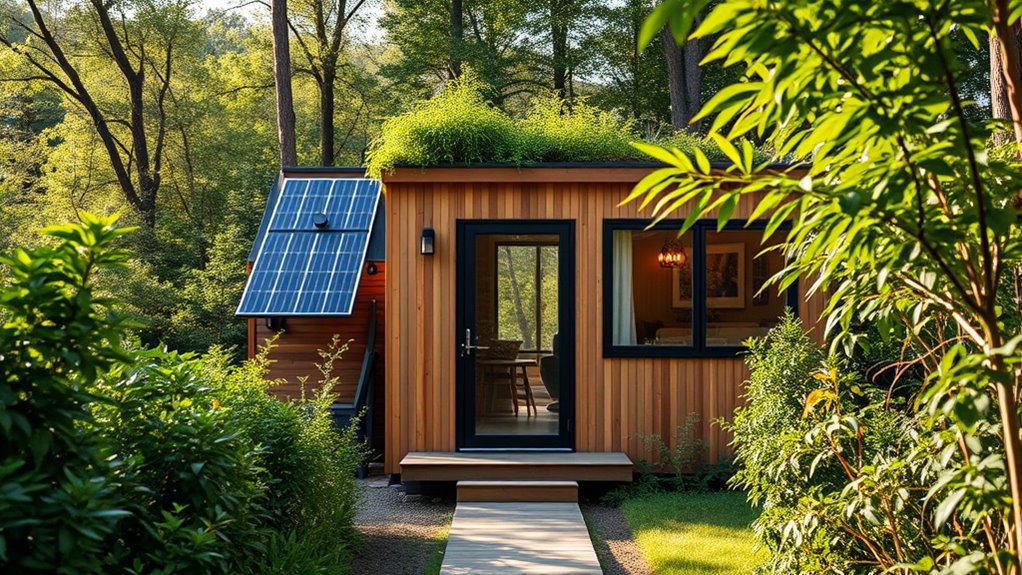

To build a highly energy-efficient tiny home, focus on integrating high-quality solar panels positioned for ideal sun exposure and combining them with energy storage systems. Use effective insulation materials like spray foam or sheep’s wool to create a tight barrier against heat loss, and incorporate passive solar design principles such as strategic window placement and shading devices. By combining these strategies, you’ll minimize reliance on external energy and maximize sustainability. Keep exploring for detailed tips to make your tiny home truly eco-friendly.
Key Takeaways
- Install high-quality, optimally positioned solar panels combined with efficient energy storage systems for self-sufficient power.
- Use high R-value insulation materials and seal all gaps to minimize heat transfer and energy loss.
- Incorporate passive solar design strategies like strategic window placement and shading to enhance natural heating and cooling.
- Design the home with energy-efficient appliances and lighting to reduce overall power consumption.
- Integrate all systems for maximum synergy, focusing on durability, low maintenance, and environmental sustainability.
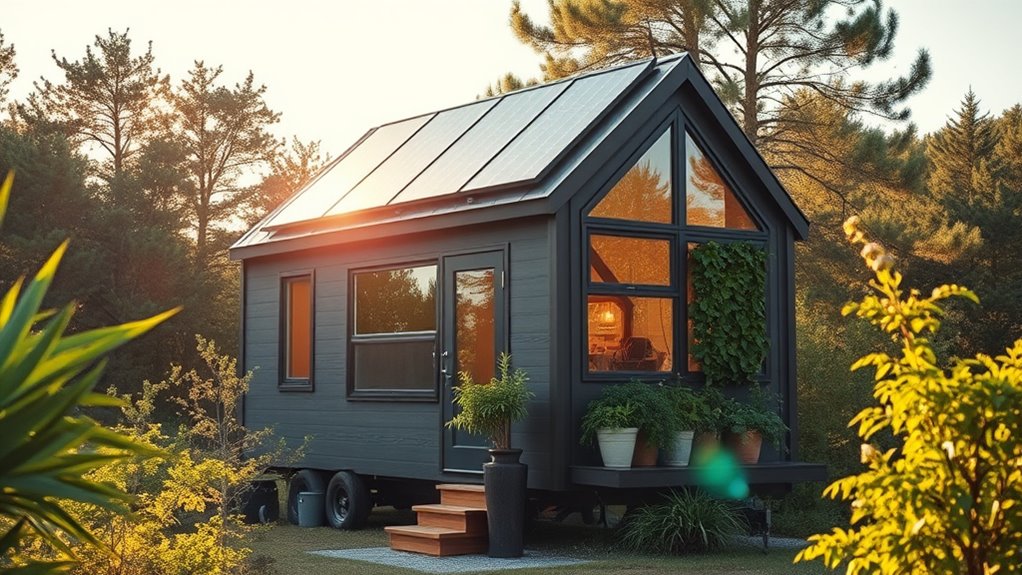
Are you interested in creating a tiny home that not only saves space but also minimizes energy consumption? If so, focusing on efficient design and smart technology is essential. One of the best ways to achieve this is by integrating solar panels into your tiny home’s energy system. Solar panels harness sunlight, converting it into clean energy that can power your appliances, lighting, and even your heating system. By installing high-quality, appropriately sized solar panels, you reduce reliance on the grid and lower your overall energy costs. Positioning them on the roof at the optimal angle ensures maximum sun exposure, which boosts efficiency and energy yield. Combining solar energy with energy storage solutions like batteries allows you to store excess power generated during sunny days for use at night or cloudy periods, guaranteeing a consistent energy supply. Additionally, selecting the right type of home energy system can optimize overall efficiency and ease of maintenance.
Equally important is employing effective insulation techniques. Proper insulation keeps your tiny home warm during winter and cool in the summer, reducing the need for excessive heating and cooling. You should consider using materials with high R-values, which measure thermal resistance, such as spray foam, rigid foam boards, or sheep’s wool. These materials create a tight barrier against heat transfer, maintaining a stable indoor temperature and decreasing energy consumption. When insulating walls, floors, and ceilings, make sure there are no gaps or leaks, as even small cracks can lead to considerable heat loss. Sealing air leaks around windows and doors with weather stripping or caulking is equally vital.
In addition to high-quality insulation, incorporating passive solar design principles can greatly enhance your tiny home’s energy efficiency. Position windows to maximize sunlight in winter and minimize heat gain during summer. Use strategic shading devices like overhangs or awnings to block excessive heat when needed. Light-colored or reflective roofing materials also help reduce heat absorption, keeping your home cooler during hot months.
Frequently Asked Questions
What Are the Initial Costs of Building a Tiny Home?
The initial costs of building a tiny home typically range from $10,000 to $50,000, depending on size, materials, and features. Conduct a thorough cost analysis to identify essential expenses and avoid overspending. You should also explore financing options like personal loans or grants to fund your project. Planning carefully helps you stay within budget while creating a comfortable, energy-efficient tiny home tailored to your needs.
How Long Does It Take to Complete a Tiny Home?
Building a tiny home typically takes about 3 to 6 months, depending on your project’s complexity and your experience with tiny home construction. You’ll need to secure building permits early in the process, which can impact your timeline. Once permits are approved, construction moves forward more smoothly. Keep in mind, delays can happen, so staying organized and flexible helps ensure your tiny home is completed efficiently.
Are There Specific Permits Required for Tiny Homes?
Yes, you’ll need specific permits for your tiny home. Check local zoning restrictions and building codes first, as regulations vary by area. Some locations require a building permit, while others may have restrictions on where tiny homes can be placed. You might also need inspections during construction. Contact your city or county planning office early to make certain you meet all requirements and avoid delays.
Can a Tiny Home Be Easily Relocated?
Think of your tiny home as a mobile seed ready to plant itself elsewhere. Yes, it can be easily relocated, but transportation challenges depend on its foundation options and size. If you choose a trailer-based foundation, moving it is straightforward, like hitching a trailer to your truck. However, permanent foundations make relocation difficult. Planning ahead guarantees your tiny home remains as portable as you want it to be.
How Do I Ensure Proper Ventilation and Indoor Air Quality?
To guarantee proper ventilation and indoor air quality, you should install efficient ventilation systems like exhaust fans and air filtration units. Regularly open windows when possible to promote fresh air exchange. Use air purifiers with HEPA filters to reduce pollutants and allergens. Maintain your ventilation systems and replace filters as recommended. Proper ventilation not only improves air quality but also enhances overall comfort and health inside your tiny home.
Conclusion
Now, imagine your tiny home as a shining beacon of sustainability, glowing softly in a landscape of waste. By implementing these energy-efficient strategies, you’re not just saving money—you’re crafting a sanctuary that breathes harmony with the environment. Your small space becomes a mighty proof to innovation and care, showing that even the tiniest homes can make a big difference. With every mindful choice, you turn your dream into a vibrant, living example of sustainable living.