
Did you know that many energy modeling tools designed for professionals also have versions suitable for DIYers? You might be surprised at how accessible some of these options are, even if you lack formal training. Choosing the right software can substantially impact your project’s success, but with so many choices out there, it’s easy to get overwhelmed. Keep exploring to find out which tools could help you optimize your building’s energy performance without needing a degree in engineering.
Key Takeaways
- Choose user-friendly options with guided workflows, tutorials, and preloaded templates designed for non-experts.
- Ensure the software offers easy import of building models or manual input methods suitable for DIY projects.
- Prioritize tools that integrate climate data and provide clear visualizations for straightforward analysis.
- Look for cost-effective solutions, including free or affordable software with essential energy modeling features.
- Consider community support and online resources to assist in learning and troubleshooting during your DIY projects.

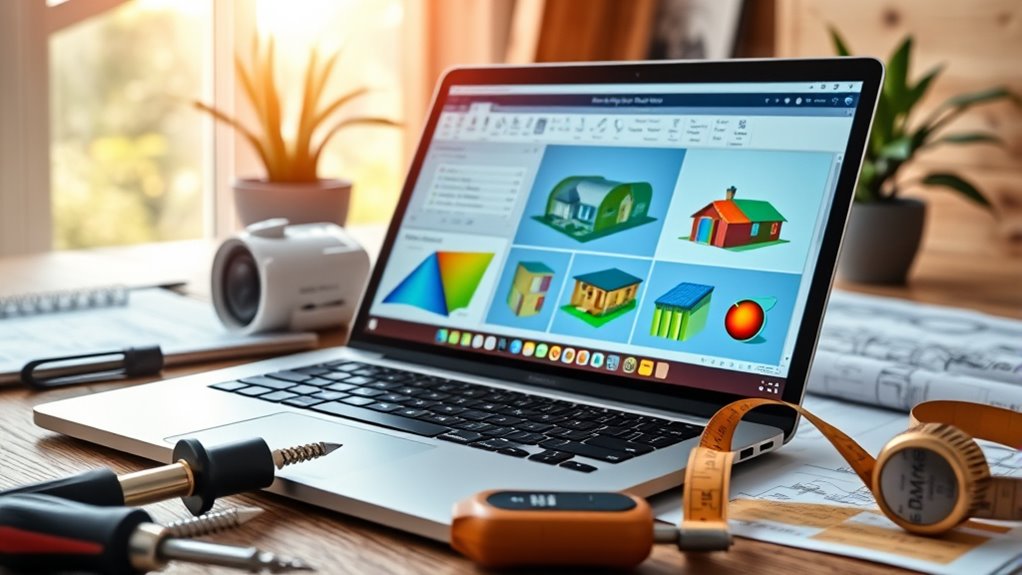
Energy modeling software has become an indispensable tool for architects, engineers, and energy analysts seeking to optimize building performance. If you’re a DIY enthusiast interested in improving your home’s energy efficiency, understanding how this software works is vital. At its core, energy modeling software enables you to perform detailed building simulations, which help you assess how your design choices impact energy consumption. By running these simulations, you can identify areas where your home might be losing heat, wasting energy, or underperforming, allowing you to make informed improvements. This process is fundamentally a virtual test, giving you insight into your building’s behavior under various conditions without costly physical modifications.
When you plunge into building simulation with these tools, you’re engaging in a detailed analysis of your home’s systems—heating, cooling, lighting, and insulation. These programs analyze your building’s geometry, materials, climate data, and occupant behavior to produce an extensive energy analysis. The goal is to predict how your building will perform over time, so you can optimize energy efficiency and reduce utility bills. Many software options are tailored for DIYers, offering user-friendly interfaces and guided workflows. They often include preloaded templates or simplified input methods, so you don’t need to be an expert in building science to get started.
Choosing the right energy modeling software depends on your project scope and technical comfort level. Some tools are more advanced, providing detailed simulations suitable for professional-grade analysis, while others strike a balance between complexity and accessibility. If you’re just starting out, look for software that emphasizes ease of use, clear visualizations, and step-by-step instructions for performing building simulation and energy analysis. These features help you understand the results without needing a background in architecture or engineering. Also, consider software that offers tutorials, community support, or online resources, as these can be invaluable when troubleshooting or expanding your knowledge.
Another important aspect is compatibility with existing design tools or data formats. Many DIY-friendly options can import models from common CAD programs or allow manual input of building parameters. This flexibility makes it easier to incorporate your existing plans and data into the simulation process. Additionally, choosing software that incorporates accurate weather data can significantly improve the reliability of your results. Keep in mind that some software might require a subscription, while others are available as one-time purchases or open-source options. Balancing cost, features, and ease of use will help you select the best tool for your needs.
Ultimately, the right energy modeling software empowers you to take control of your building’s energy performance. By performing accurate building simulations and energy analysis, you gain actionable insights that can lead to significant savings and a more sustainable home. As a DIYer, mastering these tools allows you to make smarter design choices, improve comfort, and reduce environmental impact—all without needing to hire a professional every time.
energy modeling software for DIY home projects
As an affiliate, we earn on qualifying purchases.
As an affiliate, we earn on qualifying purchases.
Conclusion
Remember, Rome wasn’t built in a day, and mastering energy modeling takes time. Choose user-friendly software that fits your skill level and project needs, and don’t be afraid to start small. With patience and the right tools, you’ll gain valuable insights to improve your building’s efficiency and comfort. Keep learning, stay curious, and soon you’ll be making smarter, more sustainable choices—one step at a time.

Introduction to Energy Analysis
As an affiliate, we earn on qualifying purchases.
As an affiliate, we earn on qualifying purchases.

Home Energy Rating System Building Energy Simulation Test (HERS BESTEST)
As an affiliate, we earn on qualifying purchases.
As an affiliate, we earn on qualifying purchases.
energy efficiency software for homeowners
As an affiliate, we earn on qualifying purchases.
As an affiliate, we earn on qualifying purchases.