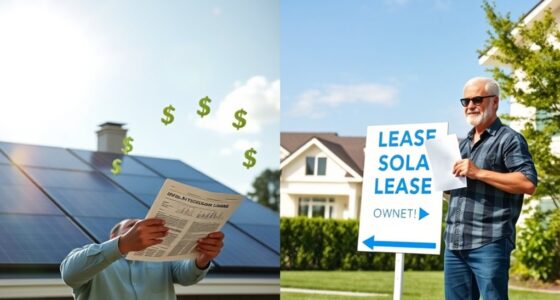
Considering a home equity loan to fund sustainable upgrades can seem like a smart move, but it’s important to weigh the benefits against potential risks. While you can access funds at fixed rates for eco-friendly improvements, securing your home and managing repayment terms might pose challenges. Before making a decision, understanding the full picture can help you determine if this financial option aligns with your long-term goals and household stability.
Key Takeaways
- Home equity loans provide lump sums for eco-friendly upgrades, boosting property value and environmental sustainability.
- Fixed interest rates offer predictable payments, but longer terms may increase total interest paid.
- Borrowing secures the home, posing a risk of foreclosure if repayments are missed.
- Fluctuating interest rates can affect costs; fixed rates are stable, while variable rates may decrease if market rates fall.
- Upgrades like solar panels or energy-efficient windows can reduce long-term costs and environmental impact but involve upfront expenses.
Are you considering ways to access the equity built up in your home? Home equity loans can be a smart option if you’re planning sustainable upgrades that add value and improve your living environment. These loans allow you to borrow against the equity you’ve accumulated over time, providing a lump sum that you can use for eco-friendly improvements like solar panels, energy-efficient windows, or new insulation. When exploring this option, it’s vital to understand how interest rates and repayment terms work, as they directly impact your financial stability. Typically, home equity loans offer fixed interest rates, which provide predictable monthly payments, making budgeting easier. However, interest rates can fluctuate based on market conditions, so you should compare lenders to find the most favorable terms. Additionally, the repayment terms usually span 5 to 20 years, giving you flexibility to choose a plan that aligns with your financial situation. Longer terms may lower monthly payments but increase the total interest paid over time, while shorter terms can help you pay off the loan faster but might come with higher monthly obligations.
Before committing, think about how these repayment terms fit into your household budget. Because these loans are secured by your home, missing payments could put your property at risk, so it’s vital to evaluate your income stability and expenses. If you plan to make significant upgrades for sustainability, you want to confirm that your loan payments won’t interfere with your ability to cover other essential costs or savings goals.
Understanding the environmental impacts of your investments can also motivate responsible decisions, especially as wood-burning practices are linked to air pollution and climate change. Another factor to consider is the interest rate environment. If interest rates are low, locking in a fixed rate home equity loan can be cost-effective, saving you money over the repayment period. On the other hand, if rates are expected to fall, you might prefer a variable-rate option, though this introduces some unpredictability. Keep in mind that some lenders might charge origination fees or other closing costs, which can add to your upfront expenses.
Conclusion
Considering a home equity loan for sustainable upgrades can be a smart move, especially since energy-efficient improvements can boost your home’s value and cut long-term costs. Did you know that homeowners who invest in energy upgrades see an average return of 70% on their expenses? Just remember to weigh the risks, like securing your home and managing repayment terms. With careful planning, you can make eco-friendly choices that benefit both your wallet and the planet.