
TL;DR
A homebrew macro pad called Apna Dost, built with an RP2040 microcontroller, OLED display, and QMK firmware, has garnered positive attention for its design and flexibility. The project demonstrates how accessible custom macro pads are for hobbyists.
A homebrew macro pad built around the RP2040 microcontroller, featuring an OLED display and running QMK firmware, has attracted attention from the maker community. The project, named Apna Dost, demonstrates the potential for accessible, customizable macro pads for enthusiasts and professionals alike.
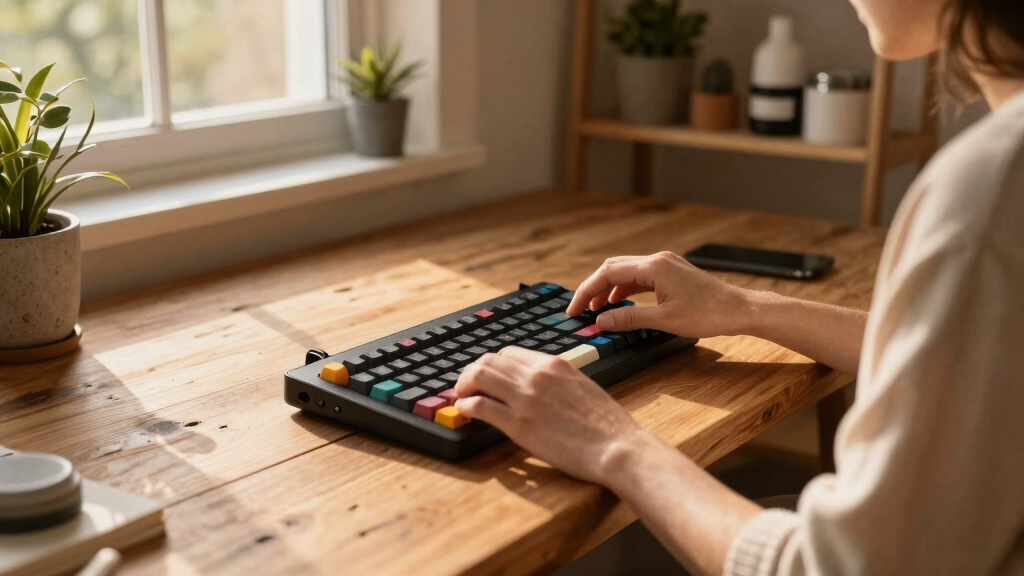
The Apna Dost macro pad is a DIY project that incorporates a few buttons, an encoder, and an OLED display, all powered by the RP2040 microcontroller. It runs QMK firmware, making it highly customizable and easy to modify, which is a notable advantage over cheaper macro pads that often lack open firmware support.
The design allows for multiple functions for the encoder, and the creator mentions that the layout could be expanded with more keys or labeled more clearly on the OLED display. The project is built from readily available components, making it feasible for hobbyists to replicate with existing parts, including repurposing older devices such as conference badges.
While the current build is modest, the project exemplifies how accessible macro pad customization has become, emphasizing the use of open-source firmware and popular microcontrollers like the RP2040.
Why Custom Macro Pads Matter for Enthusiasts
This project highlights the growing accessibility of DIY electronics for customization and productivity enhancement. By using open-source firmware like QMK and affordable microcontrollers such as the RP2040, hobbyists can create tailored input devices suited to their workflows. It also reflects a broader trend toward open hardware and firmware in the maker community, enabling more personalized and adaptable tech solutions.

Basic Starter Kit for Raspberry Pi Pico RP2040, Microcontroller Learning Kit with LCD1602 Display and SG90 Servo, Supports MicroPython and C/C++, Educational Electronics Kit for Beginners and Students
- Beginner-Friendly Kit: Includes LCD and servo for easy learning
- Powerful Microcontroller: Dual-core ARM Cortex-M0+ RP2040 processor
- Supports Multiple Languages: Compatible with MicroPython and C/C++
As an affiliate, we earn on qualifying purchases.
As an affiliate, we earn on qualifying purchases.
DIY Macro Pads and the Rise of Open Firmware
Macro pads have become popular among gamers, programmers, and content creators for streamlining repetitive tasks. Traditionally, commercial options often lacked flexibility or required proprietary firmware. Recently, the maker community has embraced open-source solutions like QMK, which allow extensive customization. The RP2040 microcontroller, popularized by the Raspberry Pi Foundation, has further lowered the barrier to entry due to its affordability and versatility. This project continues that trend by demonstrating how accessible and customizable macro pads can be built at home.
“The Apna Dost project showcases how hobbyists can build highly customizable macro pads with readily available components and open firmware.”
— an anonymous hacker
Unclear Aspects of the Project’s Future Development
It is not yet clear how many users will adopt or modify this macro pad design, or if the creator plans to release detailed build instructions publicly. Additionally, the extent of the project’s scalability—such as adding more keys or integrating different components—is still developing.
Next Steps for DIY Macro Pad Enthusiasts
Interest in the Apna Dost project may lead to community-driven modifications and expanded versions, possibly including more keys or features. Hobbyists are likely to experiment with different layouts and firmware customizations. The creator or community may also publish detailed guides or open-source files to facilitate wider adoption.
Key Questions
Can I build this macro pad with parts I already have?
Yes, the project uses common components like the RP2040 microcontroller, buttons, an encoder, and an OLED display, many of which can be sourced from existing electronics or repurposed from older devices.
Is QMK firmware difficult to modify for beginners?
While some familiarity with firmware configuration is helpful, QMK is well-documented and widely supported by the maker community, making it accessible for hobbyists willing to learn.
Will I need to solder or do hardware modifications?
Building the macro pad may require basic soldering skills, especially for connecting buttons and components. Following detailed guides can help ensure a successful build.
Are there plans to commercialize or sell kits of this macro pad?
Currently, there is no indication that the creator plans to commercialize the design; it appears to be a community-driven DIY project intended for educational and hobbyist purposes.
Source: Hackaday