A photograph of a defect is useful only if somebody can find it again. A verbal instruction matters only if the right people know what was said. A daywork report carries weight only if it records the work while the details are still clear.
DIY & Bau · The retrievable site record
Evidence is only useful when the project can find it.
Gewerkton’s voice-first proposition is not simply to collect more photos, notes and instructions. It is to turn events on site into structured, attributable records while the context is still visible.
“On site, what counts is what’s proven.”
From observation to usable evidence
The photograph is not the whole record
A defect image gains operational value when the relevant trade, deadline and responsible person remain attached to it.
The cost of delay
3 weeks
Recording becomes reconstruction
A daywork report rebuilt three weeks later depends on memory, scattered conversations and whatever evidence can still be recovered.
The actionable core
3 fields
Trade · deadline · responsible person
Dictation matters because these facts can be stated beside the work, then joined with a signature on the device at handover.
Cross-border evidence
27
Content languages
Participants can work in their own language while the evidence original remains connected to the record—from capture through report.
Product status
Fall 2026
Public beta planned
Gewerkton is currently in beta: a substantial construction-documentation vision still moving toward its public-beta stage.
Beta nowOne branded house
3 parts
The site record sits inside a wider workflow
Those are simple principles. On a live construction site, maintaining them is anything but simple. Several trades may be working at once. Deadlines overlap. Decisions made during meetings need to reach the crews carrying them out. Photos, notes, instructions and responsibilities accumulate across devices and conversations. The site manager is expected to hold the whole picture together, including the parts nobody wrote down properly.
This is the problem behind Gewerkton, a voice-first construction documentation and defect management platform. Its central proposition is captured by the company’s own line: “On site, what counts is what’s proven.” The emphasis is not simply on collecting more information. It is on turning what happens on site into evidence that remains structured, attributable and retrievable.
The product is in beta now, with a public beta planned for fall 2026. That status matters. Gewerkton presents a substantial vision for construction documentation, but it should be viewed as a platform still moving towards its public-beta stage, not as a finished system with years of settled use behind it.

Yinhing Sound Level Meter, 11 Inch Large LED Screen 4 in 1 Decibel Tester with WiFi APP Connectivity for Home Studio Factory Office Classroom Construction Site
- WiFi & App Connectivity: Supports 2.4G WiFi and Tuya app
- Versatile & User-Friendly: Suitable for various environments with adjustable detection speeds
- 4-in-1 Multifunctional Device: Combines sound, temperature, humidity, and clock functions
As an affiliate, we earn on qualifying purchases.
As an affiliate, we earn on qualifying purchases.
The photograph that disappears into the camera roll
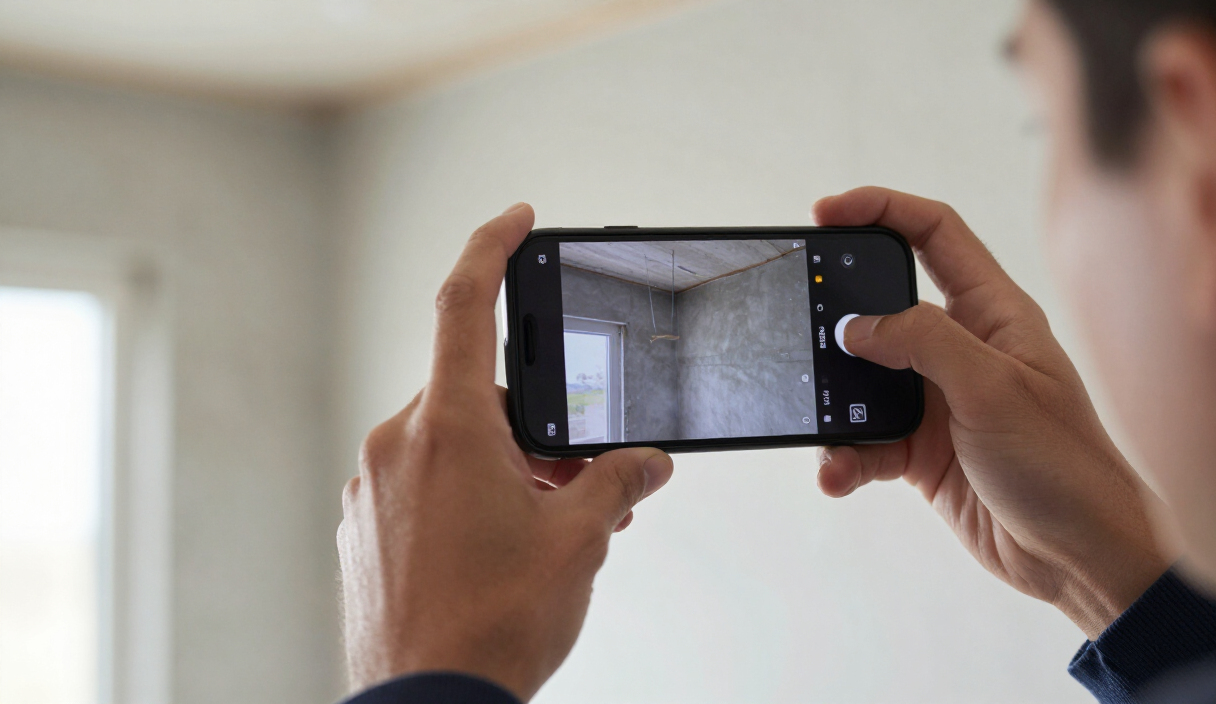
Consider the ordinary defect photograph. The site manager notices a problem, takes a picture and moves on because another issue is already demanding attention. The photograph exists, but its meaning may not. Which trade does it concern? Where was it taken? Who is responsible? What is the deadline? Was the issue passed on, or did everybody assume somebody else would handle it?
The image itself is rarely the entire record. Its value comes from the context attached to it. Without that context, the site team may later have to reconstruct the circumstances from memory, messages and other photographs. The evidence was captured, yet the useful record was not.
That gap is where voice-first documentation becomes interesting. A site manager already speaks throughout the working day: describing problems, issuing instructions, assigning responsibility and confirming what must happen next. If that spoken information can become a structured record, documentation no longer has to begin with typing everything into a form after leaving the work area.
Gewerkton Field is the product line carrying that approach onto the construction site. It is the voice-first site app within the wider Gewerkton brand, covering dictation to evidence, defects, daywork reports, takt and a portal. The practical idea is direct: capture the facts where the work and the problem are visible, then retain them in a form the project can use.
The speakable daywork report
The daywork report is the clearest example because it exposes the weakness of delayed documentation. When a report is reconstructed three weeks after the work, the writer is no longer recording the day. They are rebuilding it. Which trade carried out the work? What was the relevant deadline? Who was responsible? What was handed over, and what was signed?
Even a conscientious site manager can only reconstruct what remains available. Details that seemed obvious on the day may no longer be obvious. Conversations have moved on, the physical work has changed and several similar events may have occurred in the meantime. The report becomes an exercise in recovering context that could have been captured at the source.
Field puts the speakable daywork report at the centre of a different routine. The site manager dictates on site. The spoken account becomes structured evidence containing the trade, deadline and responsible person. At handover, the signature can be collected on the device. The record is made around the event rather than assembled weeks later from scattered fragments.
This is a modest shift in behaviour with a potentially important effect on the quality of the project record. Dictation is not valuable merely because it is faster than typing. It is valuable because it can happen while the site manager is still looking at the work, knows who was involved and can state what needs to happen next.
The signature on the device completes that particular chain at handover. The dictated information, its structured fields and the signature belong to the same immediate process. That is more coherent than having one part in a conversation, another in a photograph and the final confirmation waiting to be added elsewhere.
Structure matters as much as capture
A recording alone is not the answer. Original audio can preserve what was said, but a working project also needs information arranged so that people can act on it. Trade, deadline and responsible person are not decorative metadata. They turn an observation or instruction into something that can be assigned and followed.
This distinction is especially relevant when meeting decisions must become trade-sorted task lists. Data centres and industrial plants can have many trades operating in parallel under tight deadlines. A decision recorded only as a general meeting note still has to be separated into the actions relevant to each trade. Gewerkton’s stated deployment focus includes turning those decisions into trade-sorted task lists.
Housing and general building construction bring the same problem into a familiar form: defects documented with a photograph and deadline, dictated daywork reports, and a signature on the device at handover. Field’s appeal rests on joining those parts of the record instead of leaving the site manager to reconcile them later.
The instruction nobody wrote down
Verbal instructions are part of construction because work does not pause whenever somebody needs to prepare a formal note. The risk appears later, when the project needs to establish what was said. Memory is selective, and responsibility becomes harder to follow once the people involved have moved to other tasks.
Gewerkton’s approach to infrastructure and tunnel projects is particularly revealing. These are long-duration projects with many change orders, where instructions can be backed by the original audio. The audio is not a substitute for structure, but it keeps the spoken source connected to the resulting record.
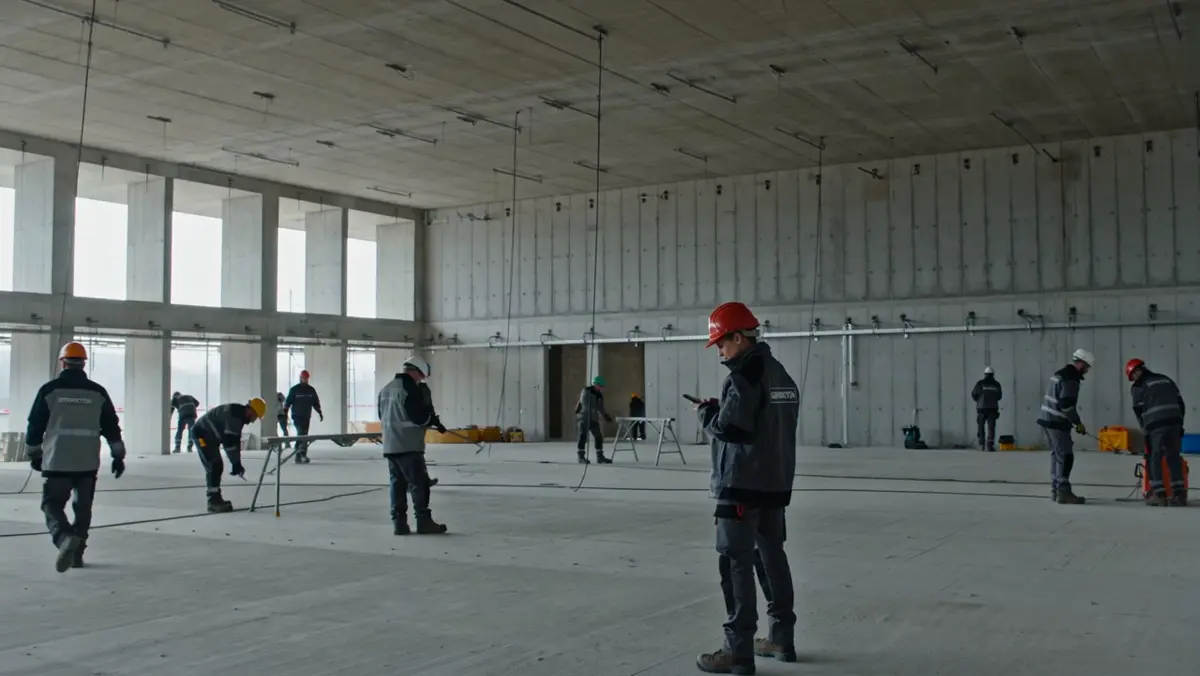
The same logic applies at smaller scale. A site manager walking through a housing project may identify a defect, state the relevant trade, assign responsibility and set a deadline in one spoken sequence. The useful outcome is not simply a saved voice note. It is a record in which the evidence and the action remain connected.
That connection is also important across languages. Gewerkton supports 27 content languages and positions itself for cross-border teams working across the EU, US and APAC. Each participant can work in their own language while the evidence original remains unambiguous. Projects in Asia are explicitly part of the intended deployment range, including Chinese, Korean and Vietnamese crews, with multilingual handling from capture to report.
Field is part of a three-part system
Field is the site-facing product, but it is not a standalone brand. Gewerkton has three product lines under one branded house: Field, Studio and Cloud.
Gewerkton Studio is the browser workspace for plans and models. Where no model exists, the site team can create one in the browser. This matters because the site record often needs a spatial or model-based context, while not every project begins with a model ready for site use.
Gewerkton Cloud handles operations and model or data coordination between Field, Studio and third parties. In that arrangement, Field captures what is happening on site, Studio provides the browser environment for plans and models, and Cloud coordinates the movement of operational and project information.
The three-part structure allows the site record to sit within a wider workflow without diluting Field’s main purpose. The site manager’s immediate problem remains concrete: capture the event now, attach the relevant responsibility and deadline, and avoid having to recreate the record later.
From housing sites to distributed projects
The platform is intended for global markets, although it was born in the German market and has its deepest German commercial integration there through GAEB, REB, XRechnung and DATEV. Its deployment fields extend well beyond conventional housing construction.
For wind farms and renewable-energy projects, the stated challenges include distributed sites, rotating crews, field acceptance and offline capture in dead zones. These conditions make delayed reconstruction particularly awkward. The person who saw an issue may not be the person reviewing it, and connectivity cannot be assumed at every point of capture.
Infrastructure and tunnel projects introduce long durations and many change orders. Data centres and industrial plants bring numerous trades and compressed deadlines. Cross-border teams add the need to preserve a clear evidence original while participants work in their own languages.
Across these settings, the common thread is not the type of structure being built. It is the difficulty of preserving a reliable account of what happened, who was responsible and what must happen next.
Data location and AI-provider choice
A platform processing site evidence also raises questions about where data and AI workloads are handled. Gewerkton’s BYO-AI approach supports 13 AI providers, allows organisations to bring their own keys and offers regional selection across EU, US and Asian providers, including providers in mainland China. The aim is to avoid vendor lock-in while allowing the provider region to reflect project requirements.
Data residency is presented as a choice between an EU cloud and the organisation’s own infrastructure. For projects in Asia, the platform also frames data residency as selectable rather than fixed. That regional choice sits alongside the multilingual workflow from field capture to report.
The public marketing site follows a similarly explicit technical position. It is available in 27 languages, uses zero trackers, has no cookie banner and is built with a fully egress-free architecture. Gewerkton also has a media bank containing more than 51 self-produced clips and posters.

A solo founder and a fleet of coding agents
Gewerkton is being built by a solo founder directing a fleet of coding agents using Codex and Claude. In one night, that fleet shipped 21 software packages, with verification through negative controls and mutation tests.
That development story shows the speed at which the project is being assembled, but it also reinforces why the beta label should remain prominent. Fast production and rigorous testing methods are relevant facts; they do not change the product’s current status. Gewerkton is in beta now, and its public beta is planned for fall 2026.
Anyone considering it should therefore distinguish between the scope of the platform’s stated capabilities and the maturity implied by a later public release. The concept is ambitious: one voice-first system spanning site evidence, multilingual reporting, models, coordination and regional AI choice. The current phase is the point at which that concept is still being developed in beta.
What this means for a tiny-house self-builder
A tiny-house project is smaller than a wind farm, tunnel or industrial plant, but smaller scale does not eliminate documentation gaps. It can make them more personal. The self-builder may be coordinating trades, checking work, agreeing changes and recording defects without a large project organisation behind them.
The same discipline still applies. A photograph should retain its purpose. A defect should have a responsible person and a deadline. A verbal instruction should become a written record while its meaning is clear. Daywork should be documented on the day rather than reconstructed weeks later. Handover should close with a signature when the relevant information is still in front of everyone.
That does not require pretending that a tiny-house build has the same operational complexity as a data centre. It simply recognises that evidence becomes difficult to recreate at any scale. One missed instruction can matter greatly when the project is compact, the budget is closely watched and the self-builder is the person trying to remember every conversation.
Voice-first capture is particularly well matched to that reality. Self-builders are often moving between physical work and coordination. Dictating the trade, deadline and responsible person at the point of observation follows the same principle as Field’s larger construction use cases: record the facts while they are available.
The real loss is context
What gets lost on a job site is rarely just a file. The photograph may still be on a device. Somebody may remember the verbal instruction. A calendar may show that daywork took place. What disappears is the connection between those fragments: the exact issue, the relevant trade, the person responsible, the deadline and the confirmation at handover.
Gewerkton Field addresses that loss by treating speech as the beginning of structured site evidence. Its most persuasive use case is not futuristic. It is the ordinary daywork report that no longer needs to be reconstructed three weeks late. Dictate it on site, preserve the relevant structure, and obtain the signature on the device at handover.
The wider platform extends that idea into plans, models, data coordination, multilingual projects and regional infrastructure choices. Yet the essential test remains close to the ground: when somebody asks what happened, can the site manager find the evidence and understand it immediately?
For large contractors and tiny-house self-builders alike, that is the discipline worth carrying forward. Document the work where it happens. Keep the instruction connected to its source. Name the trade, deadline and responsible person. Because on site, what counts is what’s proven.