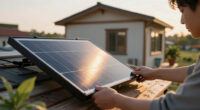
This guide provides clear instructions to help you choose and set up compact portable solar panels for outdoor or emergency power needs. It is designed for users with basic technical skills or outdoor experience who want reliable, lightweight solar solutions. In about half an hour to an hour, you will be able to select the right panel, connect it properly, and verify it is generating power effectively.

Get compact home essentials delivered free with Prime
- Fast, free delivery on millions of items
- Prime Video, Amazon Music and more included
- Member-only deals all year
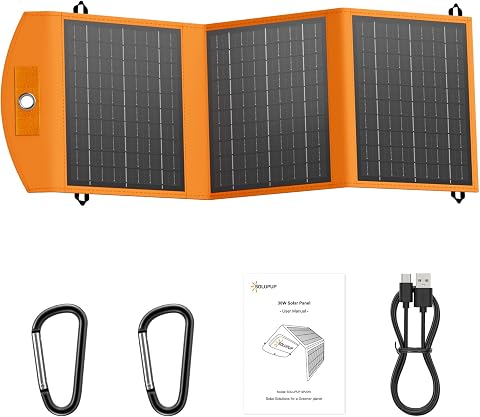
SOLUPUP 30W Portable Foldable Solar Charger with USB-A and USB-C
- ✔ Maximum Power: 30 Watts
- ✔ Output Voltage: 5 Volts
- ✔ Connector Type: USB Type A, USB Type C
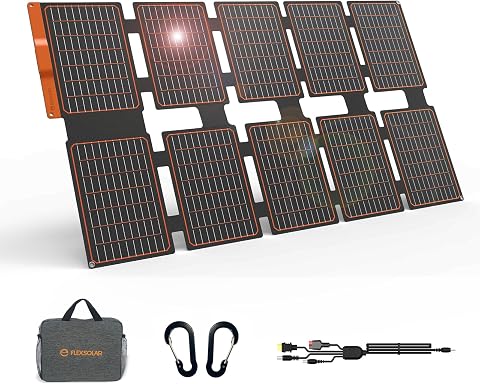
FlexSolar 100W Portable Foldable Solar Panel Charger with PD3.0 USB-C, QC3.0 USB-A, and DC Outputs
- ✔ Power: 100W
- ✔ Weight: 4.1 lbs
- ✔ Dimensions (folded): 12.99 x 10.43 x 2.17 inches

MARBERO 21W Portable Foldable Solar Panel Charger IP65 Waterproof High Efficiency USB & DC Output
- ✔ Model: SL21W
- ✔ Wattage: 21W
- ✔ Conversion Rate: 23%
Difficulty: Intermediate | Time: 30-60 minutes
What You’ll Need
Tools & Materials:
- Multimeter
- Power bank or device to charge
- DC connector cables (if not included)
- Optional: Adapter cables for different devices
Knowledge:
- Basic understanding of electricity (voltage, current)
- Familiarity with connecting electronic devices
Gather all components before starting. Ensure your devices are compatible with solar power outputs, and read the solar panel’s user manual for specific instructions.
SOLUPUP 30W Portable Foldable Solar Charger with USB-A and USB-C
<p>The <strong>SOLUPUP 30W</strong> excels due to its high-efficiency monocrystalline silicon technology, enabling faster charging times for phones, tablets, and small devices. Its <strong>foldable, lightweight</strong> design and included carabiners make it highly portable for camping, hiking, and outdoor activities. The <strong>IPX5 waterproof rating</strong> ensures durability against rain and dust, making it an excellent choice for casual outdoor use. Compared with larger panels, its 30W capacity is limited for high-demand devices, and weather conditions can impact actual output, but its compact size and safety features make it a top pick for everyday outdoor charging.</p>
Pros:
- High-efficiency monocrystalline silicon for faster charging
- IPX5 waterproof and dustproof for outdoor durability
- Compact, lightweight, and foldable with included accessories
- Built-in smart chip for safe device charging
Cons:
- Limited to 30W output, not suitable for larger devices
- Performance depends heavily on direct sunlight
- Weather conditions can reduce output
Best for: Casual campers and outdoor enthusiasts seeking a portable, easy-to-use panel for small devices
Not ideal for: Users needing to charge laptops or run high-power appliances in remote locations
Bottom line: This pick is perfect for lightweight outdoor use and small device charging but falls short for high-power needs.
“This pick is perfect for lightweight outdoor use and small device charging but falls short for high-power needs.”
FlexSolar 100W Portable Foldable Solar Panel Charger with PD3.0 USB-C, QC3.0 USB-A, and DC Outputs
<p>The <strong>FlexSolar 100W</strong> offers a significant power boost over smaller panels, making it suitable for charging larger devices or multiple gadgets simultaneously. Its <strong>foldable design</strong> is still portable, and the <strong>IP67 waterproof standard</strong> ensures resilience against harsh weather conditions. The array’s high efficiency (23%+) and multiple output ports, including PD3.0 and QC3.0, make it versatile for various device types and power needs. Compared to the MARBERO, it provides more wattage, but at the expense of increased weight and size, which could be a concern for ultra-light backpackers. Its robust build makes it ideal for longer outdoor stays or emergency preparedness.</p>
Pros:
- Higher 100W output for versatile device charging
- Multiple output options including PD 3.0 and QC3.0
- Durable, weather-resistant with IP67 waterproof rating
- Lightweight relative to power output
Cons:
- Larger and heavier than smaller panels, less pack-friendly
- Requires direct sunlight for maximum efficiency
- Folded size may still be bulky for some backpacks
Best for: Outdoor adventurers and emergency preppers needing higher power capacity in a portable form
Not ideal for: Backpackers prioritizing ultra-light gear or minimal pack weight
Bottom line: This panel strikes a balance between portability and power, making it best suited for off-grid use and longer trips where extra capacity is needed.
“This panel strikes a balance between portability and power, making it best suited for off-grid use and longer trips where extra capacity is needed.”
MARBERO 21W Portable Foldable Solar Panel Charger IP65 Waterproof High Efficiency USB & DC Output
<p>The <strong>MARBERO 21W</strong> is an ultra-compact, foldable panel designed for minimalists and hikers. Its high solar conversion rate of up to 23% means it can produce reliable power even on cloudy days. Its <strong>IP65 waterproof rating</strong> ensures durability in various weather conditions, and its small folded size makes it an excellent choice for tight packs. Unlike larger panels, it cannot store energy or power laptops, so it’s best suited for charging smartphones, GPS units, and small gadgets. Compared to the SOLUPUP, it offers slightly higher efficiency and smaller size, but with less overall power capacity, making it ideal for those who prioritize portability and simplicity.</p>
Pros:
- Very compact and lightweight for portability
- High solar conversion efficiency of up to 23%
- Reliable power output on cloudy days
- Durable and waterproof (IP65)
Cons:
- Limited to small device charging, cannot power laptops or large electronics
- Output power varies with weather and sunlight angle
- No energy storage or larger power capacity
Best for: Hikers, backpackers, and outdoor enthusiasts needing ultra-lightweight, reliable device charging
Not ideal for: People needing to power large devices or require high wattage for extended use
Bottom line: This panel is perfect for ultra-light portability and quick outdoor device charging, but not suitable for high-power or long-term off-grid needs.
“This panel is perfect for ultra-light portability and quick outdoor device charging, but not suitable for high-power or long-term off-grid needs.”
As an Amazon Associate we earn from qualifying purchases.
Before You Start
Check the weather forecast; avoid setting up on cloudy or rainy days for best results. Confirm the solar panel is free of dirt or debris that could block sunlight. Have your devices and cables ready to test the output once the panel is set up.
Step-by-Step Instructions
Step 1: Select the appropriate solar panel
Choose a compact solar panel that matches your power needs and is lightweight enough for portability. Look for panels with the right wattage (10W-100W), compatible connectors, and good reviews for durability.
Tip: Opt for panels with USB outputs if charging small electronics directly, or with MC4 connectors for larger power banks or batteries.
Check: You have a solar panel that meets your power requirements, is portable, and has the necessary output connectors.
Step 2: Position the solar panel in direct sunlight
Set the panel on a flat, stable surface in direct sunlight, ideally facing south (in the northern hemisphere) or north (in the southern hemisphere). Adjust the angle until the sunlight hits the panel at its optimal tilt, typically about 30-45 degrees.
Tip: Avoid shadows or obstructions that block sunlight during peak hours, usually 10 am to 2 pm.
Check: The panel is stably positioned with maximum sunlight exposure, showing no shadows or obstructions.
Step 3: Connect your device or power bank to the solar panel
Use the appropriate cables or adapters to connect your device or power bank to the panel’s output port. Ensure connections are secure and match the device’s charging port.
Tip: Start with a low-power device or a test device to verify the setup before connecting more sensitive electronics.
Check: Device or power bank begins charging with indicator lights or display showing charging status.
Step 4: Monitor the output and verify charging
Check the charging indicator on your device or power bank periodically. Use a multimeter to measure voltage at the panel’s output to confirm it’s generating power (look for 5V USB or appropriate voltage for other ports).
Tip: Ensure connections are tight; loose connections can prevent charging or cause fluctuating power.
Check: Your device shows charging activity, and multimeter readings confirm solar panel output matches specifications.
Common Mistakes to Avoid
- Positioning the panel in low sunlight or shadows — Place the panel in full sun with no shadows during peak sunlight hours for maximum efficiency.
- Using incompatible cables or connectors — Verify device requirements and use matching cables with proper voltage and current ratings.
- Incorrectly wiring panels in series or parallel without proper knowledge — Follow manufacturer instructions strictly or consult a knowledgeable source for wiring configurations to avoid damage or inefficiency.
Troubleshooting
Problem: Device not charging despite sunlight
Solution: Check all connections, verify the panel’s output with a multimeter, and ensure the panel is in direct sunlight without shadows.
Problem: Multimeter shows no voltage
Solution: Test the multimeter with a known power source, check the panel’s connections, and confirm the panel is exposed to sunlight.
Problem: Charging indicator flickers or inconsistent
Solution: Ensure cables are secure, clean the panel surface, and reposition the panel for better sunlight exposure.
What Success Looks Like
The device or power bank shows steady charging activity, with multimeter readings stable and matching the panel’s rated output. The panel remains in direct sunlight without shadows, and connections are secure.
Next Steps
Store the panel in a dry, protected place when not in use. Regularly clean the surface to maintain efficiency. Use the charged devices as needed, and consider adding a portable battery for longer-term storage. Repeat setup in new locations or when changing sunlight conditions for ongoing power supply.
Frequently Asked Questions
How do I know if my solar panel is working properly?
Check for a steady output voltage with a multimeter in direct sunlight. Also, observe if connected devices are charging or powered on.
Can I connect multiple panels for more power?
Yes, but only if you understand series or parallel wiring, and the combined voltage and current stay within your devices’ limits. Follow manufacturer instructions carefully.
What should I do if the panel isn’t charging my device?
Verify the connections, check for shadows or dirt on the panel, test the output voltage with a multimeter, and confirm that your device’s charging port is functioning properly.
How do I maintain my portable solar panel?
Keep the surface clean from dirt and debris, store it in a dry place, and avoid bending or dropping the panel to prevent damage.
Halloween Picks
halloween
As an affiliate, we earn on qualifying purchases.