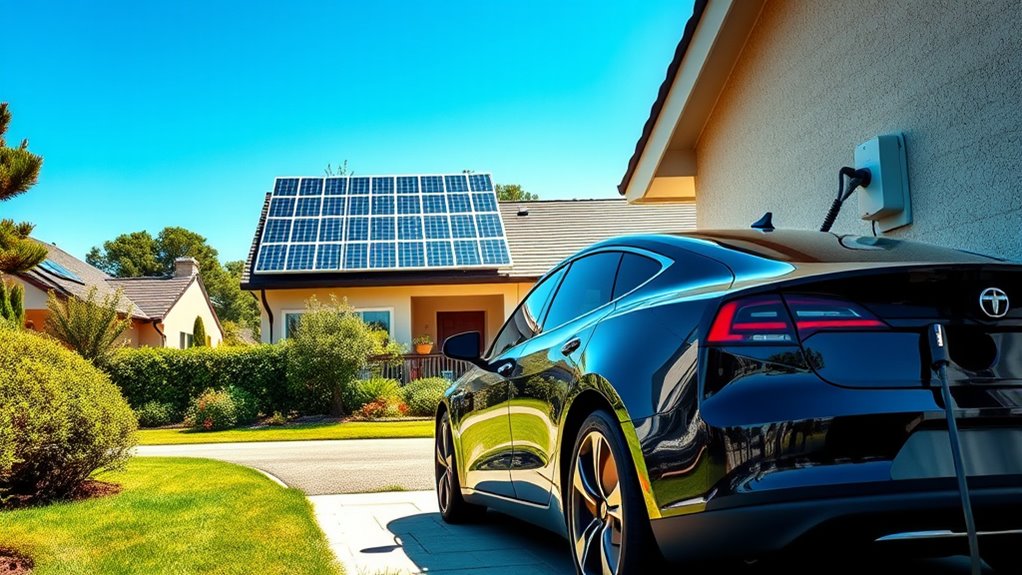

When integrating home solar with EV charging, selecting the right battery size is critical. Too large, and you’ll face unnecessary costs with little added benefit; too small, and you might not meet your daily charging needs or maximize solar energy. Getting this balance right requires understanding your driving habits and energy use. Without careful planning, you risk costly mistakes that could undermine your efforts to create an efficient, sustainable charging setup—so, what’s the best way to avoid these pitfalls?

Get compact home essentials delivered free with Prime
- Fast, free delivery on millions of items
- Prime Video, Amazon Music and more included
- Member-only deals all year
Key Takeaways
- Avoid oversizing batteries to prevent unnecessary costs and capacity wastage.
- Ensure battery capacity matches your EV’s daily energy requirements for reliable charging.
- Consider your solar production and EV charging habits to balance system size and efficiency.
- Use smart control systems for seamless switching between solar, battery, and grid sources.
- Regularly evaluate and adjust system sizing to align with changing energy needs and usage patterns.
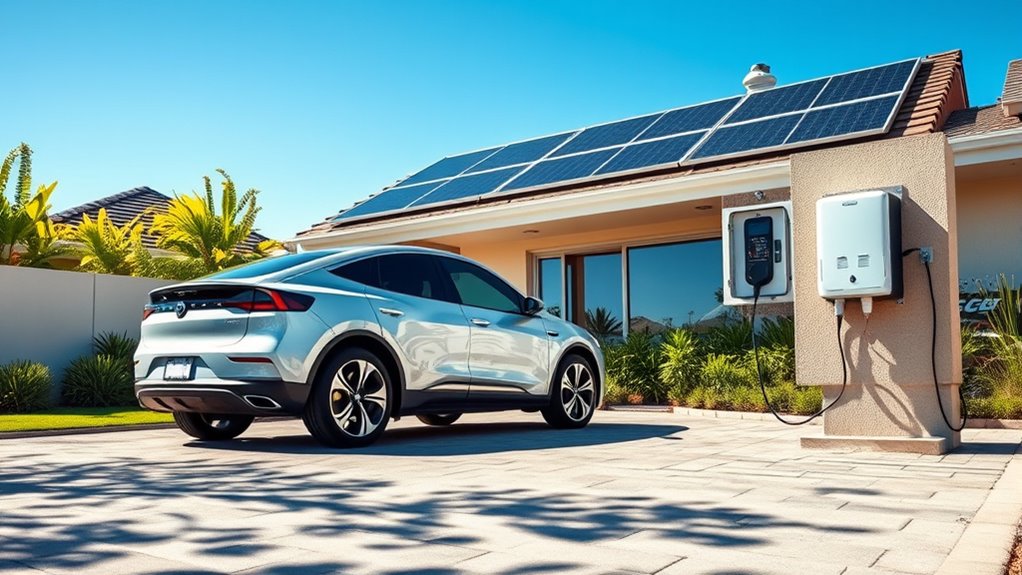
Have you ever wondered how to charge your electric vehicle more sustainably and affordably? If so, integrating your home solar system with EV charging is a smart move, but it’s essential to size it correctly. One common pitfall is overlooking the importance of battery storage. Without adequately sized batteries, you might find yourself unable to store enough solar energy to power your EV consistently, especially during cloudy days or at night. Proper battery storage allows you to maximize the use of your solar power, reducing reliance on the grid and lowering your energy costs. It’s tempting to think bigger batteries are always better, but oversizing can lead to unnecessary expenses and wasted capacity. Conversely, undersized systems won’t meet your needs, forcing you to pull expensive electricity from the grid during peak times.
Proper battery sizing maximizes solar use, reduces grid reliance, and prevents costly oversizing or undersizing pitfalls.
Another critical aspect to think about is grid integration. When sizing your system, you need to evaluate how your solar and battery setup will interact with the grid. A well-designed system should seamlessly switch between stored solar energy, battery power, and grid supply, depending on availability and cost. Poor grid integration planning can result in inefficient energy flow, increased costs, or even penalties if your system feeds excess power back to the grid improperly. You want a setup that not only captures and stores enough solar energy but also intelligently manages that energy in harmony with the grid. This means incorporating smart inverters and control systems that optimize when to draw from or send energy to the grid, ensuring you get the most value from your investment. Additionally, understanding your system’s noise levels can help you select equipment that operates quietly, avoiding disturbances in your home environment.
Sizing your system correctly also involves understanding your EV’s charging habits and energy consumption patterns. If you underestimate your daily driving needs, you might end up with a system that can’t fully charge your vehicle, forcing you to rely on grid power more often. On the other hand, overestimating your needs leads to higher upfront costs and potential underuse of capacity. Striking the right balance requires a detailed assessment of your energy usage, your solar panel capacity, battery storage, and how your system will connect to the grid.
In essence, successfully charging your EV with home solar hinges on careful planning. Properly sized battery storage enhances your energy independence, while effective grid integration ensures your system operates efficiently and economically. Avoiding these sizing pitfalls means you’ll be able to charge more sustainably and affordably, making your EV ownership not just eco-friendly but also cost-effective in the long run.
home solar battery storage system
As an affiliate, we earn on qualifying purchases.
As an affiliate, we earn on qualifying purchases.
Conclusion
So, next time you’re tempted to wing your battery size, remember: bigger isn’t always better—unless you enjoy throwing money into a pit. Oversize your battery, and you’ll enjoy the thrill of wasted capacity; undersize it, and you’ll be stuck begging for more solar juice. The secret? Know your driving habits, size smartly, and let your system do the heavy lifting. After all, who doesn’t love a perfectly balanced, cost-effective EV-charging setup?
Columbus Day / Indigenous Peoples' Day Picks
long weekend sales
As an affiliate, we earn on qualifying purchases.