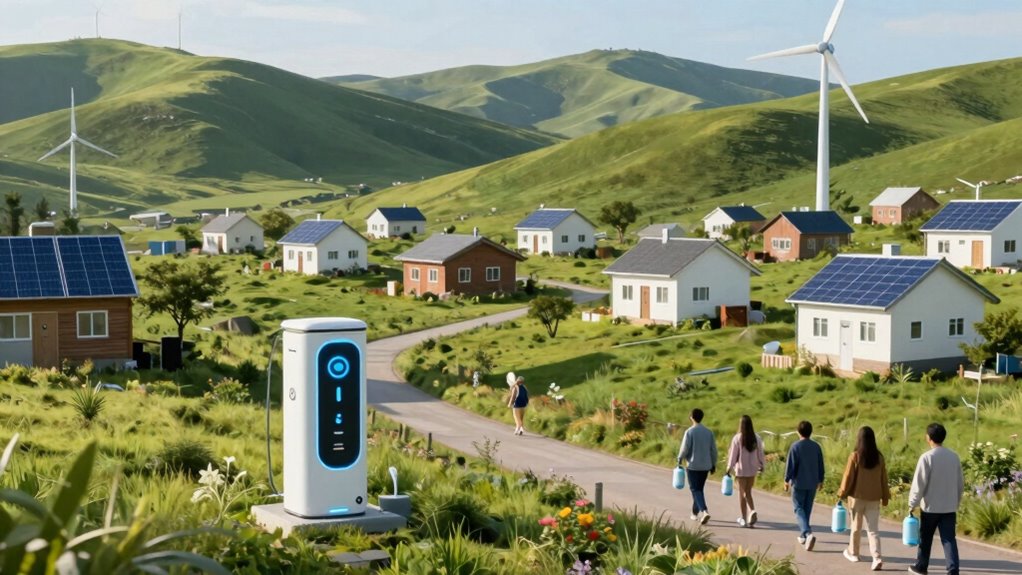

Adopting hydrogen in future tiny communities can help you become more self-sufficient and environmentally friendly. It offers reliable energy for heating, transportation, and backup power while reducing dependence on fossil fuels. By using renewable sources like solar and wind, you can produce clean hydrogen locally. This approach boosts resilience, creates local jobs, and attracts new residents interested in sustainable living. If you want to explore how this can shape your community’s future, keep exploring these innovative possibilities.
Key Takeaways
- Enables self-sufficient, sustainable energy systems reducing reliance on fossil fuels.
- Creates local jobs through infrastructure development and maintenance.
- Enhances community resilience and climate change mitigation efforts.
- Supports integration of renewable energy, promoting environmental sustainability.
- Attracts investments and residents interested in green, innovative living environments.
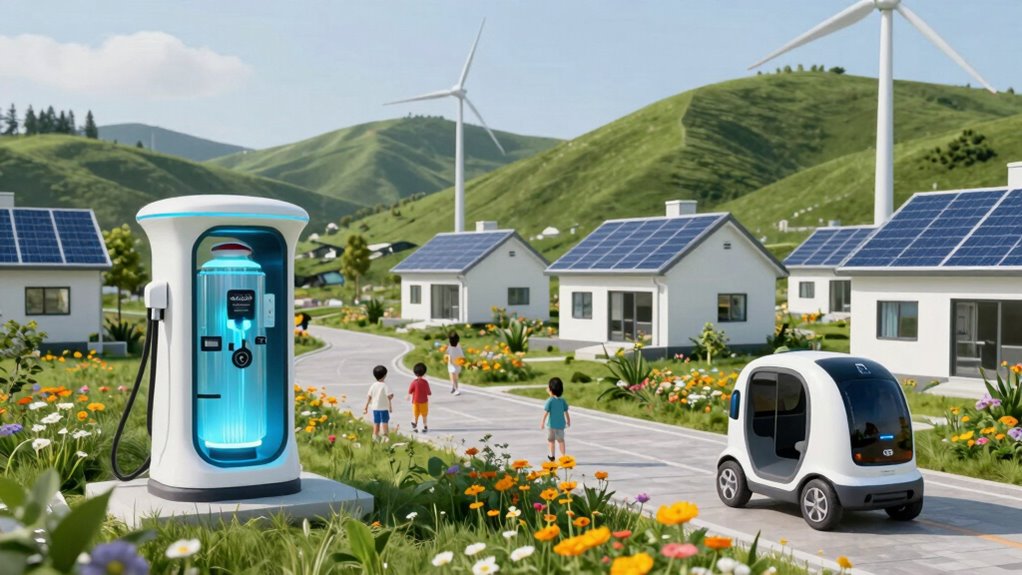
Could hydrogen be the key to transforming tiny communities into sustainable havens? It’s an exciting possibility that hinges on harnessing renewable energy sources and developing the right infrastructure. As you consider the future of small communities, you realize that energy independence isn’t just a dream but a tangible goal when hydrogen becomes part of the equation. With renewable energy—like solar and wind—playing a growing role, you can produce hydrogen through electrolysis, splitting water into hydrogen and oxygen without emitting greenhouse gases. This process taps into abundant, clean energy, making hydrogen a truly sustainable fuel source.
Hydrogen from renewable energy could transform small communities into self-sufficient, sustainable havens.
However, turning this vision into reality requires significant infrastructure development. You’ll need localized facilities for hydrogen production, storage, and distribution. Building these systems in small communities can be challenging, but it’s also an opportunity to create tailored solutions that meet specific needs. For instance, small-scale electrolysis units can be installed at or near renewable energy sites, ensuring efficient use of locally generated power. As you develop the infrastructure, you’ll also need to establish safety protocols and transportation methods, such as pipelines or mobile delivery systems, to guarantee hydrogen reaches homes, businesses, and community facilities safely. Additionally, understanding the importance of projector technology concepts like contrast ratio and color accuracy can help you visualize and communicate the potential quality and reliability of the energy systems you plan to implement.
Adopting hydrogen technology in tiny communities offers numerous benefits. It provides a reliable energy source that reduces dependence on fossil fuels, which is particularly vital in remote or isolated areas where grid connection might be limited or unreliable. Hydrogen can serve as a versatile energy carrier, powering everything from heating systems to transportation. Imagine small community buses running on hydrogen fuel cells or homes equipped with hydrogen-powered backup generators, ensuring continuous energy supply even during outages. This shift not only promotes sustainability but also creates local jobs—people will be needed to build, maintain, and operate the new infrastructure. Moreover, integrating renewable energy can help optimize the overall energy ecosystem, making the community more resilient and efficient.
Furthermore, integrating hydrogen into tiny communities encourages resilience against climate change. As you shift toward renewable energy and green fuels, your community diminishes its carbon footprint, contributing to global efforts to combat climate change. The combination of renewable energy and hydrogen infrastructure development can turn small communities into models of sustainability. You’ll see these places become self-sufficient, environmentally friendly, and economically vibrant, attracting newcomers and investments interested in green living. Using local renewable resources effectively can help make these communities truly independent and resilient.
In essence, adopting hydrogen in tiny communities isn’t just about swapping one fuel for another; it’s about creating a sustainable ecosystem powered by renewable energy. With thoughtful infrastructure development, these communities can thrive independently, reduce environmental impacts, and serve as inspiring examples of what’s possible when innovation meets local needs. Incorporating renewable energy sources into the planning process is crucial to ensure long-term success and sustainability. Recognizing the role of energy storage solutions can further enhance the stability and efficiency of these new energy systems.
hydrogen fuel cell generator for home
As an affiliate, we earn on qualifying purchases.
As an affiliate, we earn on qualifying purchases.
Frequently Asked Questions
How Affordable Is Hydrogen for Small Communities?
Hydrogen can be quite affordable for small communities, especially as storage technology improves and costs decrease. You might find that local hydrogen storage solutions reduce reliance on expensive fuel imports, boosting community resilience. While initial setup costs can be significant, long-term savings are achievable with small-scale production and strategic partnerships. Overall, hydrogen’s affordability depends on your community’s ability to leverage these advancements and optimize storage and distribution.
What Safety Measures Are Necessary for Hydrogen Use?
You need strict safety protocols when using hydrogen, especially for storage and handling. Guarantee hydrogen storage containers are robust, well-ventilated, and kept away from heat sources to prevent leaks or explosions. Regularly check for leaks with appropriate detectors, and train everyone on safety procedures. Proper labeling, emergency response plans, and safety equipment like fire extinguishers are essential. These measures protect your community while safely harnessing hydrogen’s potential.
Can Hydrogen Infrastructure Be Easily Scaled?
Hydrogen infrastructure can be scaled relatively easily, especially with advancements in renewable sources and storage solutions. You can expand systems incrementally, leveraging modular designs that adapt to community needs. As renewable energy generates more hydrogen, storage solutions become more efficient, making it simpler to increase capacity. This flexibility allows you to develop tailored infrastructure that grows with your tiny community’s needs, ensuring sustainable and reliable energy access.
How Does Hydrogen Impact Local Ecosystems?
Hydrogen impacts local ecosystems mainly through potential hydrogen emissions, which could influence soil and water quality. Notably, hydrogen leaks might harm ecosystem biodiversity by disrupting plant and microbial life. While hydrogen itself is clean when used, accidental releases could pose risks, so careful management is essential. You need to monitor emissions closely, ensuring that hydrogen adoption doesn’t unintentionally threaten the delicate balance of natural habitats.
Are There Government Incentives for Hydrogen Adoption?
Yes, there are government incentives for hydrogen adoption. Policy incentives like grants, tax credits, and subsidies encourage communities to adopt hydrogen technologies. These incentives aim to promote sustainable energy use and reduce emissions. Engaging your community through awareness programs and workshops can help maximize these benefits. By leveraging policy incentives and fostering community engagement, you can accelerate hydrogen adoption in your tiny community, making it more sustainable and resilient for the future.
Conclusion
Imagine a future where tiny communities harness hydrogen, transforming their lives with clean energy that sings of hope and innovation. Embracing this power isn’t just a choice; it’s a leap toward sustainability and independence. As you consider this shift, remember: the seed of change you plant today can blossom into a brighter, greener tomorrow. Will you be the spark that ignites this revolution, lighting the way for tiny communities everywhere? The future’s energy is in your hands.