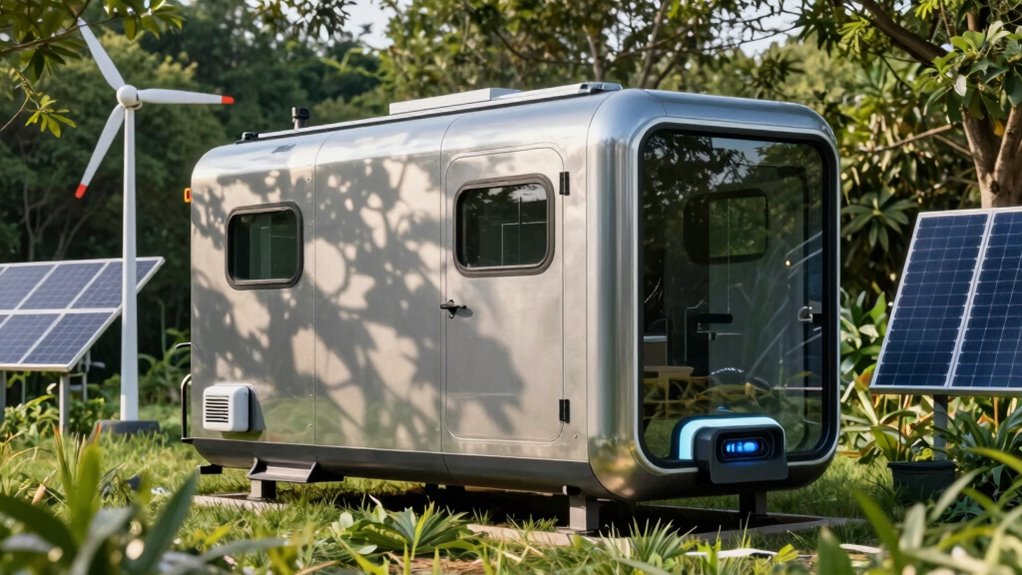

Hydrogen could become a serious power option for your tiny home, offering clean energy that produces only water when burned. Its high energy density makes storage compact, ideal for small spaces. However, safety concerns like leaks and flammability require proper ventilation and detection systems. Infrastructure for production and refilling is still developing, but advances in renewable hydrogen production could make it more accessible. If you want to explore how this emerging technology could fit into your tiny living scheme, keep going.

Get compact home essentials delivered free with Prime
- Fast, free delivery on millions of items
- Prime Video, Amazon Music and more included
- Member-only deals all year
Key Takeaways
- Hydrogen offers a clean, high-density energy source suitable for sustainable tiny home power systems.
- Storage and infrastructure challenges, including high-pressure tanks and refueling stations, remain significant hurdles.
- Safety concerns, such as flammability and leak detection, require rigorous standards and advanced safety systems.
- Excess renewable energy can produce hydrogen, supporting self-sufficient and environmentally friendly tiny home setups.
- Technological advancements and safety improvements are crucial for hydrogen to become a practical tiny home power option.
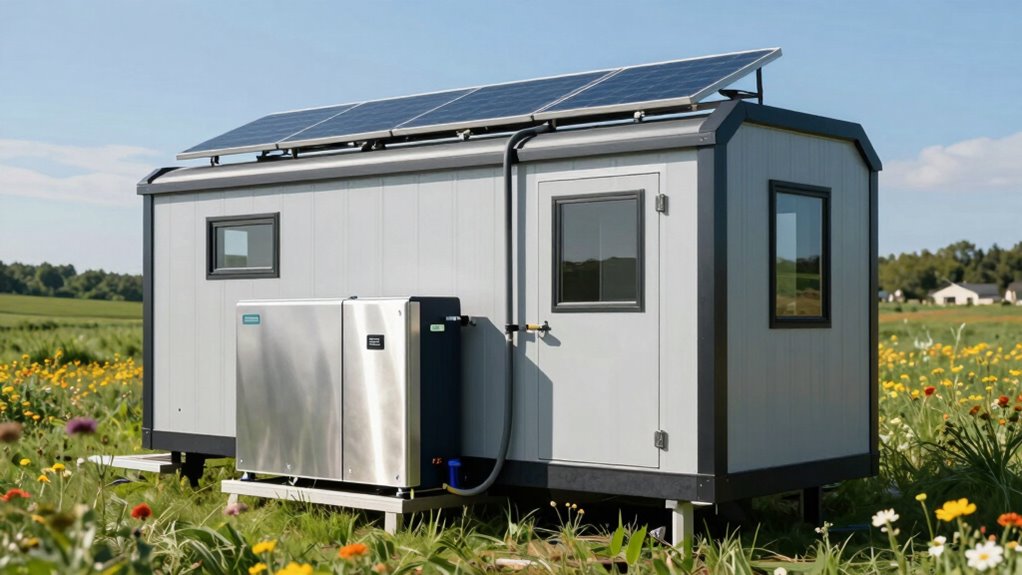
Have you ever pondered how sustainable energy sources could revolutionize tiny home living? Hydrogen, as a potential power option, is gaining attention because of its clean, efficient energy production. Unlike traditional fossil fuels, hydrogen produces only water when burned, making it an attractive choice for eco-conscious homeowners. But before you imagine a future where your tiny home is fully powered by hydrogen, it’s vital to understand the practicalities involved, especially around renewable storage and safety concerns. Hydrogen’s high energy density means you can store a lot of power in a small space, which is perfect for tiny homes. However, storing hydrogen isn’t as straightforward as it is with electricity or propane. It requires specialized tanks designed to handle high pressure, and these tanks must be robust enough to prevent leaks or ruptures. This is where renewable storage solutions come into play. Using advanced materials and innovative tank designs, you can safely contain hydrogen for long periods, ensuring your tiny home remains self-sufficient. Still, safety concerns are significant when dealing with hydrogen. It’s highly flammable and can ignite with very little provocation, which raises questions about its practicality in residential settings. Proper ventilation, leak detection systems, and rigorous maintenance routines are non-negotiable if you want to minimize risks. It’s also essential to consider the infrastructure needed to supply hydrogen safely. Unlike electricity, which can be drawn from the grid or solar panels, hydrogen must be produced, stored, and refilled, often requiring specialized facilities. For tiny home dwellers, this means either relying on local hydrogen providers or setting up a small-scale electrolysis system powered by renewable energy sources like solar or wind. This approach aligns with the idea of renewable storage, where excess energy generated during sunny or windy days is used to produce hydrogen, which can then serve as a reliable energy reserve during less favorable conditions. Still, the technology is evolving, and widespread adoption will depend on advancements that improve storage safety and reduce costs. As you contemplate hydrogen as a power option, weigh its benefits against the safety concerns and the current limitations in storage technology. While it promises a clean, high-density energy source, the risks involved mean that careful planning and investments in safety systems are key. Ultimately, hydrogen could become a viable and sustainable power solution for tiny homes, but it’s essential to stay informed about ongoing innovations and safety standards to make the most of its potential.
hydrogen storage tanks for tiny homes
As an affiliate, we earn on qualifying purchases.
As an affiliate, we earn on qualifying purchases.
Frequently Asked Questions
How Safe Is Hydrogen Storage in Tiny Homes?
Hydrogen storage in tiny homes can be safe if you follow strict safety regulations and guarantee proper storage infrastructure. Modern tanks are designed with safety in mind, featuring robust materials and leak detection systems. It’s essential that you work with certified professionals to install and maintain storage units, and always adhere to local codes. When these precautions are in place, hydrogen can be a secure and efficient energy source for your tiny home.
What Is the Cost Comparison Between Hydrogen and Solar Power?
Sure, because nothing screams “cost-effective” like choosing between renewable sources, right? Hydrogen power tends to be pricier upfront due to production and storage challenges, whereas solar panels offer declining costs through technological advances. For energy independence, solar remains the budget-friendly, accessible option, while hydrogen might someday shine—if you’re willing to pay a premium. So, in the battle of the wallets, solar often wins for tiny homes today.
Are There Government Incentives for Hydrogen-Powered Tiny Homes?
Yes, there are some government policy incentives for hydrogen-powered tiny homes, aiming to boost market viability. These incentives can include tax credits, grants, or subsidies that lower initial costs and encourage adoption. However, availability varies by region, and policies are still evolving. Your best bet is to research local programs, as supporting policies are essential for making hydrogen a practical, sustainable energy option for tiny homes.
How Long Does a Hydrogen Fuel Cell Last?
Hydrogen fuel cells typically last between 5,000 to 10,000 hours, depending on usage and maintenance. You’ll want to monitor hydrogen production and fuel cell efficiency regularly, as these factors influence lifespan. Proper care can prolong the power plant’s performance, ensuring your tiny home stays powered longer. With diligent maintenance, you can enjoy the eco-friendly energy of hydrogen fuel cells, making your tiny home sustainable and smart for years to come.
Can Hydrogen Technology Be Integrated With Existing Tiny Home Systems?
Yes, you can integrate hydrogen technology with existing tiny home systems, but you need to prioritize hydrogen safety. Proper installation and ventilation are essential to prevent leaks, ensuring safe use. Fuel cell longevity varies depending on quality and maintenance, so choosing reliable units and regular upkeep helps extend their lifespan. With careful planning, hydrogen-powered systems can safely and efficiently provide clean energy for your tiny home.
Conclusion
Imagine a future where your cozy tiny home runs smoothly on hydrogen, echoing the simplicity of a Victorian lantern illuminating a dark night. While it’s still early days, hydrogen could become a reliable, eco-friendly power source, making off-grid living more feasible than ever. Just like the pioneers of the past embraced new technologies, you might soon find yourself stepping into a sustainable lifestyle powered by this tiny but mighty energy source—proof that big change often starts small.
Halloween Picks
halloween
As an affiliate, we earn on qualifying purchases.