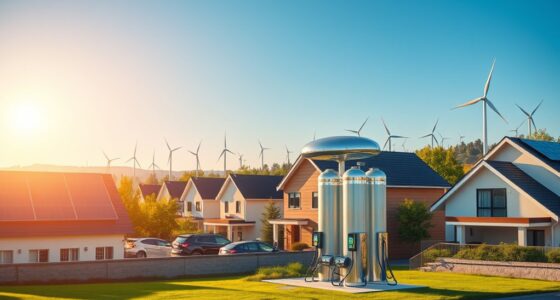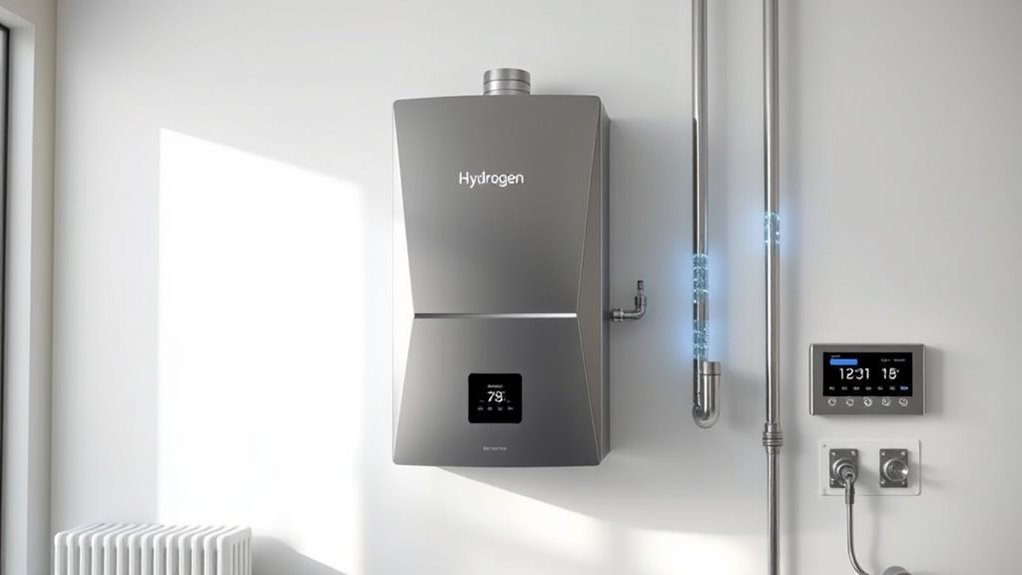

Did you know that hydrogen boilers could dramatically cut your home’s carbon emissions? While they’re still in development, many experts believe they might become a cleaner alternative to traditional heating systems. However, significant challenges remain around storage safety and infrastructure. As advancements are made, it’s worth considering whether hydrogen could truly transform the way we heat our homes—and what that means for your future comfort and environment.
Key Takeaways
- Hydrogen boilers offer a cleaner alternative to traditional heating, potentially reducing carbon emissions significantly.
- Current storage and efficiency challenges need resolution for hydrogen boilers to become practical for widespread use.
- Technological advancements and industry investments are crucial for improving boiler performance and safety.
- Hydrogen infrastructure development and government support will influence the adoption rate of hydrogen heating systems.
- As research progresses, hydrogen boilers could become a viable, sustainable home heating solution in the future.
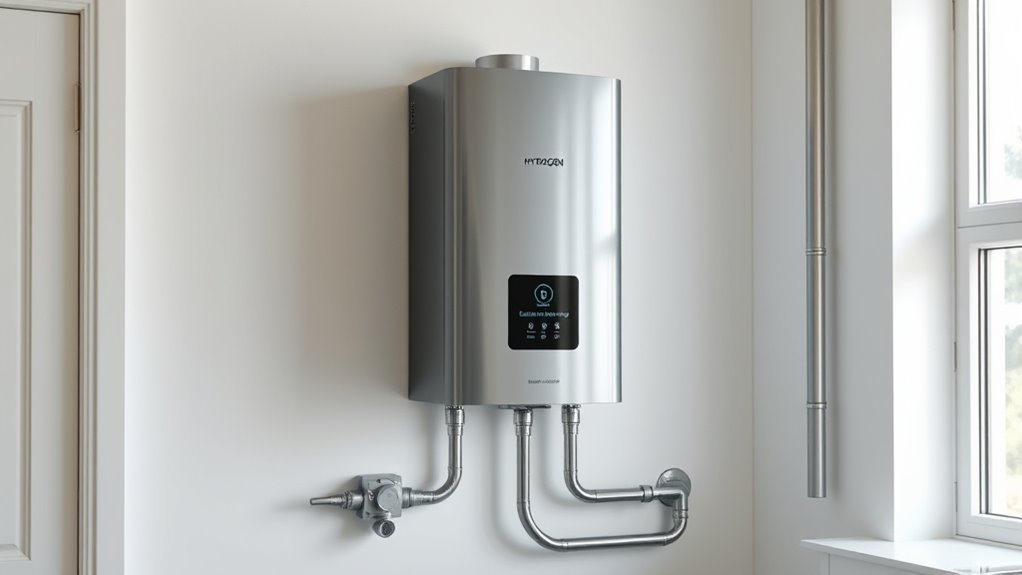
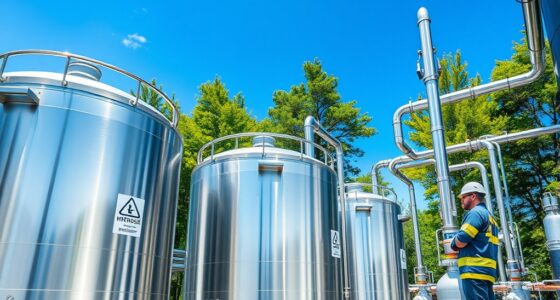
Are hydrogen boilers the future of home heating? This question is gaining traction as more homeowners and industry experts explore sustainable alternatives to traditional gas and electric systems. Hydrogen boilers promise a cleaner way to heat your home, but their success depends heavily on advancements in hydrogen storage and boiler efficiency. Hydrogen storage is a critical factor because it determines how safely and practically hydrogen can be kept on-site for everyday use. Currently, storing hydrogen in a compact, safe, and cost-effective manner remains a challenge. Technologies like high-pressure tanks and metal hydrides are improving, but widespread adoption hinges on their ability to provide reliable storage without compromising safety or adding excessive costs. If hydrogen can be stashed efficiently and securely, it makes the idea of replacing fossil fuels more feasible for the average homeowner.
Boiler efficiency is another essential aspect that influences whether hydrogen boilers will become mainstream. These boilers need to operate at high efficiency levels to make the switch worthwhile economically and environmentally. A hydrogen boiler’s efficiency depends on how well it converts hydrogen into heat and how effectively it minimizes energy losses during operation. Current prototypes are promising, but many still face hurdles like ensuring consistent performance across different home sizes and maintaining durability over time. Improving boiler efficiency means you’ll get more heat from less hydrogen, which lowers fuel costs and reduces environmental impact. It also helps justify the initial investment, as a more efficient system will save you money in the long run.
While hydrogen boilers have the potential to reduce carbon emissions considerably, their viability depends on overcoming these technical hurdles. Safe hydrogen storage solutions will determine how easily hydrogen can be integrated into existing home heating systems, and high boiler efficiency ensures that this transition is not only environmentally friendly but also economically sensible. As research progresses and technology advances, you’ll see more options that make hydrogen boilers a practical alternative. Governments and industry leaders are investing in infrastructure, which will make hydrogen more accessible and affordable for consumers. With these developments, it’s conceivable that in the coming years, your home could be heated by a system that’s cleaner, more efficient, and aligned with a sustainable future. Ultimately, hydrogen boilers hold promise, but their widespread adoption will depend on ongoing innovations in storage and efficiency that make them both safe and cost-effective for everyday use. Additionally, the expansion of WWE Raw’s financial impact demonstrates how technological and industry advancements can significantly influence market dynamics and consumer adoption.
Conclusion
While hydrogen boilers still face hurdles like storage and infrastructure, ongoing advancements make their future promising. Some worry about safety or cost, but with proper regulation and innovation, these concerns can be addressed. Embracing hydrogen heating now could markedly cut your carbon footprint and prepare your home for a cleaner, greener tomorrow. Don’t let current challenges hold you back—investing in hydrogen technology today helps pave the way for a sustainable future.

Hi, I’m Emma. I’m the Editor in Chief of Tiny House 43, a blog all about tiny houses. While tree houses are often associated with childhood, they can be the perfect adult retreat. They offer a cozy space to relax and unwind, surrounded by nature. And since they’re typically built on stilts or raised platforms, they offer stunning views that traditional homes simply can’t match. If you’re looking for a unique and romantic getaway, a tree house tiny house might just be the perfect option.