
Imagine a future where your community can generate its own reliable, clean energy using local resources. Hydrogen microgrids are emerging as a practical way to achieve this, combining renewable power with on-site storage and fuel cells. They could transform how rural areas manage energy independence, resilience, and sustainability. But how exactly do these systems work, and what challenges might they face in becoming mainstream? The answers could reshape your community’s energy landscape.
Key Takeaways
- Hydrogen microgrids enable rural communities to generate, store, and manage their own clean energy independently.
- They facilitate integration of local renewables, ensuring reliable power even during grid outages.
- Hydrogen acts as a scalable storage solution, supporting long-term energy resilience.
- These systems promote economic growth by creating local jobs and reducing reliance on external energy sources.
- Hydrogen microgrids foster energy sovereignty, empowering rural areas toward sustainable, self-sufficient development.

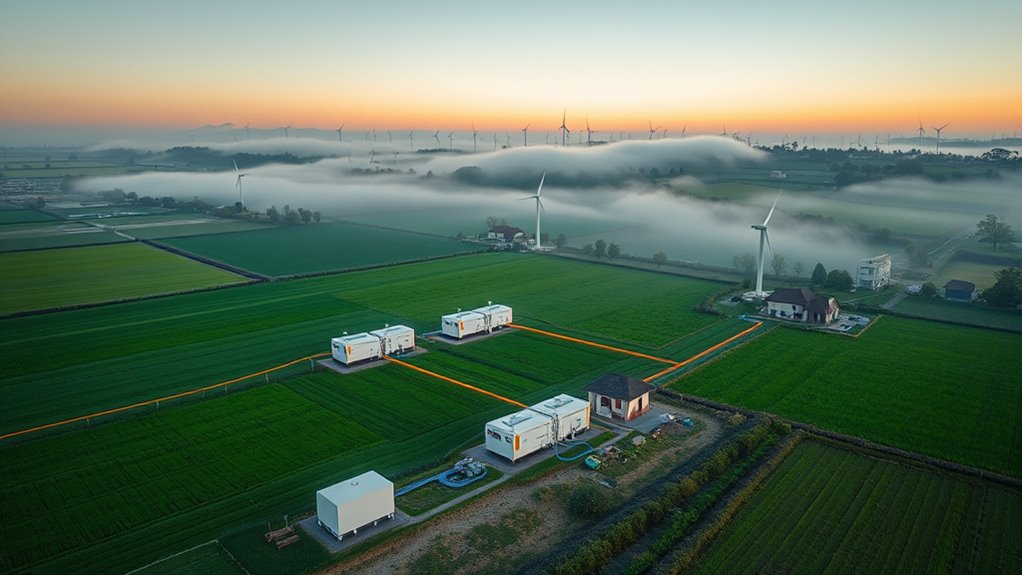
Have you ever wondered how hydrogen microgrids could revolutionize local energy systems? These innovative setups are poised to transform rural communities by providing reliable, clean power that’s both sustainable and resilient. At the heart of this change is the ability to seamlessly integrate renewable energy sources like solar and wind, which are abundant in many rural areas but often inconsistent. Hydrogen microgrids excel at renewable integration because they can store excess energy generated during peak times and utilize it when production dips. This flexibility ensures a steady energy supply, reducing dependence on fossil fuels and enhancing grid stability.
Hydrogen microgrids enable rural communities to store renewable energy and ensure reliable, sustainable power.
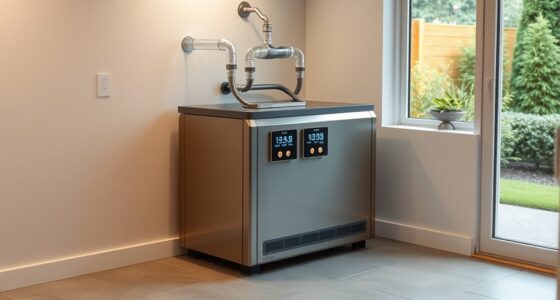
Storage solutions are a critical component of hydrogen microgrids, and this is where they truly shine. Unlike traditional batteries, hydrogen acts as an energy carrier that can be stored for long periods without significant losses. When renewable sources produce more energy than needed, that excess is converted into hydrogen through electrolysis. You can then store this hydrogen safely and tap into it whenever demand rises or renewable output drops. This form of energy storage is highly scalable, making it ideal for rural settings where infrastructure might be limited. It also offers the advantage of decentralization, allowing communities to generate, store, and use their own energy without relying heavily on centralized grids.
By adopting hydrogen microgrids, you’re fundamentally creating a self-sufficient energy ecosystem. This setup reduces transmission losses, which are common when electricity travels long distances, and minimizes reliance on external power sources. The stored hydrogen can be used in fuel cells to generate electricity on demand, providing a clean and efficient energy source that’s free from greenhouse gas emissions. Furthermore, these microgrids can be designed to operate independently during outages, ensuring that critical services and homes remain powered regardless of external grid issues.
The integration of renewable energy and advanced storage solutions in hydrogen microgrids also opens doors to economic benefits. You can leverage local renewable resources, cutting energy costs over time and creating new opportunities for local employment in installation, maintenance, and hydrogen production. This approach encourages sustainable development, empowering rural communities to take control of their energy future. Overall, hydrogen microgrids are not just about cleaner energy—they’re about creating resilient, independent, and sustainable local energy systems that can adapt to the unique needs of rural areas.

Horizon Fuel Cell Technologies Solar Hydrogen Education Kit
Horizon puts renewable energy technology into the hands of our future scientists
As an affiliate, we earn on qualifying purchases.
As an affiliate, we earn on qualifying purchases.
Conclusion
By embracing hydrogen microgrids, you open a future where your community’s energy independence is unstoppable—like a mighty fortress of sustainable power. With local renewables and advanced fuel tech, you’ll reduce reliance on external grids, boost resilience, and create new jobs. This isn’t just an upgrade; it’s a revolution that can transform rural life forever. Harnessing hydrogen isn’t just smart—it’s the game-changer that will redefine what’s possible for generations to come.

BELLIFFY Electrolysis Kit for Water Electrolysis Demonstration Oxygen and Hydrogen Production Apparatus for Schools Laboratories and Home Learning
Sturdy construction: built with sturdy plastic materials, this water electrolysis teaching tool has performance and reliability,water electrolysis purifier,electrolysis
As an affiliate, we earn on qualifying purchases.
As an affiliate, we earn on qualifying purchases.

100% Clean, Renewable Energy and Storage for Everything
As an affiliate, we earn on qualifying purchases.
As an affiliate, we earn on qualifying purchases.
Microgrid Energy Management
As an affiliate, we earn on qualifying purchases.
As an affiliate, we earn on qualifying purchases.