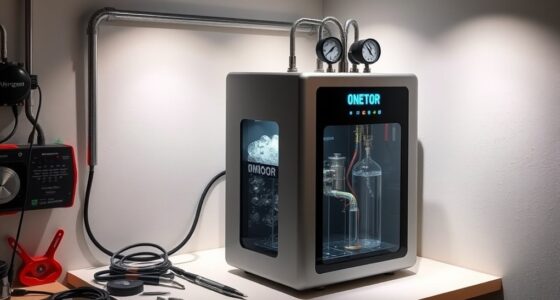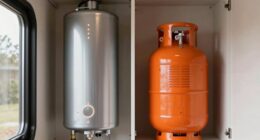

When installing hydrogen tanks in your tiny home, prioritize safety by choosing corrosion-resistant materials and making certain proper ventilation. Place tanks outdoors or in well-ventilated areas, keeping them away from heat sources and sparks. Secure tanks firmly and use certified fittings to prevent leaks. Follow all local codes, obtain permits, and install safety devices like sensors and fire suppression systems. If you want detailed steps to guarantee a safe and compliant setup, keep exploring further.
Key Takeaways
- Select corrosion-resistant, properly rated hydrogen tanks suitable for outdoor or well-ventilated tiny home locations.
- Ensure compliance with local codes, permits, and safety regulations before installation.
- Position tanks away from heat sources, windows, and property lines, securing them firmly for stability.
- Use certified fittings, correct wiring, and piping, following safety standards to prevent leaks and hazards.
- Conduct regular safety inspections, monitor for leaks, and maintain safety systems like sensors and fire suppression devices.
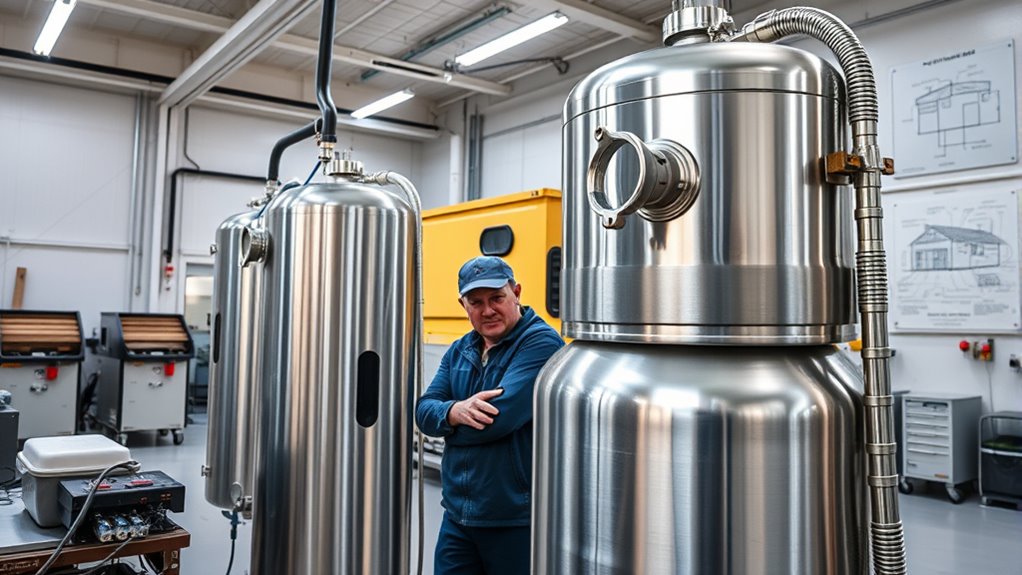
Installing hydrogen tanks for tiny homes offers a sustainable and efficient energy solution, but it requires careful planning and proper safety measures. Before you begin, it’s imperative to prioritize safety precautions. Hydrogen, being highly flammable, demands strict handling and installation procedures. You must understand and follow all installation regulations to guarantee your setup is safe and compliant with local codes. This not only protects you but also ensures your tiny home remains safe for anyone living or visiting.
Start by researching the specific safety precautions necessary for hydrogen tank installation. These include selecting appropriate materials that resist corrosion, ensuring proper ventilation, and avoiding ignition sources near the tank. You should also install hydrogen sensors and fire suppression systems as added safety measures. These precautions help detect leaks early and prevent potential accidents, giving you peace of mind. Remember, it’s best to consult with certified professionals who are familiar with hydrogen safety standards. They can help you navigate the complexities of installation regulations and guarantee your setup meets all legal requirements.
Research safety precautions like corrosion-resistant materials, ventilation, and leak detection; consult certified professionals for compliant hydrogen tank installation.
When planning your hydrogen tank installation, pay close attention to the location. The tank should be placed outdoors or in well-ventilated areas, away from windows, doors, or any sources of heat or sparks. Proper placement minimizes risk and adheres to installation regulations designed to maximize safety. Secure the tank firmly to prevent movement or damage, and use certified fittings and connectors to avoid leaks. Make sure your wiring and piping are correctly installed, following all safety standards, to prevent electrical sparks or corrosion that could lead to leaks or fires.
You’ll also need to obtain the necessary permits before installation. Local regulations often specify minimum distances from property lines, structures, or other hazards. Compliance with these regulations is imperative to avoid fines or having to redo your setup. During installation, double-check all connections, pressure gauges, and safety valves. Regular inspections are essential afterward to ensure everything remains in proper working order, especially since hydrogen tanks require ongoing maintenance and safety checks. Additionally, understanding the role of AI in Education can inform ongoing training and safety protocols for handling advanced technologies like hydrogen storage systems.

Aqua Dream 793 GPH Amphibious Water Pump – 55W Submersible or Inline External Pump with Corrosion Resistant Ceramic Shaft, 8.85ft Max Lift for Aquariums, Ponds, and Hydroponics – 1 Pc
Safety & Professional Performance: Engineered with an epoxy-sealed motor and a corrosion-resistant ceramic impeller shaft, this submersible pump…
As an affiliate, we earn on qualifying purchases.
As an affiliate, we earn on qualifying purchases.
Frequently Asked Questions
What Safety Measures Are Required During Hydrogen Tank Installation?
During hydrogen tank installation, you need to follow strict safety protocols and installation procedures to prevent accidents. Always wear proper protective gear, guarantee good ventilation, and keep a fire extinguisher nearby. Confirm that all connections are secure and check for leaks with soapy water. Keep ignition sources away, and follow manufacturer guidelines precisely. These steps help minimize risks and ensure a safe, compliant installation process.
How Long Do Hydrogen Tanks Typically Last?
Hydrogen tanks typically last 10 to 15 years, depending on tank maintenance and longevity factors like material quality and usage conditions. You should regularly inspect your tanks for signs of wear, corrosion, or damage to guarantee safety and peak performance. Proper maintenance, including timely repairs and adherence to safety guidelines, can extend the lifespan of your hydrogen tanks, giving you reliable energy for years to come.
Can Hydrogen Tanks Be Installed Indoors?
Sure, you can install hydrogen tanks indoors—if you enjoy risking explosions and indoor air quality crises. Just remember, proper indoor ventilation is essential, and leak detection systems are your best friends. Without these, you’re inviting disaster into your cozy tiny home. Think of it as hosting a tiny, explosive party where safety measures are the uninvited guests. So, proceed with caution, and don’t forget: safety first, or it’s lights out.
What Is the Cost Range for Installing a Hydrogen Tank?
You’ll find that the cost for installing a hydrogen tank, focusing on hydrogen storage and tank maintenance, generally ranges from $3,000 to $10,000 or more. Factors influencing this include tank size, safety features, and installation complexity. Regular tank maintenance is essential for safe hydrogen storage, which can add to ongoing costs. Be sure to consult professionals to get accurate estimates tailored to your tiny home setup.
Are There Specific Regulations for Tiny Home Hydrogen Tank Use?
You face regulations that are as strict as a fortress when it comes to tiny home hydrogen tank use. You must guarantee your tank has proper tank certification and follows safety regulations designed to protect you and your home. Local authorities often require permits, regular inspections, and adherence to codes specific to hydrogen storage. Ignoring these can lead to serious safety risks, so always stay informed and compliant for peace of mind.

PQWT Underground Water Leak Detectors for Home PQ125A Wall Pipe Water Leakage Detection with Touchscreen Earphone and Carrying Case Multi Sensor Acoustic Pipeline Sound Intensifier
[Simple Operation] The PQ125A water leak detectors for home utilizes a factory-developed UI interaction system. Its touchscreen displays…
As an affiliate, we earn on qualifying purchases.
As an affiliate, we earn on qualifying purchases.
Conclusion
Installing hydrogen tanks in your tiny home can be a game-changer, offering a clean and efficient energy source. Did you know that hydrogen fuel cells produce only water as a byproduct? With over 60,000 hydrogen-powered vehicles worldwide, the technology is rapidly expanding. By choosing hydrogen, you’re not just upgrading your home—you’re joining a movement toward sustainable living. Embrace this innovative energy solution and help shape a greener future for everyone.

StoveTop FireStop Rangehood® Fire Suppressor – Automatic StoveTop Fire Suppressor for Residential Kitchen Safety – Easy to Install, Direct Flame-Activated, Non-Toxic Fire Suppression System (1 Pair)
PROTECT YOUR PROPERTY AND LOVED ONES – Designed specifically for residential kitchens with four-burner stoves, the Rangehood Fire…
As an affiliate, we earn on qualifying purchases.
As an affiliate, we earn on qualifying purchases.

3 Stage Reverse Osmosis Countertop Portable Tank-Less Space Saver Water Universal Filtration System for Drinking Water or Aquarium Fish Tank Filter NSF Certified 50 GPD Membrane Removal Rate 98%
💎 CONVENIENT RO WATER The 3 Stage system is portable water filter unit requiring minimum installation perfect for…
As an affiliate, we earn on qualifying purchases.
As an affiliate, we earn on qualifying purchases.