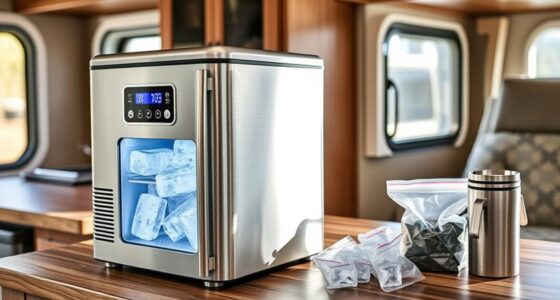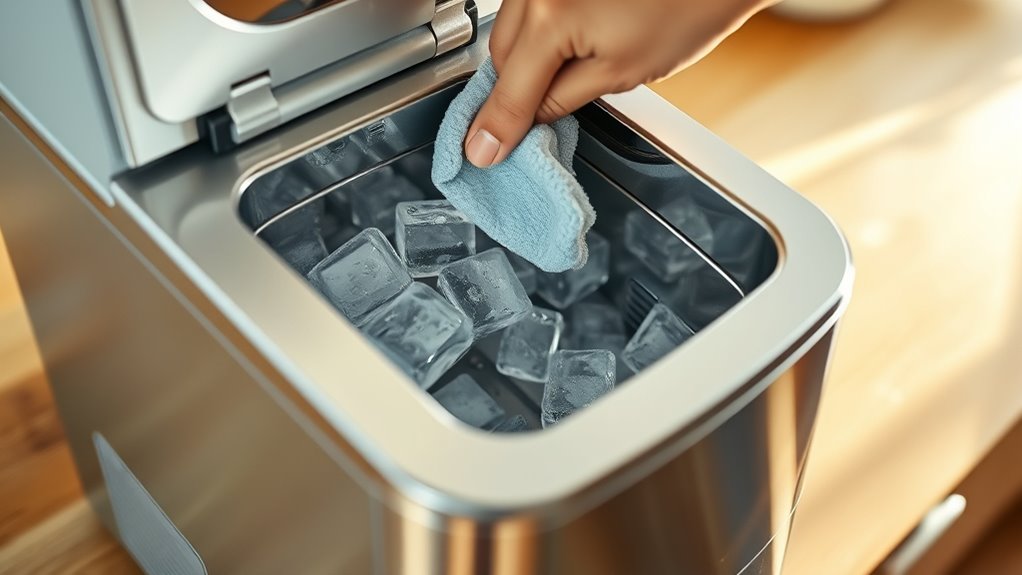

To keep your small home’s ice maker running smoothly and producing clean ice, establish a regular cleaning schedule every 3 to 6 months. Turn it off, unplug, and remove parts like ice trays for gentle scrubbing with mild detergent or vinegar solution. Replace water filters twice a year, and wipe down exterior surfaces frequently. Check water lines and clear any blockages to prevent buildup. Stay on top of these simple steps to maintain fresh ice—more expert tips await.
Key Takeaways
- Schedule regular cleaning every 3 to 6 months, including scrubbing removable parts with mild detergent or vinegar-water.
- Replace water filters approximately every six months to maintain ice clarity and taste.
- Wipe down exterior surfaces regularly to prevent dust buildup and ensure machine efficiency.
- Inspect and clear water lines and drainage to prevent clogs and ensure smooth operation.
- Follow manufacturer guidelines for maintenance and use tools like load planning to optimize ice production.
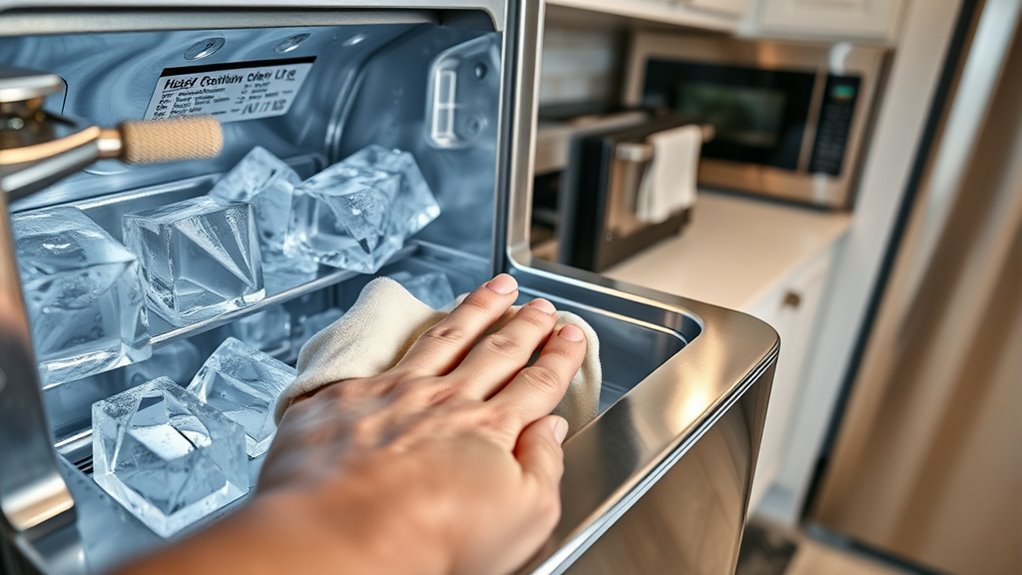
Maintaining your ice maker is essential to guarantee it produces clean, fresh ice and operates efficiently. One of the most effective ways to do this is by establishing regular cleaning schedules. Depending on your usage, you should plan to clean your ice maker every three to six months. Consistent cleaning prevents the buildup of mineral deposits, mold, and bacteria that can compromise ice quality and potentially cause health issues. When setting your cleaning schedule, remember to turn off the machine, unplug it, and carefully remove any removable parts like ice trays or filters. Use a mild detergent or a mixture of vinegar and water to scrub away grime, paying close attention to corners and crevices where mold can hide. Sizing and load‑planning tools can help ensure your ice maker operates within optimal parameters, reducing the need for excessive cleaning. An equally important aspect of maintenance is replacing the water filter regularly. Most ice makers have a built-in water filter designed to improve ice clarity and taste by removing impurities. Over time, these filters become saturated with contaminants, reducing their effectiveness. Check your manufacturer’s recommendations for how often to replace the filter—typically every six months—but consider your water quality and usage volume. If you notice your ice cubes are cloudy or have an off taste, it’s a clear sign that your filter needs attention. Replacing the filter not only ensures the purity of your ice but also helps your machine operate more efficiently, preventing unnecessary strain on the system. When installing a new filter, follow the instructions carefully, and run a few cycles of water through the system to clear out any air pockets or residual particles. In addition to cleaning schedules and water filter replacement, it’s wise to keep the exterior of your ice maker clean. Wipe down the surfaces regularly with a soft cloth and mild cleaner to prevent dust and grime accumulation, which can affect the machine’s performance. Also, check the drainage and water lines periodically for clogs or leaks, ensuring water flows smoothly without causing backups or ice production issues.
Frequently Asked Questions
How Often Should I Replace My Ice Maker’s Water Filter?
You should replace your ice maker’s water filter every six months to guarantee ideal filter lifespan and maintain water quality. Regularly changing the filter prevents buildup of contaminants, keeping your ice fresh and safe. If your water has higher mineral content or you notice reduced ice production, consider replacing the filter sooner. Checking your manufacturer’s recommendations and monitoring water taste and clarity can help you determine the best replacement schedule.
Can I Use Tap Water in My Ice Maker?
Yes, you can use tap water in your ice maker, but it’s important to consider water quality and tap water safety. If your tap water is clean and safe to drink, it should be fine for making ice. However, if your water contains minerals or impurities, it could affect ice clarity and taste, and might clog your machine over time. Using filtered or purified water can help ensure better ice quality and appliance longevity.
What Are Signs of a Malfunctioning Ice Maker?
If your ice maker makes unusual noise or you notice ice block formation, it’s likely malfunctioning. You might hear grinding or banging sounds, indicating mechanical issues or debris. Ice block formation suggests freezing problems or low water flow. Don’t ignore these signs; they can lead to bigger malfunctions. Regularly check for ice buildup and noise, and address issues promptly to keep your ice maker running smoothly.
How Do I Troubleshoot Inconsistent Ice Production?
If your ice maker produces inconsistent ice, start by checking for ice level issues and make certain nothing’s blocking the ice flow. Next, verify that your freezer temperature stays at the recommended 0°F, as it affects ice production. Clean the ice maker components regularly and inspect the water supply line for kinks or clogs. Adjusting these factors usually helps stabilize your ice production for consistent results.
Is It Safe to Clean the Ice Bin With Bleach?
Cleaning your ice bin with bleach isn’t recommended, as it can leave residues that affect ice quality and safety. Instead, follow the proper sanitizing procedures using a mild solution of dish soap and water, then rinse thoroughly. If you choose to disinfect, use a solution specifically designed for food-contact surfaces. Always make certain the bin is completely dry before refilling to keep your ice clean and safe for use.
Conclusion
Keeping your ice maker well-maintained is like tending a garden; with regular care, it continues to flourish and serve you perfectly. By cleaning filters, checking for clogs, and following simple maintenance steps, you guarantee your ice maker stays in top shape. Think of it as giving your small home’s heart a gentle tune-up—so it keeps churning out crisp, clear ice whenever you need it. A little effort now saves you from bigger headaches later.