For off-grid ice storage, you should use solar-powered ice makers combined with well-insulated containers placed in shaded, cool areas. Building insulated sheds or coolers with reflective roofs helps slow melting, while strategic placement reduces heat gain. Regular maintenance and natural underground storage can also extend ice life. These methods maximize cold retention and ensure reliable ice supply even without grid access. Keep exploring to discover more ways to optimize your off-grid ice storage solutions.
Key Takeaways
- Use insulated containers or sheds with thick walls and reflective roofing to minimize heat transfer and ice melting.
- Incorporate solar-powered ice makers to produce ice during sunny periods for storage and later use.
- Store ice in cool, shaded locations or underground to naturally extend its lifespan.
- Ensure proper sealing and continuous insulation to prevent air leaks and heat infiltration.
- Combine storage with natural refrigeration methods and regular maintenance to optimize ice preservation off-grid.
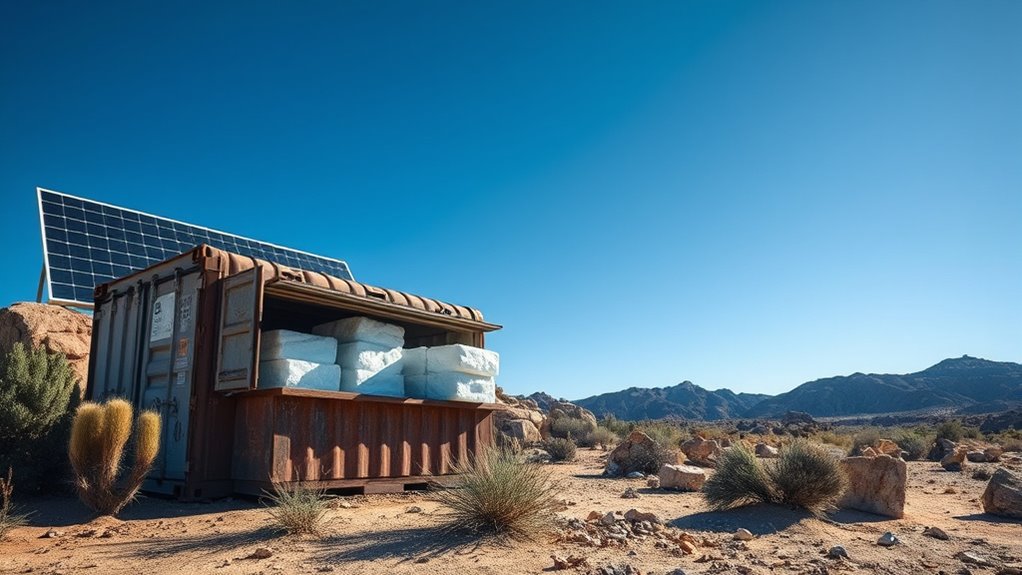
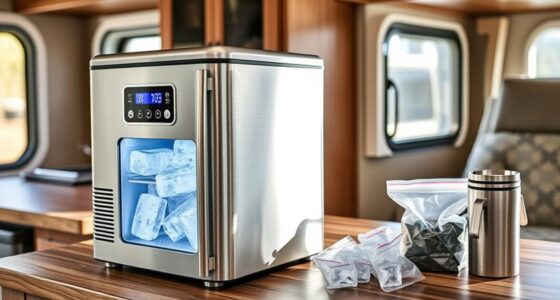
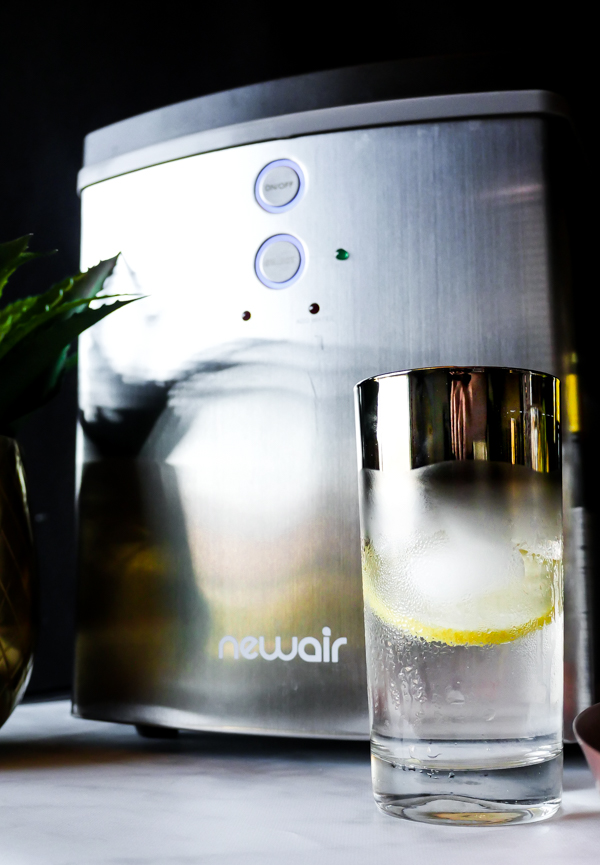
When you’re living off-grid, maintaining a reliable cold storage system can be challenging, especially without access to conventional electricity. One effective way to keep your perishables fresh is by producing your own ice using solar powered ice makers. These devices harness sunlight to operate, eliminating the need for grid power and making them ideal for remote locations. By investing in a solar powered ice maker, you can generate ice during sunny days and store it for later use, extending the freshness of your food and reducing waste.
However, simply producing ice isn’t enough; it needs to be stored properly to prevent melting and spoilage. This is where insulation materials become essential. High-quality insulation materials help maintain low temperatures inside your ice storage unit by minimizing heat transfer from the environment. Materials like foam board, spray foam, or reflective insulation are popular choices because they are lightweight, easy to install, and highly effective at conserving cold. When constructing an ice storage bin or a dedicated cold room, ensure that the insulation is continuous and well-sealed to prevent air leaks, which could increase energy consumption or cause your ice to melt faster.
To maximize efficiency, combine a solar powered ice maker with insulated storage containers. Place these containers in shaded, cool areas to further reduce heat gain. If you’re designing a dedicated ice storage shed, consider building it with thick insulated walls and a reflective roof to bounce off sunlight and keep interior temperatures low. Ventilation also plays a key role; proper airflow can prevent heat buildup and humidity, which can accelerate melting.
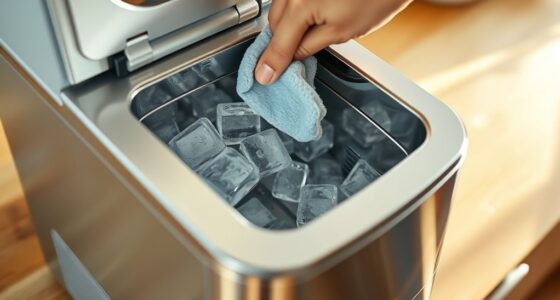
It’s important to remember that insulation materials alone won’t keep your ice cold forever. You’ll need to plan for periodic ice production, especially during cloudy days or seasons with less sunlight. Having a backup plan, like storing ice in a well-insulated cooler or using natural refrigeration techniques—such as burying ice underground—can help ensure a steady supply. Regular maintenance of your solar powered ice maker and checking insulation integrity will keep your system running smoothly.
Frequently Asked Questions
What Is the Typical Lifespan of Off-Grid Ice Storage Systems?
Off-grid ice storage systems typically last 10 to 15 years, depending on ice quality and storage capacity. You’ll want to regularly maintain insulation and refrigeration components to guarantee longevity. Properly stored, high-quality ice reduces wear on the system, extending its lifespan. Keep an eye on ice quality, as degraded ice can strain the system, and ensure your storage capacity matches your needs to avoid unnecessary stress and prolong the system’s usefulness.
How Much Maintenance Do Ice Storage Solutions Require?
You’ll find that maintenance frequency for off-grid ice storage solutions is relatively low, typically requiring checks every few months. Regularly inspect seals, refrigerant levels, and insulation to guarantee system durability. Keeping the system clean and addressing minor issues promptly helps prevent bigger problems, extending its lifespan. Overall, with proper maintenance, your ice storage system can remain reliable and efficient for many years, making it a worthwhile investment.
Are There Eco-Friendly Refrigerants Suitable for Off-Grid Use?
Yes, there are eco-friendly refrigerant options suitable for off-grid use. You can choose refrigerants with low environmental impact, such as R-290 (propane) or R-600a (isobutane), which have minimal ozone depletion potential and lower global warming effects. These refrigerant options are energy-efficient and safer, making them ideal for off-grid applications where reducing environmental impact is a priority. Always guarantee proper handling and ventilation when using these refrigerants.
Can Ice Storage Be Integrated With Renewable Energy Sources?
Yes, ice storage can be integrated with renewable energy sources. For example, a remote village might use solar panels to power an ice storage system, storing excess energy as ice during sunny days. This acts as energy storage, providing cooling and conserving power for cloudy days. Such renewable integration guarantees reliable off-grid cooling, reduces reliance on fossil fuels, and enhances energy efficiency, making off-grid living more sustainable and resilient.
How Do Weather Conditions Affect Ice Storage Efficiency?
Weather conditions substantially impact your ice storage efficiency. Temperature fluctuations can cause your ice to melt faster or refreeze unevenly, reducing storage effectiveness. High humidity impacts evaporation rates, leading to quicker ice loss. To optimize performance, make certain your storage system is well-insulated and protected from direct sunlight. Monitoring weather patterns helps you anticipate changes, so you can adjust your system accordingly, maintaining reliable ice storage even in varying conditions.
Conclusion
Choosing the right ice storage solution keeps your off-grid life cool and sustainable. With the right system, you’ll avoid the pitfalls of bygone days when ice was a rare luxury, much like the steam engine’s revolution. Embrace modern technology, but remember, your ingenuity and resourcefulness are timeless. Stay ahead of the curve, and your off-grid journey will remain smooth and invigorating, just like a well-stocked ice chest on a hot summer day in the 1800s.