Protecting your tiny home from natural disasters is essential, and the right insurance helps you do that. Look for policies that cover the structure, fixtures, and optional natural disaster protections like floods, fires, and storms. Many providers offer affordable options tailored to your location and build, including specialized coverage for tiny homes on wheels. Comparing premiums, deductibles, and policy details guarantees you get the coverage you need without overspending. Keep exploring to find the best options for your tiny home protection.
Key Takeaways
- Look for insurance policies that include natural disaster coverage such as storms, floods, and wildfires for tiny homes.
- Consider specialized policies for tiny homes on wheels, which often require tailored coverage options.
- Compare premiums, deductibles, and policy details to ensure comprehensive yet affordable natural disaster protection.
- Verify that coverage matches your tiny home’s location and construction to avoid gaps in protection.
- Opt for policies with optional add-ons for floods and earthquakes, especially in high-risk areas.

Are you wondering if your tiny home is protected? When it comes to safeguarding your investment against natural disasters, having the right insurance is vital. One of the first things you’ll notice is that many policies offer affordable premiums, making it easier to find coverage that fits your budget. Affordable premiums don’t mean you must sacrifice quality coverage, though. In fact, many insurance providers now recognize the unique needs of tiny homeowners and offer tailored coverage options that can protect against a variety of natural events like storms, floods, and wildfires.
Coverage options vary widely, so it’s smart to explore what’s available. Basic policies often cover the structure itself, including walls, roof, and built-in fixtures, but you’ll want to make sure they also extend to damage caused by natural disasters. For instance, some policies include protection against fire and wind damage, which are common in many disaster-prone areas. Others may offer optional add-ons for flood or earthquake coverage, especially if your tiny home is in a high-risk zone. You should carefully review these options to guarantee you’re adequately protected without paying for coverage you don’t need.
Explore coverage options to protect your tiny home from natural disasters without overpaying.
It’s important to get insurance that’s specific to your tiny home’s location and construction. Some policies are designed for traditional homes and may not be suitable for tiny structures, so ask your insurer about coverage options that truly fit your situation. Additionally, some providers now offer specialized policies for tiny homes on wheels, which are more vulnerable to certain natural disasters. These policies often include flexible coverage options that can be customized to your needs, giving you peace of mind whether you’re facing a hurricane, flood, or wildfire.
Another factor to consider is the deductibles and claim processes. With natural disasters, you want insurance that offers straightforward claims procedures and manageable deductibles, so you’re not overwhelmed if disaster strikes. Comparing different policies based on premiums, coverage options, and customer reviews can help you find the best fit. Remember, a policy with affordable premiums combined with comprehensive coverage options guarantees you’re protected without stretching your finances.
Furthermore, understanding the importance of adequate coverage can help you make informed decisions about the policies you choose. In the end, protecting your tiny home from natural disasters involves understanding what coverage options are available and choosing a plan that balances affordability with thorough protection. Don’t hesitate to ask questions and clarify what each policy covers. Your home is a significant investment, and having the right insurance means you can focus on enjoying your tiny living space, knowing you’re safeguarded against the unpredictable forces of nature.
Frequently Asked Questions
Does Tiny Home Insurance Cover Flood Damage?
No, tiny home insurance typically doesn’t cover flood damage because of common insurance exclusions. If you’re concerned about tiny home flooding, you’ll need to purchase a separate flood insurance policy. Standard policies generally exclude flood damage, so it’s essential to review your coverage and consider additional protection to safeguard against flood risks. Always check your policy details to understand what’s covered and what’s not regarding natural disasters.
Are Wildfire Damages Included in Tiny Home Policies?
Wildfires can strike unexpectedly, and your tiny home insurance might not cover the flames if wildfire damages aren’t included in your policy. To protect yourself, focus on wildfire prevention and understand your coverage details. If flames threaten, you’ll want to make swift insurance claims. Check with your insurer to see if wildfire damages are covered, and consider adding extra protection to keep your tiny haven safe from nature’s fury.
How Does Earthquake Coverage Work for Tiny Homes?
Earthquake coverage for your tiny home typically includes damages caused by seismic activity, but it’s essential to verify if your policy covers earthquake zones. You might need seismic retrofitting to strengthen your home against tremors, which can lower premiums and improve coverage. Be sure to discuss these options with your insurer, especially if you live in an earthquake zone, to ensure you’re protected and prepared for potential seismic events.
Can Tiny Home Insurance Be Customized for Natural Disasters?
Yes, you can customize your tiny home insurance for natural disasters. Your insurer considers tiny home regulations and insurance premium factors like location, materials, and safety features. You can add coverage for specific disasters like floods, wildfires, or earthquakes, tailoring the policy to your needs. This way, you’re better protected against potential damages, ensuring your tiny home is covered according to its unique risks and compliance with local regulations.
What Exclusions Exist in Tiny Home Disaster Coverage?
You might think your tiny home disaster coverage is all-encompassing, but surprise—exclusion clauses and policy limitations often leave gaps. Floods from hurricanes or earthquakes, for example, are frequently excluded, despite their devastating potential. So, while you’re protected from some disasters, others might wipe out everything. Always read the fine print, because what’s not covered could end up costing you more than you bargained for when disaster strikes.
Conclusion
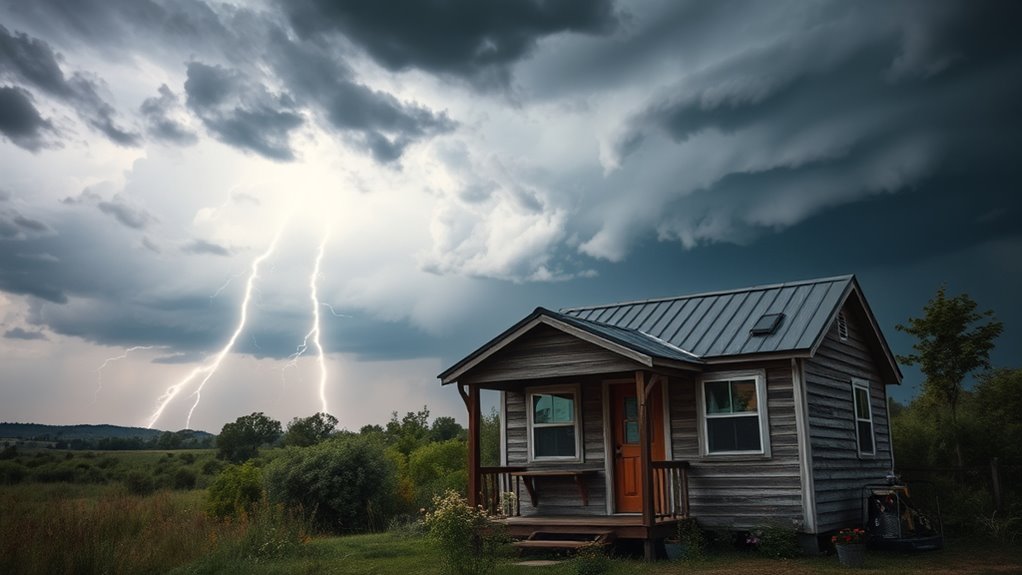
Securing tiny home insurance for natural disasters gives you peace of mind. Imagine a storm damaging your tiny home; with proper coverage, you can recover quickly without heavy financial strain. For example, Sarah’s tiny home was hit by a hurricane, but her insurance covered repairs, letting her rebuild without stress. Don’t leave your small haven vulnerable—protect it today so you’re prepared for whatever nature throws your way.