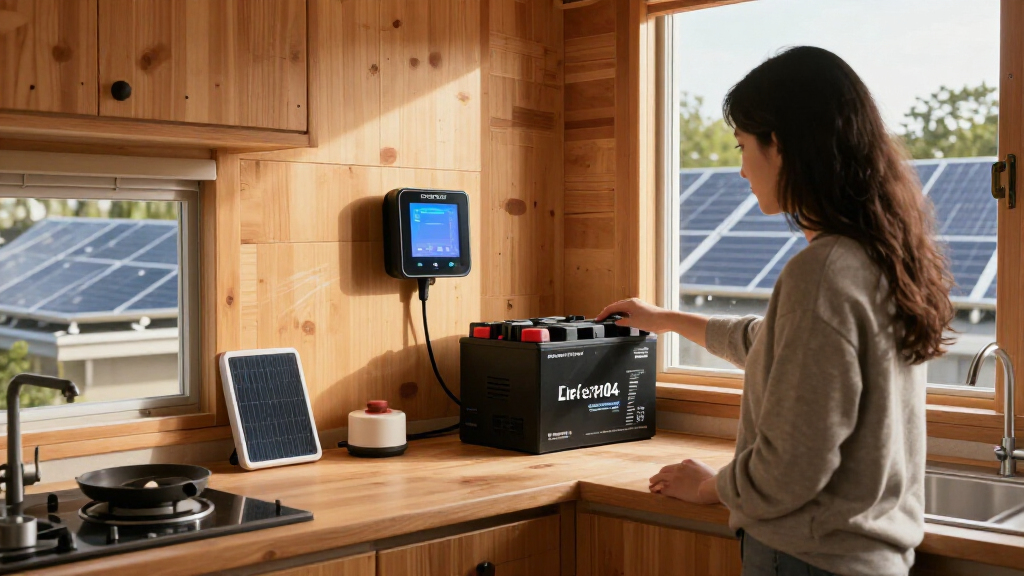
The ECO-WORTHY PowerMega pairs a 16.1kWh LiFePO4 battery with a 10kW hybrid inverter, putting it in the fixed home-storage class rather than the portable power-station market. Its strongest case is the combination of substantial usable energy and output for both 120V and split-phase 240V loads. The tradeoff is a 293-pound battery that needs freight delivery and a less predictable inverter exterior version. It is worth considering for a planned home or off-grid installation, but cumbersome and potentially excessive for buyers who just need portable backup.

Get compact home essentials delivered free with Prime
- Fast, free delivery on millions of items
- Prime Video, Amazon Music and more included
- Member-only deals all year

ECO-WORTHY PowerMega 48V 314Ah LiFePO4 Energy Storage System
- ✔ Battery chemistry: LiFePO4
- ✔ Battery capacity: 314Ah
- ✔ Battery voltage: 51.2V
Why This Product Stands Out
The PowerMega stands out through capacity and inverter output in one package. At 16.1kWh usable and 10kW, it is aimed at home backup, solar storage, and off-grid installations that need more than a few hours of phone, laptop, or small-appliance power. The 240V split-phase option is especially relevant to buyers planning a fixed system around household circuits or compatible 240V equipment.
That places it in a different role from compact solar generators. For example, the Jackery Solar Generator 1000 v2 with a 200W panel is a more natural choice for lighter, portable use, while the Jackery HomePower 3600 Plus and HomePower 3000 offer smaller-capacity portable-station alternatives. The ECO-WORTHY makes more sense when buyers need a fixed system with substantially more usable energy and 240V support; it is less appealing when quick setup and easy relocation matter most.
Its specification set is strong for that stationary use case: LiFePO4 chemistry, active balancing, multiple safety protections, and a stated cycle life above 9,000 cycles at 80% depth of discharge. Those figures describe the product’s intended durability, but they do not by themselves guarantee a particular service life in a specific installation. The practical advantage is a system designed around recurring storage and backup, rather than occasional portable charging.
Key Features and What They Mean
The 16.1kWh of usable energy gives a home or off-grid system a sizeable reserve to draw on during an outage or when solar production is low. That reserve can keep selected household circuits running longer before owners need to reduce loads or switch to another source. Homeowners backing up several circuits and off-grid users bridging periods of low solar production benefit most; buyers should estimate their loads and expected runtime to check whether this capacity fits.
The 10,000W hybrid inverter determines how much power the system can deliver at one time. That higher output can let a planned installation serve larger loads or several compatible circuits together, instead of limiting use to small electronics and appliances. The battery capacity determines how long those loads can run, so buyers benefit from the inverter rating most when their load plan needs substantial simultaneous output and the stored energy to support it.
Split-phase 240V and single-phase 120V output lets a compatible installation serve ordinary household circuits as well as equipment designed for 240V. This can make the system more useful for whole-home or selected-circuit backup, since buyers can plan around a broader range of household loads. Homeowners with compatible 240V equipment benefit most, but the voltage options alone do not guarantee compatibility; confirm the inverter configuration and connection plan with an installer.
The LiFePO4 battery, active-balancing BMS, and safety protections are intended to manage the battery cells and guard operation. For owners who charge and discharge regularly for solar storage or recurring backup, these features support a system designed for repeated use. The stated rating of more than 9,000 cycles at 80% depth of discharge is relevant to buyers expecting frequent cycling, though it does not guarantee that lifespan in every installation.
WiFi and Bluetooth monitoring let owners check system status without relying only on the unit itself, while RS485, CAN, and RS232 provide communication options for compatible equipment. These features help most when an owner or installer is coordinating the battery with a planned solar or monitoring setup; status visibility can make it easier to track operation and spot changes. The MPPT controller’s listed efficiency of up to 99.9% describes a maximum conversion specification, which may help limit conversion losses under suitable conditions. Actual solar yield still depends on the array and operating conditions, so these features add less value to someone seeking only occasional, simple backup.
Performance and Real-World Use
In day-to-day use, the PowerMega is best treated as installed energy equipment, not as a box to move wherever power is needed. The battery’s dimensions—32.56 by 20.47 by 9.92 inches—and 293.2-pound weight make the placement decision consequential. Freight delivery means buyers should plan for receiving, moving, and positioning the battery before ordering. The system’s output options and communications also make installation planning part of the purchase, rather than an afterthought.
For backup, the combination of stored energy and inverter output offers room to support a broader set of loads than a small portable station. The usable runtime will vary with load, and a 10kW rating should not be read as a guarantee of any particular outage duration. For solar storage, the monitoring and MPPT specifications may help integrate the system into an appropriately designed setup, but the product description alone does not establish compatibility with every panel array or household electrical configuration.
The randomly selected inverter exterior version is a small but unusual ownership consideration: buyers may not receive the exact exterior variant they expected. That matters more where the unit will be visible or where a specific version is needed for a planned installation. The available facts do not establish a particular maintenance schedule or noise level, so buyers should confirm installation and operating details for their intended setup before relying on assumptions.
Who Should Buy This
The best fit is a homeowner, workshop operator, or off-grid user planning a fixed energy system who can make use of 16.1kWh of storage and needs an inverter with 240V split-phase support. It also suits buyers who expect to cycle a battery regularly with solar and value app monitoring, multiple communication ports, and a long stated cycle-life rating. This buyer should have a clear installation plan and a practical way to receive and place a battery weighing more than 293 pounds.
Who Should Skip This
Skip the PowerMega if you want portable backup for camping, travel, or occasional small-device charging. A Jackery Solar Generator 1000 v2 with a 200W panel is a better comparison for lighter portable needs, while the HomePower 3600 Plus or HomePower 3000 may suit buyers who prefer a portable power-station format with less storage than this system. It is also a poor choice if freight delivery, battery placement, or fixed-system planning is impractical, or if you need to choose a particular inverter exterior version.
Value for Money
The PowerMega is worth its price for buyers who will use its 16.1kWh of storage, 10kW hybrid inverter, and 240V support in a planned home backup, solar-storage, or off-grid installation. Those capabilities make the package’s scale worthwhile for a system that needs substantial stored energy and the ability to serve meaningful loads. It is poor value for someone who needs only limited emergency power or portable charging, because the extra capacity and output would go unused and the fixed setup adds handling effort. Since no current price is provided here, a precise cost comparison is not possible; judge the purchase against the installed system’s defined needs and the cost of comparable fixed-storage packages.
ECO-WORTHY PowerMega 48V 314Ah LiFePO4 Energy Storage System
The PowerMega stands out through capacity and inverter output in one package . At 16.1kWh usable and 10kW, it is aimed at home backup, solar storage, and off-grid installations that need more than a few hours of phone, laptop, or small-appliance power.
Pros:
- The 16.1kWh usable capacity gives a home backup setup meaningful runtime for multiple loads, depending on what is connected and how much power those loads draw.
- A 10kW inverter can serve larger loads than compact portable stations, making the system more relevant to fixed household or off-grid circuits.
- Support for split-phase 240V and single-phase 120V adds flexibility for installations serving both common household circuits and compatible 240V equipment.
- The LiFePO4 battery, active balancing, and safety protections are well suited to a system intended for repeated cycling and long-term stationary use.
- WiFi and Bluetooth monitoring, alongside RS485, CAN, and RS232 communications, gives owners several ways to check status or connect compatible equipment.
Cons:
- At 293.2 pounds, the battery is difficult to move and needs truck freight delivery, so placement and receiving arrangements need attention before purchase.
- The inverter’s exterior version is selected randomly, limiting the buyer’s ability to specify the appearance or exact exterior variant.
- The fixed battery and inverter format calls for more planning than a portable power station; it is a poor match for buyers who want an easy-to-carry, plug-in backup device.
- Its 16.1kWh capacity and 10kW output can be more system than a buyer with only a few small devices needs, especially if portability is a priority.
Best for: Homeowners and off-grid users planning a fixed 48V battery installation who need 240V support and substantial backup capacity.
Not ideal for: Buyers who need a portable, ready-to-use power station or cannot arrange freight delivery and installation for a 293-pound battery.
Bottom line: The ECO-WORTHY PowerMega is worth buying for a planned fixed installation when 16.1kWh of usable energy, 10kW output, and split-phase 240V support fit the load plan.
Frequently Asked Questions
Can the PowerMega run a home during an outage?
It can be part of a home backup system, with 16.1kWh usable energy and a 10kW inverter. How long it runs and which circuits it can support depend on the connected loads and system configuration, so map out those needs before purchase.
Does it support 240V appliances?
The system supports split-phase 240V or single-phase 120V output. Confirm that the inverter setup and installation suit the appliance and electrical system you intend to connect.
Is this a portable power station?
No. The battery weighs 293.2 pounds and requires truck freight delivery, making it a stationary installation choice. For camping or backup that needs to move around, compare portable options such as the Jackery Solar Generator 1000 v2.
What does the 9,000-plus cycle-life rating mean?
The product lists more than 9,000 cycles at 80% depth of discharge, indicating a design aimed at repeated battery use. Treat it as a stated specification, not a guarantee of lifespan in every installation; actual results depend on operating conditions and setup.
Can I choose the inverter’s exterior version?
The exterior version is selected randomly, so buyers should not count on receiving a particular variant. If a specific appearance or version is necessary for the installation, confirm availability before ordering.
Final Thoughts
The ECO-WORTHY PowerMega is worth buying for a planned fixed installation when 16.1kWh of usable energy, 10kW output, and split-phase 240V support fit the load plan. Its LiFePO4 battery, active balancing, safety protections, and monitoring options strengthen the case for ongoing solar storage or home backup. Buy only with delivery and placement figured out, and with the understanding that the inverter exterior version is selected randomly. If portability, light backup, or quick setup is the priority, choose a smaller portable station instead.