
Imagine your kitchen as a well-orchestrated dance, where every step counts. The classic triangle layout aims to keep your stove, sink, and fridge close, but modern needs often call for something different. Whether the traditional setup still fits your space or a more flexible work zone makes life easier depends on your lifestyle. Curious how these designs compare and which might suit your kitchen best?
Key Takeaways
- The classic kitchen triangle emphasizes proximity among stove, sink, and fridge for efficiency.
- Modern work zones organize tasks by activity, enhancing multitasking and overall workflow.
- Triangles are ideal for traditional, single-user kitchens focused on streamlined cooking; work zones suit larger or social kitchens.
- Work zones improve traffic flow and reduce congestion, adaptable to various kitchen sizes and user needs.
- Choosing between layouts depends on your cooking habits, space, and whether efficiency or multitasking is a priority.

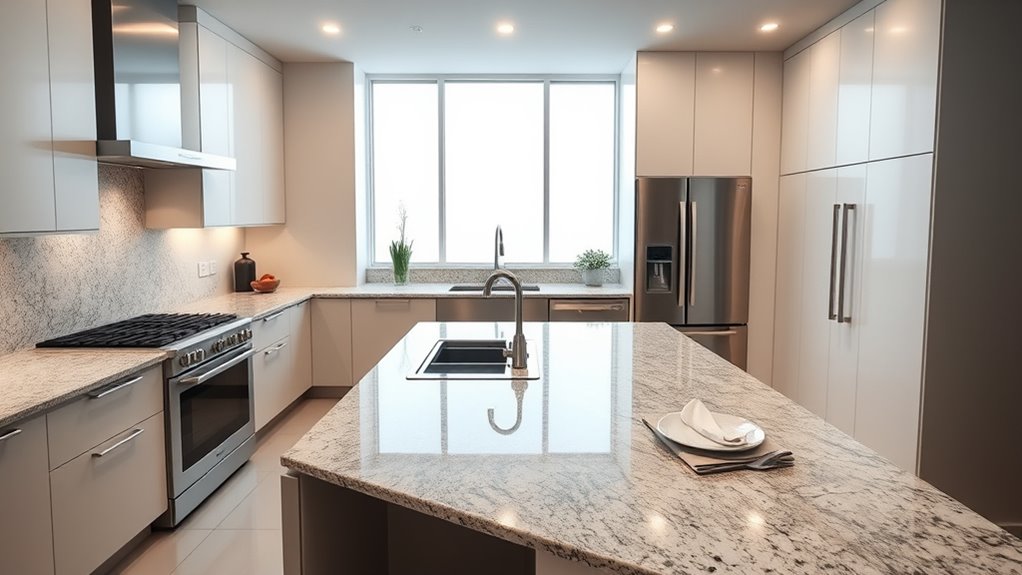
When designing a functional kitchen, understanding the differences between the classic kitchen triangle and modern work zones is essential. The kitchen triangle focuses on three main points—the stove, sink, and refrigerator—positioned to minimize distance and maximize efficiency. Its goal is to streamline appliance placement so you can move smoothly between cooking, cleaning, and food storage. This layout emphasizes reducing unnecessary steps, which helps improve traffic flow during busy cooking times. You want to avoid cluttering pathways, so the placement of appliances and work surfaces is critical. If these points are too far apart, you might find yourself wasting time or creating congestion, especially if multiple people cook together. The classic triangle simplifies this by encouraging a balanced distance—close enough for convenience, but not so tight that it causes bottlenecks.
However, the modern approach to kitchen design often shifts away from the strict triangle toward work zones that organize space based on tasks. Instead of three focal points, you might divide your kitchen into distinct areas: prep zones, cooking zones, cleaning zones, and storage. This approach puts less emphasis on proximity between specific appliances and more on the overall workflow. Here, appliance placement is tailored to specific functions, which can improve traffic flow by reducing crowding in one area. For example, you might place the dishwasher near the sink to streamline cleanup or position the oven and microwave close together for easy meal prep. By zoning your kitchen, you can also better accommodate multiple users, preventing congestion and allowing several tasks to happen simultaneously without interruption.
Modern kitchens favor task-based zones over the traditional triangle for better flow and multitasking.
The modern work zone concept recognizes that kitchens are evolving spaces, often used for socializing or multitasking. It encourages flexible, efficient layouts that adapt to your habits. Traffic flow becomes a key consideration—ensuring pathways stay clear and accessible, regardless of how many zones you create. This means thoughtful placement of appliances, counters, and storage to facilitate movement and prevent bottlenecks. Unlike the traditional triangle’s focus on proximity, work zones prioritize logical organization based on use, which can lead to more adaptable, spacious kitchens.
In the end, choosing between the classic kitchen triangle and modern work zones depends on your cooking style, space availability, and how many people typically use your kitchen. Both aim to boost efficiency and improve traffic flow but do so through different principles. By understanding these distinctions, you can design a kitchen that’s not only functional but also tailored to how you cook and live.
Conclusion
Think of your kitchen like a bustling city. The traditional triangle is a tight, efficient downtown—perfect for quick trips between three key spots. But a work zone is like a vibrant neighborhood, with dedicated districts for prep, cooking, and cleaning, making multitasking easier. Ultimately, choosing the right layout is like designing your city—balance efficiency with flexibility, creating a space that feels just right for your lifestyle and habits.