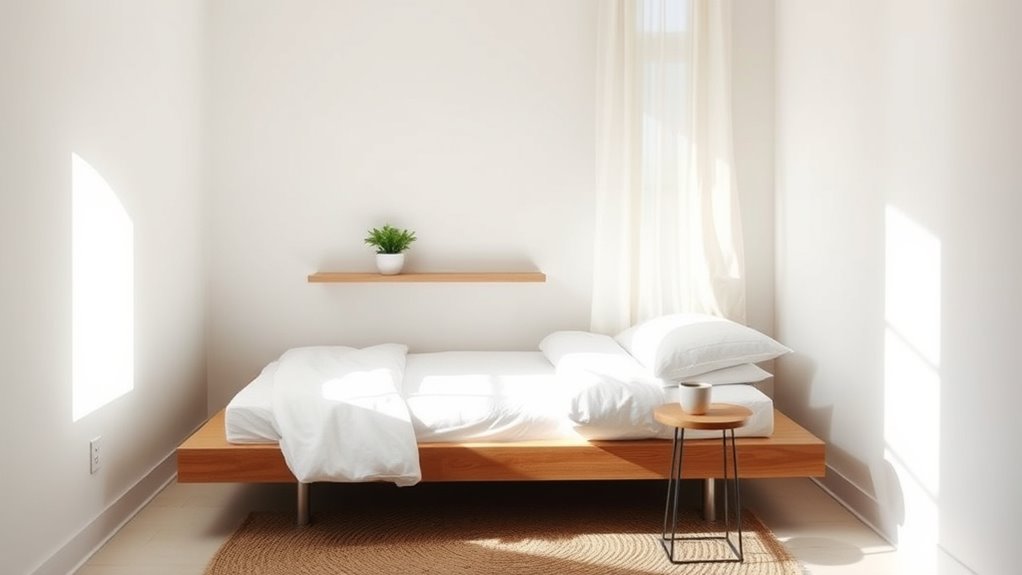

Living mindfully in a minimal space means intentionally organizing your surroundings to create a calming, purposeful environment. Focus on decluttering regularly, designating specific zones, and choosing meaningful possessions. Develop daily routines that turn simple tasks into mindfulness practices, helping you stay present and foster peace. This approach encourages you to let go of excess and appreciate what truly matters. If you keep exploring, you’ll find more ways to cultivate simplicity and well-being in your home.
Play games included with Prime
Start a Prime free trial and play with Amazon Luna on your devices.
As an affiliate, we earn on qualifying purchases.
Key Takeaways
- Create designated zones to promote purposeful use of small spaces and reduce clutter.
- Develop mindful daily routines that turn chores into calming, intentional practices.
- Regularly declutter and organize to maintain visual order and a sense of calm.
- Limit possessions and digital notifications to focus on meaningful, value-driven experiences.
- Cultivate gratitude and simplicity to foster a harmonious, balanced living environment.

Living in a small space can feel challenging, but it also offers a unique opportunity to live more intentionally. When your environment is limited, every item and action counts. Small space organization becomes essential, helping you create a sense of calm amid potential clutter. Instead of allowing chaos to take over, you learn to prioritize what truly matters. Clear surfaces, neatly stored belongings, and designated zones give your space a purposeful feel. This deliberate approach not only makes your environment more functional but also reinforces a mindful attitude toward your possessions. As you organize, you start to notice how much unnecessary stuff you’ve accumulated, prompting you to let go of what no longer serves a purpose. This ongoing process cultivates a sense of clarity and control, empowering you to maintain a clutter-free lifestyle.
In addition to physical organization, establishing mindful daily routines is crucial in a minimal space. By consciously designing your habits, you turn ordinary moments into opportunities for mindfulness. For instance, when you prepare your morning coffee, focus solely on the process—the aroma, the warmth, the sound of boiling water. When you tidy up your space at the end of the day, pay attention to what you’re doing, noticing how each item finds its place. These small acts become daily rituals that ground you in the present moment, reducing stress and mental clutter. Developing intentional habits can help reinforce your mindful living practices and make them more sustainable over time. Consistency in these routines creates rhythm and predictability, which can be soothing in a compact environment. Over time, these mindful practices become second nature, subtly shifting your mindset toward appreciation of simplicity and intentionality.
Living intentionally in a minimal space also means being selective about what you bring into your environment. Every purchase or possession should align with your values and needs, not just impulse. Before acquiring something new, ask yourself if it truly adds value or if it’s just a fleeting desire. This mindful approach extends to your digital life too—limiting notifications, decluttering your devices, and focusing on meaningful interactions. When you make deliberate choices, your space and your mind become clearer, allowing you to focus on what genuinely enriches your life. Small space living isn’t about deprivation; it’s about cultivating a sense of sufficiency and appreciation for what you have. By practicing small space organization and mindful routines daily, you create a harmonious environment that nurtures your well-being and helps you live intentionally, no matter how limited your square footage may be.
minimalist storage bins for small spaces
As an affiliate, we earn on qualifying purchases.
As an affiliate, we earn on qualifying purchases.
Frequently Asked Questions
How Can I Incorporate Plants Into a Minimal Living Space?
You can incorporate plants into your minimal living space by practicing indoor gardening with sleek, space-efficient pots. Choose a few versatile plants and place them on floating shelves, windowsills, or corners to maximize space. Use plant placement strategically to enhance natural light and create focal points. Keep it simple with a few well-chosen greenery pieces that add life without clutter, making your space feel fresh and calming.
What Are the Best Multi-Functional Furniture Options?
You should consider multipurpose beds that double as storage or seating, saving space while adding functionality. Fold-away desks are perfect for small areas, allowing you to work or dine without cluttering your space when not in use. Look for furniture with hidden compartments or convertible features; these options maximize utility and maintain a clean, minimalist aesthetic. This way, your space stays open, organized, and adaptable to your needs.
How to Maintain Mental Well-Being in Small Spaces?
While small spaces can feel cramped, you can boost mental well-being through stress reduction and mindfulness practices. Use natural light and calming colors to create a peaceful environment. Incorporate dedicated moments for meditation or deep breathing exercises, even in tight corners. Keep your space clutter-free to promote clarity and focus. Regularly disconnect from digital devices, and practice gratitude to foster positivity. These simple steps help you stay centered and resilient amidst your cozy surroundings.
What Are Eco-Friendly Minimal Living Tips?
To embrace eco-friendly minimal living, you should prioritize sustainable energy sources like solar panels or energy-efficient appliances to reduce your carbon footprint. Use eco-friendly cleaning products to keep your space healthy without harming the environment. Additionally, declutter regularly to minimize waste, choose multi-purpose furniture for versatility, and incorporate natural materials. These steps help you live sustainably, save resources, and create a more mindful, eco-conscious home.
How Do I Personalize a Minimal Space Without Clutter?
You can personalize your minimal space by adding meaningful decorative accents that reflect your personality, like a few carefully chosen art pieces or plants. Use a cohesive color scheme to create a calming atmosphere without clutter. Keep items purposeful and avoid overcrowding. Rotate accents seasonally to refresh your space and maintain its simplicity. This approach guarantees your space feels uniquely yours while staying clutter-free and serene.
Conclusion
Living mindfully in a minimal space isn’t just about decluttering; it’s about creating a sanctuary where clarity and peace thrive. When you focus on what truly matters, you naturally find more room for joy and presence. This intentional simplicity supports your well-being, helping you stay grounded amid life’s chaos. So, embrace minimalism as a way to nurture your mind and spirit. With each mindful choice, you’ll discover that less truly becomes more—more calm, more focus, more life.
NFL season / tailgating Picks
team gear
As an affiliate, we earn on qualifying purchases.