
To start minimalist decluttering, focus on small, manageable steps like sorting one space at a time and using simple storage options such as bins, baskets, and labels. Be honest about what you need and keep only valuable items to create a calm environment. Keep your essentials accessible and store seasonal items out of the way. If you follow these straightforward methods, you’ll find it easier to maintain a clutter-free space over time. Learn more tips to streamline your process.
Key Takeaways
- Start small by decluttering one area at a time to avoid overwhelm.
- Use clear storage containers and labels to organize kept items efficiently.
- Focus on keeping only items that add value or serve a purpose.
- Create designated spaces for different items to maintain an organized environment.
- Maintain minimalism by practicing mindful organization and regularly reassessing possessions.
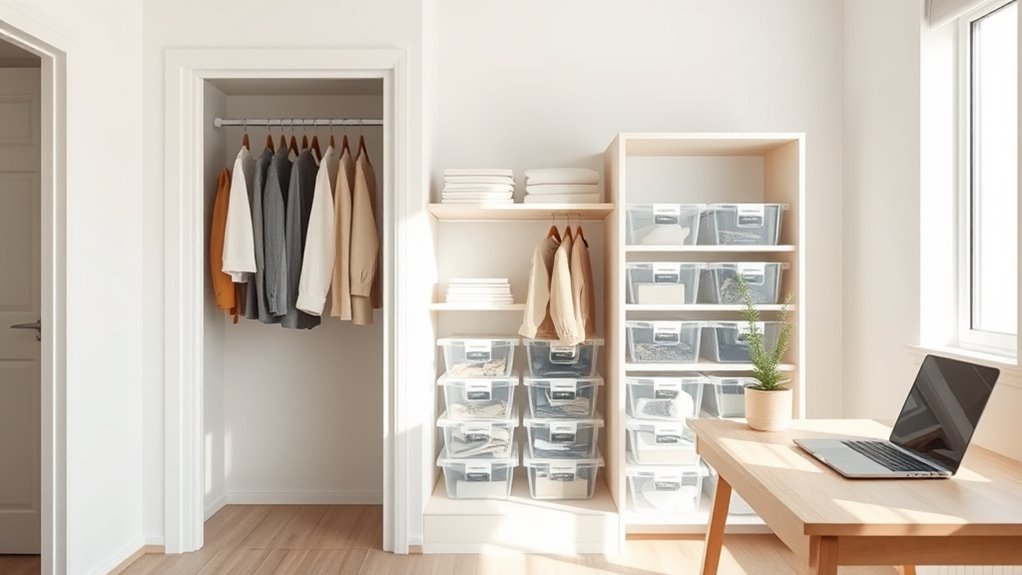
Starting the decluttering journey can feel overwhelming, but with simple methods, you can make the process manageable and even enjoyable. One of the most effective ways to begin is by focusing on minimalism—keeping only what truly adds value to your life. To do this efficiently, you need to utilize the right organizing tools and storage solutions. These will help you sort, categorize, and store your belongings in a way that reduces clutter and creates a sense of calm.
Declutter with minimalism and the right storage tools to create calm and manageable spaces.
First, gather basic organizing tools such as bins, baskets, and labels. Clear containers are especially useful because they allow you to see what’s inside without opening them. Use small baskets or drawer dividers to separate items within drawers or shelves. Labels are essential; they help you quickly identify what’s stored where, preventing clutter from piling up again. When selecting storage solutions, opt for space-efficient options like stackable boxes or modular shelving units. These maximize your available space and keep your belongings easily accessible.
Start by tackling one area at a time—perhaps a drawer, a closet, or a shelf. Empty it completely, then sort items into categories: keep, donate, or discard. Be honest with yourself about what you really need and use regularly. Once you’ve decided what stays, use your storage solutions to organize those items. For example, store seasonal clothing in labeled bins and keep everyday essentials in accessible drawers. Using organizing tools helps create designated spaces for specific items, reducing the chance of clutter creeping back in.
As you work through your space, consider how your storage solutions fit into your lifestyle. Do you need containers that are easy to open with one hand? Are your shelves adjustable to accommodate larger or smaller items? The goal is to make your space functional and streamlined. Remember that mindful organization is key to maintaining your clutter-free environment and avoiding unnecessary accumulation. Keep in mind that minimalism isn’t about perfection; it’s about creating a space that feels lighter and more manageable. As you get used to your new organization system, you’ll notice how much easier it is to maintain your clutter-free environment.

12 PACK Multi-Use Clear Plastic Storage Bins for Organizing w/ Labels – Home, Kitchen, Bathroom, Office, Pantry Cabinet Shelf Organizer Bins – SOHO Collection, RV, Fridge Organization Containers
12 PACK CLEAR ORGANIZER BINS – Item includes 12 pcs plastic bins (9.6" L x 6.6" W x…
As an affiliate, we earn on qualifying purchases.
As an affiliate, we earn on qualifying purchases.
Frequently Asked Questions
How Do I Stay Motivated During Decluttering?
To stay motivated during decluttering, focus on your decluttering mindset by visualizing the benefits of a tidy space. Use motivational strategies like setting small, achievable goals and rewarding yourself after each step. Remind yourself of the positive impact on your mental clarity and space. Keep a progress journal or play upbeat music to boost your energy. Remember, maintaining your motivation keeps the decluttering process enjoyable and rewarding.
What Tools Are Essential for Minimalist Decluttering?
To start your minimalist decluttering, essential tools include storage solutions like bins, baskets, and shelves to organize items efficiently. You should also use sorting techniques such as categorizing belongings by type or function, which helps you decide what to keep or donate. A sturdy box for donations and labels for clarity make the process smoother. These tools streamline your decluttering, making it quicker and more manageable.
How Often Should I Declutter My Space?
You should declutter your space every few months to maintain a minimalist environment. Incorporate storage solutions like bins or shelves to keep things organized, making decluttering easier. Establish regular cleaning routines that include tidying up and reassessing your belongings. This consistency prevents clutter buildup, helping you stay minimalist and focused. By staying proactive, you’ll enjoy a calmer, more organized space that aligns with your decluttering goals.
How Can I Handle Sentimental Items?
Think of sentimental items as anchors in your life’s ocean; they hold emotional weight but can also restrict your flow. To handle them, acknowledge your sentimental attachment, then decide if each item truly adds value or memories worth preserving. Avoid emotional decision making by setting limits—perhaps keep only a few meaningful pieces. This approach helps you declutter thoughtfully, respecting your feelings while creating space for new experiences.
What Are Quick Decluttering Tips for Busy Schedules?
To quickly declutter with a busy schedule, prioritize time management by setting short, focused sessions, like 10-minute bursts. Use organizational skills to sort items swiftly—keep only what you need or love. Tackle one area at a time, such as a drawer or countertop, and avoid perfection. This approach keeps clutter in check without overwhelming your schedule, making decluttering efficient and manageable.

SNSLXH 5 Pack Stackable Closet Organizer Box, Multifunctional & Foldable Closet Storage Basket for Bathroom Kitchen Laundry Room Wardrobe Storage, Space-Saving Clothes Storage Drawer Organizer, Green
【Versatile & Stylish】The folding closet organizers are a comprehensive storage and categorization solution that is perfect for organizing…
As an affiliate, we earn on qualifying purchases.
As an affiliate, we earn on qualifying purchases.
Conclusion
Starting your decluttering journey might seem overwhelming, but simplicity brings clarity. As you let go of excess, you gain space and peace; yet, with less, your mind can feel both lighter and more focused. Embrace minimalism not just as a method, but as a mindset—where less becomes more, and every item holds meaning. Remember, in decluttering, you’re not just organizing your space, but creating room for what truly matters.

MaxGear Organization and Storage 3 Packs, Plastic Bins Organizer Bins, Woven Baskets for Storage, Plastic Baskets with Handles, Grey Basket for Organizing, Basket Organizer for Home and Office, Small
Sturdy & Durable: Our basket is made of high quality PP plastic, environmentally friendly, non-toxic and tasteless, harmless…
As an affiliate, we earn on qualifying purchases.
As an affiliate, we earn on qualifying purchases.

IRIS USA 5-Shelf Heavy Duty Plastic Storage Shelves, 750lb Capacity, 73" H x 36" W x 18" D, Large Modular Shelving Unit Storage Organizer for Garage, Home, Warehouse & Gym, Storage Rack – Black
DIMENSIONS: 35.9" W (~3 ft wide) × 17.9" D (~1½ ft deep) × 73.4" H (just over 6…
As an affiliate, we earn on qualifying purchases.
As an affiliate, we earn on qualifying purchases.