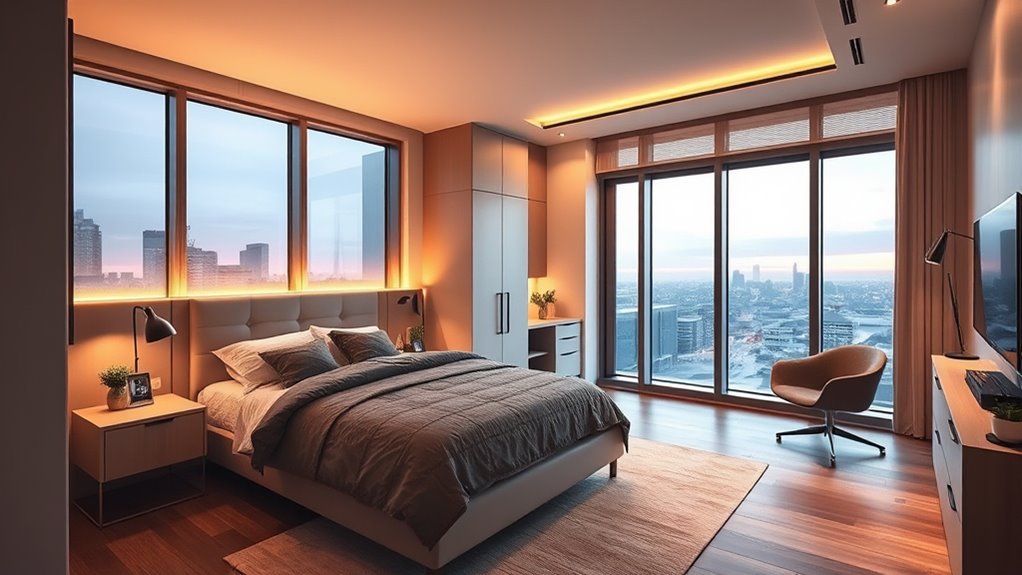
To design a bedroom for multiple uses, focus on maximizing space with smart storage options like tall shelves, multifunctional furniture, and under-bed containers. Use layered lighting—task, ambient, and accent—to easily switch between activities, and position lights near beds and work areas to define zones. Keep the room organized and flexible so it adapts effortlessly to your changing needs. Continue exploring ideas to create a versatile, personalized space that works for everything you do.
Key Takeaways
- Incorporate versatile furniture with built-in storage to maximize space and functionality.
- Define distinct zones using strategic layout and lighting to support multiple activities.
- Use layered, adjustable lighting to create adaptable atmospheres for work, relaxation, or entertainment.
- Utilize vertical storage solutions and multifunctional furniture to keep the room organized and clutter-free.
- Choose flexible decor and lighting options that easily switch between different room functions.
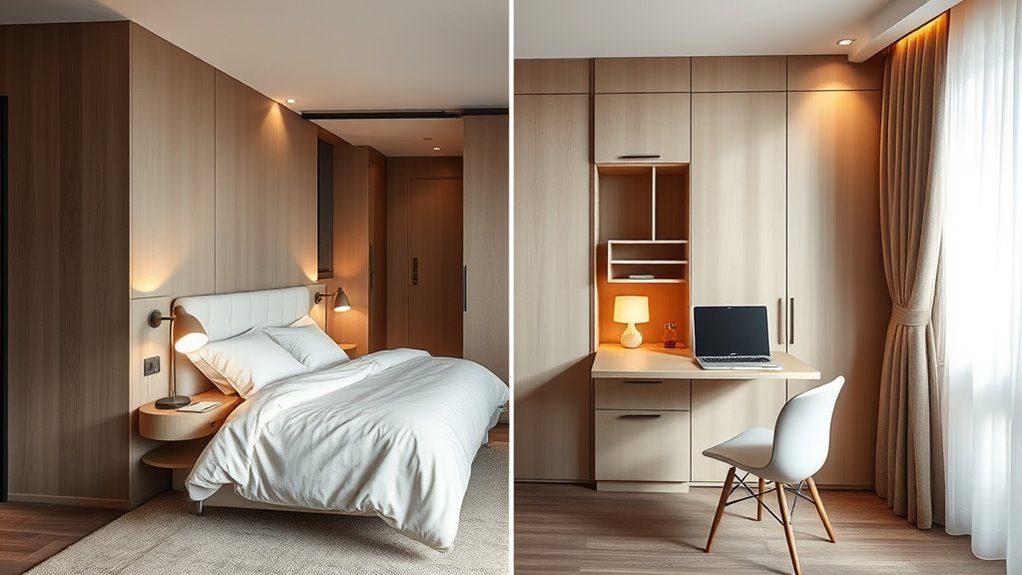
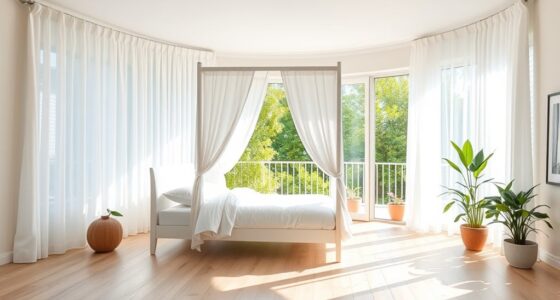
Have you ever considered transforming your bedroom into a versatile space that serves multiple functions? This approach allows you to maximize your square footage and create a room that adapts to your evolving needs. To do this effectively, you need to focus on smart storage solutions and versatile lighting options. These elements work together to keep your space organized and inviting, whether you’re sleeping, working, or relaxing.
Transform your bedroom into a versatile, organized space with smart storage and adaptable lighting solutions.
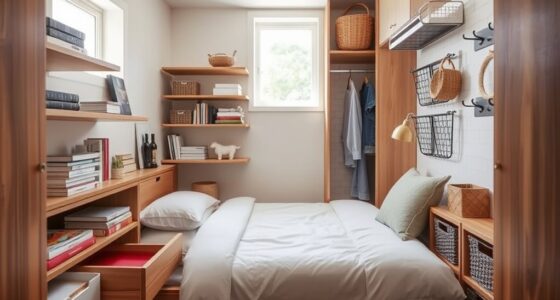
When it comes to storage solutions, think vertically and creatively. Use multifunctional furniture like beds with built-in drawers or ottomans that double as storage space. Tall bookshelves or wall-mounted units help free up floor space while providing ample room for your belongings. Consider adding under-bed storage containers or hanging organizers to keep clutter out of sight. The key is choosing storage options that blend seamlessly into your design, so your space remains open and uncluttered. This not only enhances functionality but also maintains a calming atmosphere, which is essential for a bedroom.
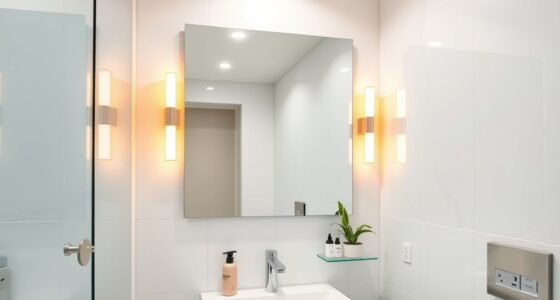
Lighting options are equally vital in transforming your bedroom into a multi-use space. Rely on layered lighting to provide flexibility and ambiance. Incorporate a combination of task lighting, such as a desk lamp or reading lights, with ambient lighting like overhead fixtures or wall sconces. Dimmable lights are especially advantageous, allowing you to adjust the brightness based on your activities—bright for work tasks, softer for relaxing or winding down. Consider using smart lighting systems that you can control via your smartphone or voice commands. This way, you can effortlessly change the mood of your room without cluttering the space with additional lamps or fixtures.
Furthermore, think about the placement of your lighting fixtures to define different zones within your bedroom. For example, position reading lights near your bed or workspace, and use ambient lighting to create a warm, inviting atmosphere in other parts of the room. Incorporating different lighting options also helps prevent your space from feeling like a single-purpose area. It allows you to switch between a cozy retreat and a functional workspace with ease. Additionally, selecting appropriate lighting can reduce eye strain and improve overall comfort during various activities.
Ultimately, designing a bedroom for multiple uses demands thoughtful planning of storage solutions and lighting options. By choosing clever storage ideas, you keep your space organized and visually appealing. Meanwhile, versatile lighting helps you adapt the ambiance to suit your activities, making your bedroom a truly multi-functional sanctuary. With these elements in mind, you can craft a space that feels both personalized and highly adaptable to your lifestyle.
Frequently Asked Questions
How Can I Maximize Storage in a Multi-Use Bedroom?
To maximize storage in your multi-use bedroom, incorporate smart storage solutions like under-bed drawers, wall-mounted shelves, and multi-functional furniture. Use space-saving furniture such as fold-away beds or desks that tuck away when not in use. Opt for vertical storage options to free up floor space. Keep clutter at bay by organizing items efficiently, ensuring your room remains functional and open, no matter how many purposes it serves.
What Lighting Options Work Best for Multi-Purpose Spaces?
Imagine soft ambient lighting casting a gentle glow across your space, creating a cozy atmosphere for relaxing or sleeping. Add adjustable task lighting near work areas or reading nooks for focused activities. Combining dimmable overhead lights with targeted lamps allows flexibility, so your lighting suits any purpose. You get both comfort and functionality, making your multi-purpose space adaptable and inviting without sacrificing style or practicality.
How Do I Choose Versatile Furniture for Small Bedrooms?
You should choose versatile furniture like convertible pieces that easily transform for different uses, such as a sofa bed or a fold-out desk. Incorporate multi-functional storage options like ottomans with hidden compartments or wall-mounted shelves to maximize space. Look for compact, multi-purpose furniture that adapts to your needs, making your small bedroom both functional and flexible without sacrificing style or comfort.
What Color Schemes Are Ideal for Multi-Use Bedrooms?
You should choose color schemes that promote color harmony and mood enhancement, making your multi-use bedroom adaptable. Opt for neutral tones like soft grays or beiges, which blend well with accent colors. Incorporate calming hues like blues or greens for relaxation, and add warm shades such as terracotta or mustard for energy. These choices create a balanced environment, allowing your space to serve different functions without feeling overwhelming.
How Can I Create Privacy in Shared Multi-Use Bedrooms?
You can create privacy in shared multi-use bedrooms by implementing soundproofing strategies like adding rugs, curtains, and wall panels to dampen noise. Use privacy solutions such as room dividers, curtains, or shelves to visually separate spaces. Also, consider positioning beds and furniture strategically to minimize disturbances and enhance personal boundaries. These tactics help you establish a more private, comfortable environment even in shared spaces.
Conclusion
Remember, a well-designed multi-use bedroom balances function and comfort. Keep versatile furniture, smart storage, and cozy zones in mind to make the space work for everything from relaxing to working. With thoughtful planning, you’ll create a room that adapts to your needs. As the saying goes, “A place for everything, and everything in its place.” Embrace flexibility and organization, and your bedroom will become a true sanctuary for all aspects of your life.