To make your tiny home look larger, choose light, neutral hues like soft whites, pale grays, or beiges that reflect more light and create an open feel. Add subtle accents in pastel or muted tones to bring personality without visual clutter. Stick to monochromatic schemes for cohesion and depth, and avoid dark, saturated colors, as they can shrink space. Understanding these color strategies can help transform your small space into a more airy, inviting home—explore more for expert tips.
Key Takeaways
- Opt for light, neutral hues like whites, beiges, and soft grays to reflect more light and create an open feel.
- Incorporate subtle accent colors in pastels or muted tones to add personality without shrinking space.
- Use monochromatic color schemes with variations of a single light color to extend visual cohesion.
- Avoid dark, saturated colors that absorb light and make small areas appear more confined.
- Enhance natural light with these light shades to maximize the perception of spaciousness in tiny homes.
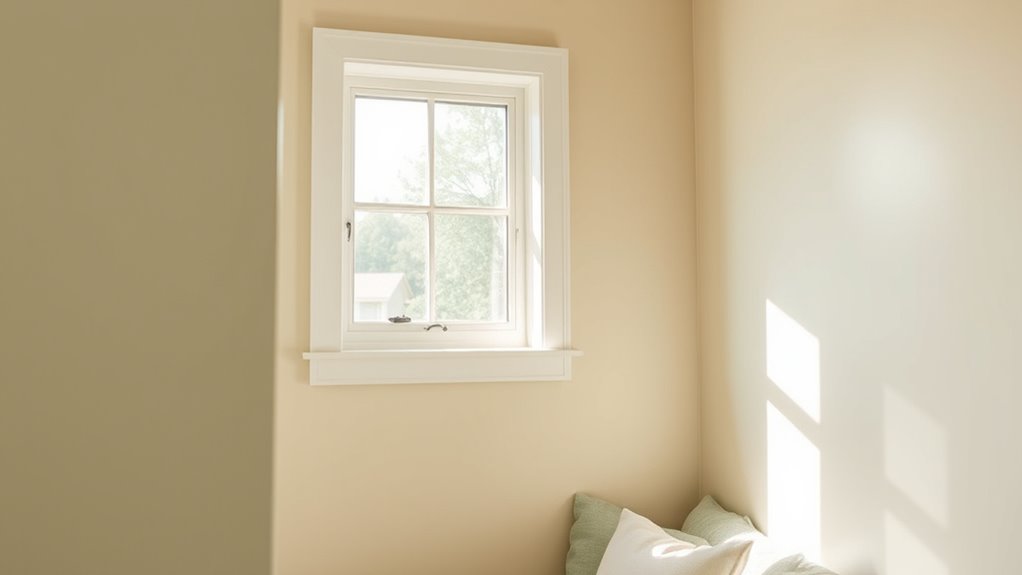
Selecting the right paint colors can transform your space and reflect your personal style. When it comes to tiny homes, clever color choices can make a significant difference in how spacious and open your environment feels. Understanding color psychology helps you pick shades that evoke the right mood and perception, while knowledge of historical color trends can guide you toward timeless, appealing options. Combining these insights allows you to create a visually larger space without sacrificing style.
Start by considering light, neutral hues. Colors like soft whites, pale grays, and beiges are excellent choices because they reflect more light and give the illusion of a larger area. These shades align with color psychology principles, which suggest that lighter colors tend to make spaces feel more expansive and calming. Historically, these timeless neutrals have been popular in design trends because they adapt well to various styles and make rooms appear airier. Choosing such shades creates a seamless, open backdrop that enhances natural light, making your tiny home feel less cramped. Color reflectivity plays a crucial role in how effectively your paint choices can influence the perception of space.
Next, incorporate strategic accents with subtle pops of color. Soft pastels or muted tones—think gentle blues, blush pinks, or light greens—add personality without overwhelming the senses. These colors, rooted in historical color trends, have long been associated with serenity and comfort, helping your small space feel inviting rather than cluttered. When used on a single wall or in decorative elements like pillows or artwork, these accents can create visual interest while maintaining an overall sense of openness.
Another effective tactic involves using monochromatic color schemes. Sticking to variations of a single light color creates a cohesive look that extends the visual space. For example, different shades of pale blue or warm taupe can add depth while maintaining a unified, airy feel. This approach aligns with the principles of color psychology, which emphasize harmony and balance, and taps into the timeless appeal of minimalism seen throughout historical color trends. Monochromatic schemes prevent the space from feeling segmented or crowded.
Finally, avoid dark, saturated colors for walls unless you want to create a cozy, intimate atmosphere. While bold shades might seem appealing, they tend to absorb light and can make a small space feel even smaller. Instead, opt for lighter shades that bounce light around, making every corner feel more open. Remember, your goal is to maximize the perception of space, and understanding how color psychology and historical color trends interplay can guide your choices effectively.
Frequently Asked Questions
How Do Lighting Conditions Affect Paint Color Choices in Tiny Homes?
Lighting conditions greatly affect your paint color choices in tiny homes. Natural light enhances lighter, cooler shades, making rooms feel more open and spacious. Artificial lighting can alter colors, sometimes making them appear warmer or cooler than they really are. You should test paint samples in both natural and artificial light before committing, ensuring your chosen colors look great throughout the day and create the illusion of more space.
Can Reflective Paints Help Make Small Spaces Appear Larger?
Did you know glossy paints can reflect up to 60% more light? Reflective finishes and glossy paints definitely help make small spaces appear larger by bouncing more light around the room. When you choose reflective paints, you create an illusion of depth and openness, making your tiny home feel more spacious. So, opting for these finishes is a smart way to enhance your small space’s visual size and brightness.
Are There Specific Paint Finishes That Enhance Spaciousness?
Matte finishes and textured paints can enhance the feeling of spaciousness in your tiny home. Matte finishes reflect less light, creating a smooth, open look, while textured paints add depth without overwhelming the space. You should opt for these finishes on walls to make your small areas feel larger and more inviting. Combining them with light, neutral colors amplifies the effect, helping your tiny home appear more airy and expansive.
How Do Color Schemes Influence the Perception of Ceiling Height?
Think of your ceiling as the sky above a landscape—its color influences the room’s perceived height. Light, bright ceiling colors create an illusion of greater ceiling height, while darker shades can make the space feel more grounded. To enhance this effect, use wall contrast wisely; keeping walls lighter and ceiling colors consistent or slightly lighter tricks the eye into perceiving higher ceilings. This balance makes your tiny home feel more open and airy.
What Are Common Color Mistakes That Make Tiny Homes Look Smaller?
You should avoid dark hues and conflicting shades, as they can make your tiny home feel cramped and smaller. Dark colors absorb light, reducing the sense of space, while conflicting shades create visual chaos that shrinks the room’s appearance. Instead, opt for light, cohesive colors that reflect natural light and provide a seamless flow, making your tiny home feel more open and inviting.
Conclusion
By selecting the right paint colors, you can turn your tiny home into a spacious sanctuary that feels as open as the sky. Think of your walls as a blank canvas, ready to reflect your personality and expand your space. With clever color choices, you’ll create an illusion of endless room, making every inch feel alive and inviting. Embrace these ideas, and watch your small space blossom into a bright, airy haven that lifts your spirits.