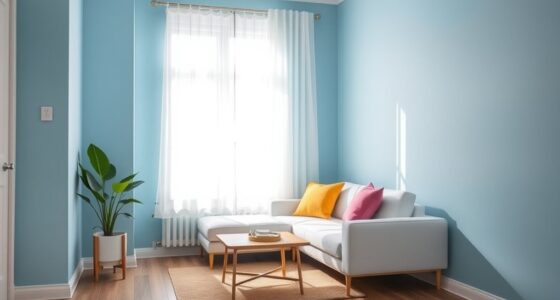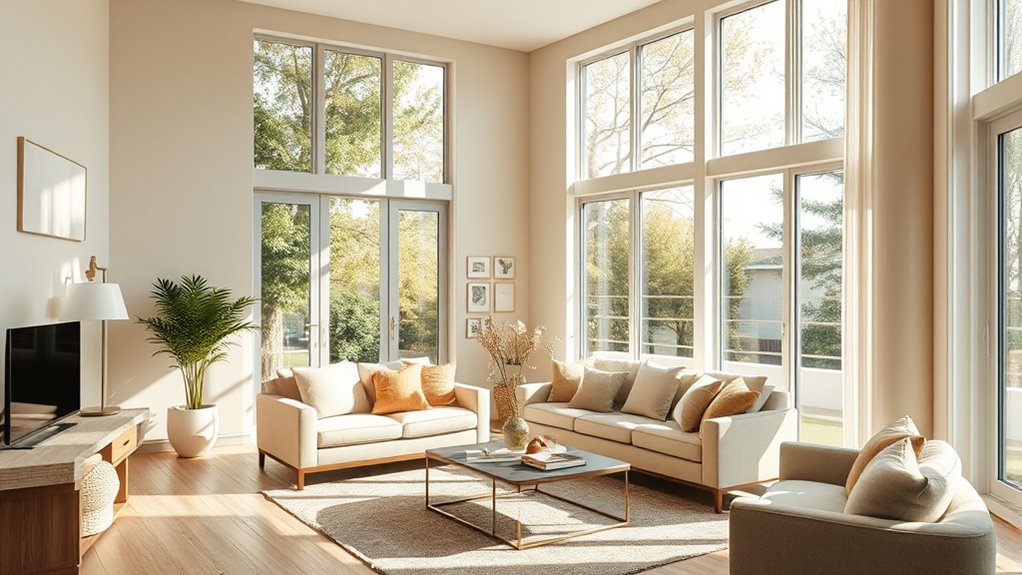

When choosing paint for natural lighting, consider the room’s sunlight direction and natural light intensity. Opt for warm tones like yellows and soft oranges in spaces with plenty of sunlight to create coziness, or cooler shades like blues and greens for a calm, airy feel. Pay attention to paint finishes—glossy or satin finishes reflect more light, making rooms feel larger, while matte softens colors. Keep an eye on how colors change throughout the day to make certain your space stays inviting—if you want to learn more, keep exploring!
Key Takeaways
- Test paint samples in different areas and at various times of day to observe natural light effects.
- Choose warm tones for rooms with abundant natural light to enhance coziness and warmth.
- Opt for cooler shades in well-lit spaces to create a calming and airy atmosphere.
- Select finishes with appropriate reflectivity—semi-gloss or satin for brightness, matte for softness.
- Consider the room’s orientation and natural light direction to select colors that complement the lighting conditions.

Natural lighting plays a crucial role in how paint colors appear in your home, influencing the mood and atmosphere of each space. When selecting paint, understanding how natural light interacts with color temperature and reflective qualities can help you achieve the look you want. Light’s angle and intensity can change throughout the day, so what looks perfect in the morning may feel entirely different in the evening. Recognizing how natural light casts different tones and shadows allows you to choose colors that enhance your space rather than clash with it.
Natural light influences paint colors, mood, and atmosphere throughout the day.
Color temperature is a key factor. Warm tones, like soft yellows or gentle oranges, tend to make a room feel cozy and inviting when natural light is abundant. These colors reflect warm light, amplifying the sun’s golden hues and creating a welcoming atmosphere. On the other hand, cool tones such as blues, greens, or grays can evoke calmness and serenity, especially in well-lit rooms. They tend to reflect cooler light, which can make a space feel more open and airy. The key is to take into account the existing natural light’s warmth or coolness; a room with south-facing windows, which gets warmer, might benefit from cooler paint shades to balance the light.
Reflective qualities also play a significant role. Paints with high reflectivity, often labeled as semi-gloss or satin, bounce more light around the room. This can brighten a space and make it feel larger, but it also makes the true color more noticeable and susceptible to natural light shifts. Matte finishes absorb more light and soften the appearance of colors, providing a subtler, more muted look. If you’re choosing in a room with lots of sunlight, opting for paints with higher reflectivity can help distribute light evenly, reducing harsh shadows and glare. Additionally, understanding paint reflectivity can guide you in selecting the right finish to achieve your desired ambiance.
When selecting your paint, you should also test samples in different parts of the room at various times of day. Observe how the color shifts as natural light changes from morning to evening. This practice allows you to see how the paint’s reflective qualities and color temperature interact with your specific lighting conditions. It’s a simple step that prevents costly mistakes and helps you find a hue that remains attractive in all lighting scenarios.
In short, understanding how natural lighting interacts with color temperature and reflective qualities guides you toward shades that enhance your space’s natural beauty. By paying attention to how light influences your chosen colors, you ensure your home feels warm, inviting, and perfectly tailored to your taste, no matter the time of day.
Frequently Asked Questions
How Does Natural Light Affect Paint Color Perception?
Natural light considerably affects how you perceive paint color because it varies in color temperature and intensity throughout the day. During daylight, colors look more true to life, thanks to daylight simulation, which mimics natural light. In the morning or evening, warmer or cooler tones may appear differently. You should test paint samples in your space at different times to see how natural light impacts color perception, ensuring your choice looks great all day.
What Finishes Are Best for Rooms With Natural Light?
For rooms with natural light, you should choose a paint sheen that enhances light reflection without causing glare. Satin or eggshell finishes work well, as they add a subtle glow and diffuse light evenly. Glossy finishes reflect more light, making a space feel brighter, but can highlight imperfections. Matte finishes absorb light, creating a softer look. Select a sheen based on your room’s brightness and the mood you want to achieve.
Can Natural Lighting Change Over the Seasons Impact Paint Choices?
Yes, seasonal light variations can impact your paint choices. During winter, outdoor vs indoor lighting may appear cooler or warmer, influencing how colors look inside. In summer, brighter natural light can intensify colors, so you might want to choose softer shades. To adapt, consider paints with flexible undertones that shift with seasonal changes, ensuring your space remains inviting and balanced year-round, regardless of outdoor or indoor lighting differences.
How to Prevent Paint Fading in Rooms With Abundant Natural Light?
It’s a coincidence that your bright room faces the sun, but you can safeguard your paint by choosing high-durability options with UV protection. To prevent fading, opt for paints formulated for durability, especially those designed to resist sunlight. Regularly maintain your walls, and consider applying a clear UV-resistant topcoat. These steps ensure your vibrant colors stay fresh longer, even in rooms flooded with natural light.
Are There Specific Paint Brands Recommended for Natural-Lit Spaces?
You should consider trusted paint brand recommendations like Benjamin Moore, Sherwin-Williams, or Behr for natural-lit spaces. These brands offer paints with excellent color retention and UV resistance, helping maintain vibrant colors despite natural lighting effects. Look for formulations labeled for durability and fade resistance, ensuring your walls stay beautiful over time. Choosing quality brands makes a noticeable difference, so prioritize reputable options to enhance your space’s natural beauty.
Conclusion
Choosing the right paint for natural lighting is like finding the perfect dance partner—you want harmony and brightness to flow effortlessly. By considering your space’s light and selecting colors that complement it, you’ll create a home that feels alive and inviting. Remember, the right paint isn’t just a color choice; it’s the foundation of your room’s personality. So, trust your instincts and let your space shine as brightly as your personality.