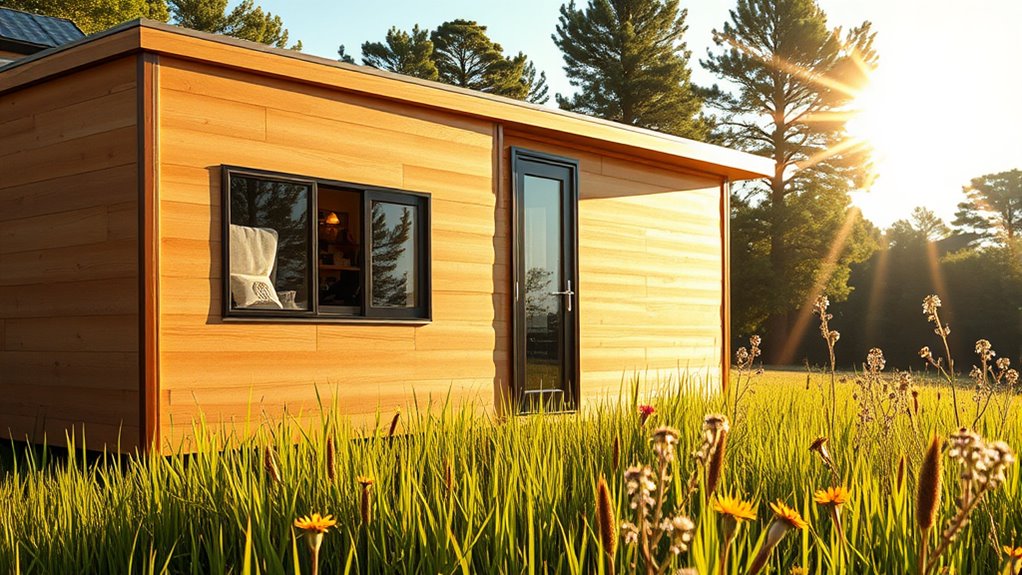

To optimize passive solar design in your tiny home, strategically place south-facing windows to maximize natural light and sunlight entry, especially during winter months. Incorporate thermal mass materials like concrete or stone to absorb daytime heat and release it slowly at night. Use light-colored interior surfaces to reflect light and enhance daylight harvesting, while shading devices prevent overheating during summer. Combining these features creates an energy-efficient, cozy space—discover more ways to harness solar energy effectively for your tiny home.
Key Takeaways
- Incorporate thermal mass materials like concrete or brick to absorb and slowly release heat, stabilizing indoor temperatures.
- Strategically place south-facing windows to maximize sunlight entry and enhance natural heating and lighting.
- Use overhangs or shading devices to optimize seasonal sunlight, allowing winter warmth and blocking summer heat.
- Utilize light-colored interior surfaces to reflect daylight, improving natural illumination and reducing artificial lighting needs.
- Combine thermal mass, strategic window placement, and reflective surfaces to create an energy-efficient, passive solar tiny home environment.
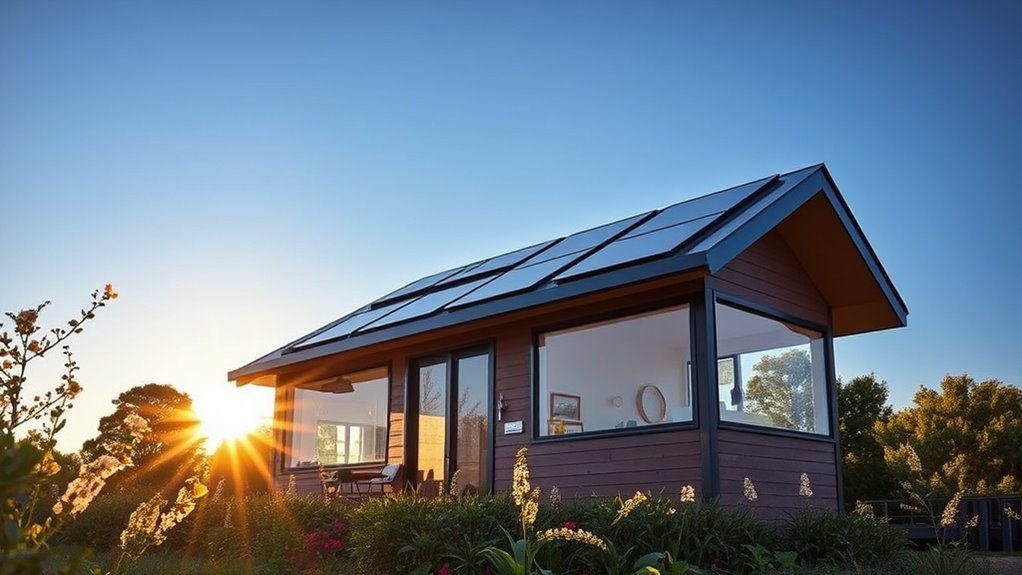
Have you ever wondered how buildings can stay warm in winter without relying heavily on conventional heating? Passive solar design takes advantage of natural energy flows, making your tiny home more energy-efficient and comfortable. One key element is thermal mass, which helps regulate indoor temperatures. By incorporating materials like concrete, brick, or stone into your walls or floors, you create a storehouse for heat. During the day, sunlight enters through south-facing windows, warming these materials. As evening falls, thermal mass releases that stored heat slowly, maintaining a cozy environment without needing extra heating sources. This process stabilizes temperature swings and reduces your reliance on electric or gas heaters, saving you money and energy.
Another essential aspect of passive solar design is daylight harvesting. When you position your tiny home thoughtfully, you maximize the amount of natural light that enters your space. Large, south-facing windows are your best friends here, allowing sunlight to flood your interior during the day. Not only does this brighten your home without electricity, but it also contributes to heating. Sunlight naturally heats the thermal mass, which then radiates warmth later. To optimize daylight harvesting, you can include overhangs or shading devices that block high summer sun but let in lower winter rays. This way, you enjoy the benefits of sunlight in winter while avoiding overheating during summer months. It’s a simple, effective strategy that reduces your need for artificial lighting and supplemental heating.
In addition to window placement, using reflective surfaces inside your tiny home can enhance daylight harvesting by bouncing light deeper into the space. Light-colored walls and ceilings help distribute sunlight evenly, making your home feel brighter and more inviting. Combined with thermal mass, these features create a harmonious balance: sunlight heats the thermal mass during the day, and the mass radiates warmth back into your living space when temperatures drop. This synergy minimizes energy consumption and creates a more sustainable living environment.
Frequently Asked Questions
How Much Does Passive Solar Design Add to Tiny Home Costs?
Passive solar design typically adds $1,000 to $5,000 to your tiny home’s cost, but it’s worth considering the long-term savings. You’ll benefit from lower energy bills and increased comfort. Keep in mind that cost considerations vary based on your design choices and materials. The good news is, passive solar design offers flexibility, allowing you to customize features to fit your budget while enhancing your tiny home’s sustainability and style.
Can Passive Solar Design Be Effective in Cold Climates?
You’ll find passive solar design highly effective in cold climates if you optimize solar orientation and incorporate thermal mass. By strategically positioning windows to capture sunlight and using materials like concrete or stone, your tiny home can absorb and store heat, reducing reliance on heating systems. This coincidence of design elements guarantees warmth during winter, making your home cozy and energy-efficient even in chilly conditions.
What Maintenance Does Passive Solar Heating Require?
Passive solar heating requires minimal maintenance. You should regularly clean your windows to maximize sunlight entry, which boosts heating efficiency. Keep an eye on your solar panels’ upkeep, ensuring they’re free of dust and debris to optimize their performance. Additionally, check for any air leaks or insulation issues that could reduce heat retention. Routine inspections and cleaning help your passive solar system operate effectively and keep your tiny home warm and cozy.
Are There Any Building Codes Affecting Passive Solar Design?
Building code restrictions and zoning regulations can influence your passive solar design choices. You need to verify local codes to ensure your tiny home complies with setback requirements, window placement rules, and insulation standards. Some areas may have restrictions on solar panels or specific building materials. By understanding these regulations beforehand, you can design an efficient, code-compliant passive solar tiny home that maximizes natural heating and cooling.
How Does Passive Solar Design Impact Tiny Home Resale Value?
You’ll find that passive solar design can boost your tiny home’s resale value by highlighting energy savings and aesthetic appeal. Buyers often appreciate lower utility bills and a cozy, attractive space, making your home stand out. By integrating strategic window placement and insulation, you enhance both comfort and visual charm, which can lead to faster sales and higher offers, especially as eco-friendly and efficient homes become more desirable.
Conclusion
By incorporating passive solar design into your tiny home, you can markedly reduce energy costs and increase comfort year-round. Did you know that properly designed passive solar homes can cut heating bills by up to 50%? That’s like saving hundreds of dollars annually just by smartly harnessing the sun’s natural warmth. So, take advantage of sunlight, insulate well, and enjoy a cozy, eco-friendly tiny home that works with nature, not against it.