Recycled glass and metal design innovations turn waste into striking art and functional pieces that challenge traditional aesthetics. By reassembling shattered glass and welding metal scraps, you can create vibrant mosaics, sculptures, and lighting opportunities that emphasize sustainability. These methods highlight imperfections and unique textures, adding character and stories to each item. If you want to explore how these sustainable approaches redefine beauty and inspire community efforts, continue exploring the possibilities.
Key Takeaways
- Artists repurpose recycled glass into vibrant mosaics, lamps, and decorative objects, emphasizing unique textures and colors.
- Metal scraps are welded into sculptures and furniture, showcasing innovative, functional art through upcycling techniques.
- Imperfections like cracks and rust are integrated into designs, turning flaws into distinctive aesthetic features.
- Creative reuse reduces landfill waste and raw material consumption, promoting sustainable craftsmanship and environmental activism.
- The movement redefines beauty by highlighting character-rich, eco-friendly objects that challenge traditional design standards.
Innovative designers are transforming recycled glass and metal into stunning, functional art that challenges traditional aesthetics. They’re pushing the boundaries of what’s possible with discarded materials, turning waste into works of beauty and purpose. At the heart of this movement is sustainable craftsmanship—an approach that emphasizes environmental responsibility while creating visually striking pieces. These designers are not just repurposing materials; they’re redefining how we view waste, using innovative upcycling techniques to breathe new life into old glass bottles, shattered metal, and scrap metal pieces. This process reduces landfill waste and minimizes the need for new raw materials, making each creation an act of environmental activism wrapped in artistic innovation.
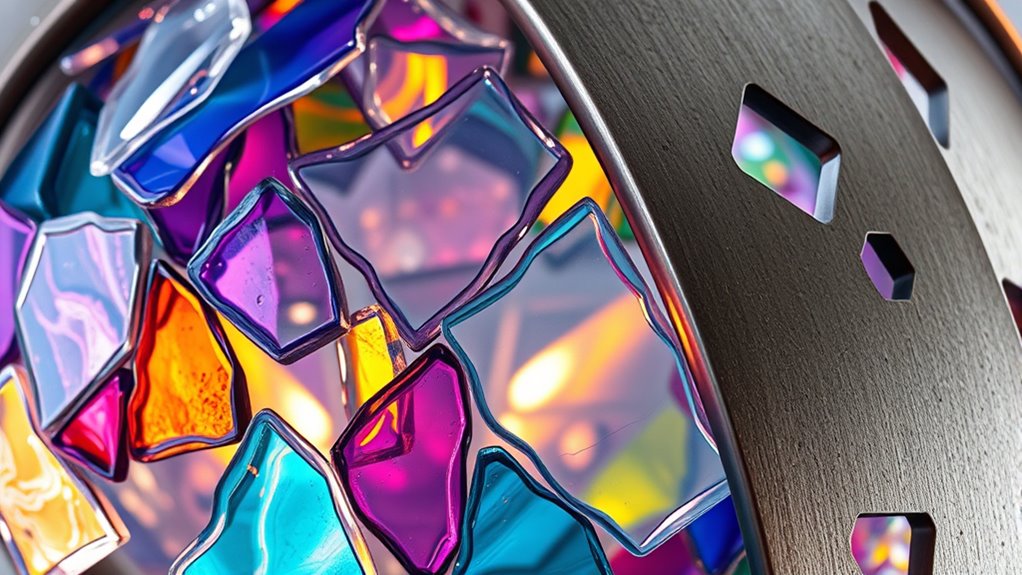
When you explore these designs, you’ll notice how thoughtfully curated details elevate recycled glass and metal into high art. For example, shattered glass can be reassembled into vibrant mosaics or transformed into translucent lamp shades that cast colorful reflections. Metal scraps are often welded into intricate sculptures, furniture, or decorative pieces that combine functionality with aesthetic appeal. What makes this truly innovative is the way designers leverage the inherent textures, colors, and shapes of discarded materials, turning imperfections into distinctive features. This approach embodies innovative upcycling, where waste becomes a treasured component rather than an afterthought. Additionally, understanding recycled materials enhances appreciation for the skill involved in transforming trash into treasure.
You can also see how these designs challenge conventional notions of beauty. Instead of pristine, mass-produced items, you’re presented with one-of-a-kind pieces that carry stories of their past lives. Each crack, rust spot, or irregular shape becomes part of the overall design narrative. This not only adds character but also emphasizes the value of sustainability—reminding us that beautiful, functional objects don’t have to come from new resources. As a consumer or appreciator, you’re encouraged to see the potential in what many might dismiss as trash, recognizing the skill and creativity required to turn discarded glass and metal into art.
Unique designs showcase imperfections, turning discarded materials into meaningful, sustainable art that tells a story.
Furthermore, these innovations are often made with local, recycled materials, supporting community-based efforts and reducing the carbon footprint associated with manufacturing. By choosing such pieces, you’re actively participating in a movement that values environmental stewardship and creative problem-solving. These designers demonstrate how sustainable craftsmanship is not just a trend but a crucial approach for future design. Their work proves that with ingenuity and care, you can create stunning, functional objects that honor the planet while celebrating artistic expression. It’s inspiring to see waste transformed into something both beautiful and meaningful—proof that true innovation starts with rethinking what’s possible.
Top picks for "recycl glas metal"
Open Amazon search results for this keyword.
As an affiliate, we earn on qualifying purchases.
Frequently Asked Questions
How Durable Are Recycled Glass and Metal Products?
Recycled glass and metal products are quite durable. You’ll find that glass strength varies but generally withstands daily wear and tear, especially with proper treatment. Metal longevity is impressive, as recycled metals often resist rust and corrosion, making them suitable for long-term use. When you choose these materials, you’re getting products that can handle regular use and environmental factors, ensuring they stay functional and attractive over time.
What Is the Environmental Impact of Using Recycled Materials?
Using recycled materials considerably reduces your ecological footprint by conserving resources and energy. Upcycling benefits you by turning waste into valuable products, which minimizes landfill waste and pollution. When you choose recycled glass and metal, you help lower greenhouse gas emissions and reduce the demand for virgin materials. Overall, incorporating recycled materials promotes sustainability and eco-consciousness, making a positive impact on the environment while providing durable, stylish products for your use.
Can Recycled Glass and Metal Be Customized for Specific Designs?
Imagine holding a piece of recycled glass or metal, and suddenly, it transforms into your vision. Yes, you can customize recycled glass and metal for specific designs, showcasing remarkable artistic versatility and design flexibility. By working with artisans and using innovative techniques, you bring your ideas to life—whether it’s intricate patterns or sleek modern shapes—making recycled materials a perfect canvas for your unique creative expression.
Are Recycled Glass and Metal More Cost-Effective Than New Materials?
Recycled glass and metal often provide significant cost savings compared to new materials, mainly because of lower material sourcing costs. You can find these recycled options at a reduced price, which helps you stay within budget. Additionally, using recycled materials can cut down on manufacturing expenses and waste disposal fees. Overall, they can be a more economical choice while also supporting sustainable practices.
How Do Recycled Materials Affect the Structural Integrity of Furniture?
Recycled materials can affect your furniture’s structural integrity, but proper material bonding guarantees durability. When you use quality adhesives and techniques, the load bearing capacity remains strong, even with recycled content. You might notice slight variations in strength, but with careful design and reinforcement, recycled materials can provide reliable support. Ultimately, the key is to prioritize proper bonding methods to maintain your furniture’s longevity and safety.
Conclusion
By embracing recycled glass and metal, you can transform waste into stunning, sustainable designs. Imagine turning discarded bottle fragments into vibrant jewelry that sparks conversations and inspires change. When you choose these innovations, you’re not just creating beautiful objects—you’re helping to reduce landfill waste and protect our planet. Each piece you create or support makes a difference, proving that sustainability and style can go hand in hand. Your choices can truly inspire a more eco-friendly future.