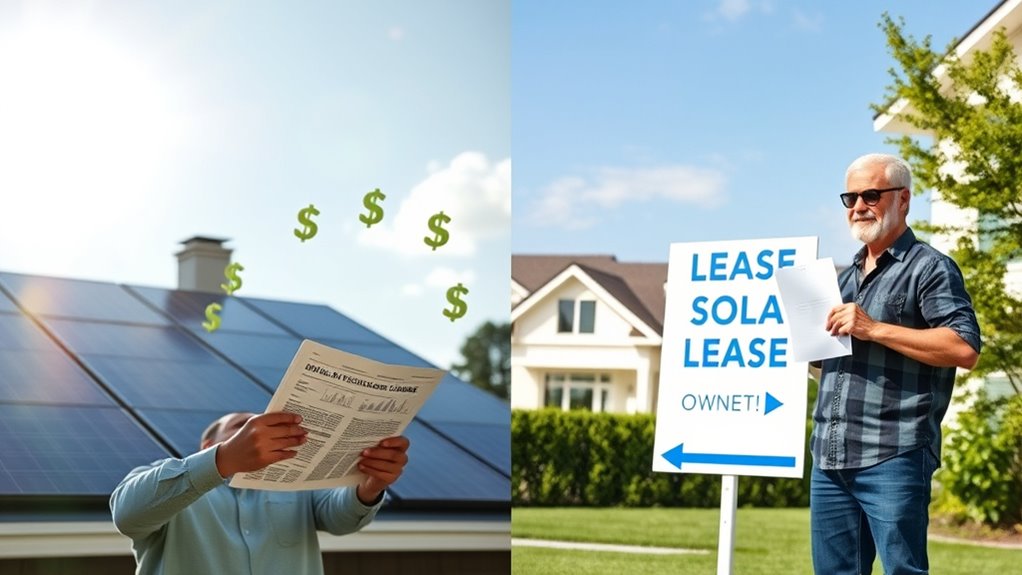

When considering solar energy options, you might wonder whether to rent or lease panels. Both choices offer low upfront costs and ease of access, but they also come with different long-term financial impacts. Understanding these differences is essential, especially when it comes to costs, tax benefits, and ownership. To make the best decision for your situation, it’s important to weigh the pros and cons of each approach carefully.
Key Takeaways
- Renting typically involves minimal upfront costs but may result in higher total expenses over time.
- Leasing often includes a longer-term contract with fixed monthly payments and maintenance responsibilities.
- Owning a solar system allows access to tax incentives like the ITC, which renters and lessees usually cannot claim.
- Renting or leasing reduces initial financial burden but may limit long-term savings and equity building.
- The choice depends on long-term financial goals, eligibility for tax benefits, and personal circumstances.

Are you contemplating solar energy but unsure whether to rent or lease? Making this decision involves understanding the financial implications of each option. When you rent solar panels, you typically pay a monthly fee to use the system, but you usually don’t own the equipment. Leasing works similarly, but often involves a longer-term contract with specific terms about maintenance and ownership transfer. Both options can seem attractive because they eliminate the hefty upfront costs associated with purchasing a system outright. Instead of paying thousands of dollars upfront, you spread payments over time, making solar more accessible. However, it’s important to recognize that while leasing and renting reduce initial expenses, they also come with limitations, especially regarding tax benefits.
One key factor to think about is the tax benefits. When you own a solar system, you’re eligible for incentives like the Federal Investment Tax Credit (ITC), which can cover a significant percentage of the installation costs. These benefits can substantially lower your overall investment and, in some cases, provide a return on your initial expenses. But if you choose to rent or lease, you typically don’t get to claim these tax benefits directly. Instead, the leasing company or the rental provider usually claims the incentives, which means you miss out on some potential savings. On the upside, leasing or renting can be a more straightforward option, especially if you’re not interested in navigating the tax credit process or if you’re unsure how long you’ll stay in your current home.
When weighing renting versus leasing, think about the upfront costs or lack thereof. With renting, the initial costs are minimal, often limited to a security deposit or setup fee. Leasing might require a small down payment or none at all, depending on the agreement. Both options are designed to keep your initial financial commitment low, allowing you to start saving on energy bills without large upfront payments. But keep in mind, your total costs over the long run may be higher compared to purchasing because you’re essentially paying for the use of the system without building equity. If maximizing tax benefits is important to you, buying a system outright or through a loan might suit your goals better, even if it means higher upfront costs initially. Additionally, choosing a system with a high contrast ratio can improve your overall satisfaction, especially in spaces with variable lighting conditions.

5W Solar Panel for Security Camera, Solar Panel with Micro USB & USB-C Port for DC 5V Outdoor Rechargeable Battery Camera, IP65 Waterproof, 360° Adjustable Security Mount, 9.8ft Cable(White 2PC)
【5W Solar Panel Compatibility】5W solar panel is compatible with DC 5V rechargeable battery cameras with micro USB or…
As an affiliate, we earn on qualifying purchases.
As an affiliate, we earn on qualifying purchases.
Conclusion
Ultimately, whether you rent or lease solar panels, you’re gently paving your way toward cleaner energy. While both options keep initial costs light and simplify the process, they come with subtle trade-offs over time. Think of it as a journey—each path offers its own benefits and gentle compromises. By carefully weighing your long-term goals and personal situation, you can choose the option that aligns best with your financial comfort and environmental aspirations.

Patriotic Prosperity: Solar Farm Contributions to Landowners, Rural Communities, and U.S. Energy Security
As an affiliate, we earn on qualifying purchases.
As an affiliate, we earn on qualifying purchases.

Off-Grid Solar Power for Sustainable Urban Living: A Practical Guide to Understand, Plan, Choose and Maintain the Right System for Long-Term Success (Sustainable Living)
As an affiliate, we earn on qualifying purchases.
As an affiliate, we earn on qualifying purchases.

Voltset 12V Solar Battery Charger – 20W Waterproof Solar Panel Kit with Smart MPPT Controller – Trickle Charger Maintainer for Car RV Boat Marine Trailer Automotive Trailer Truck Motorcycle
High-Efficiency MPPT Solar Charger – Advanced tracking technology delivers 20-30% faster charging for 12V batteries. A+ monocrystalline panels…
As an affiliate, we earn on qualifying purchases.
As an affiliate, we earn on qualifying purchases.