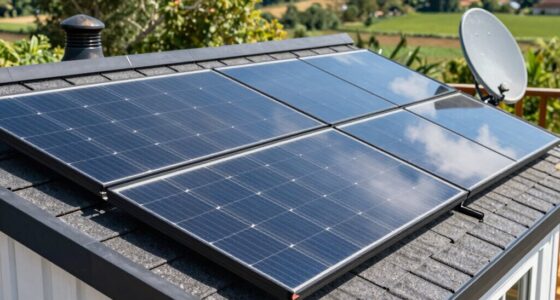
To install roof-mounted solar panels, start by evaluating your roof’s structural integrity and load capacity with a professional. Make certain panels face true south (or north, depending on your hemisphere) and are angled for ideal sunlight exposure year-round. Check for shading or obstructions that could reduce efficiency. Proper mounting hardware and reinforcement are essential to withstand weather conditions. If you want to maximize energy gains and stay compliant with local codes, there’s more to contemplate beyond these basics.
Key Takeaways
- Ensure panels are oriented toward true south (north in the southern hemisphere) for maximum sunlight exposure.
- Conduct a roof load assessment to confirm structural capacity and avoid damage.
- Inspect roof materials and framing for compatibility with mounting hardware and structural integrity.
- Plan panel placement and tilt to optimize sunlight capture and weather resistance.
- Comply with local building codes and work with professionals for safe, efficient installation.

Installing roof-mounted solar panels is a practical way to reduce your energy bills and boost your home’s sustainability. One of the most important factors to consider during installation is solar panel orientation. To maximize efficiency, you want your panels facing the sun as directly as possible. In the northern hemisphere, this typically means orienting your panels toward true south, while in the southern hemisphere, true north is ideal. Proper alignment ensures your panels capture the maximum sunlight throughout the day, increasing energy production and providing faster returns on your investment. However, you should also consider shading from nearby trees or structures, as even small obstructions can considerably reduce your system’s effectiveness.
Before installing, it’s essential to perform a roof load assessment. Not all roofs are built to support the weight of solar panels, especially if your roof is older or has existing structural issues. A roof load assessment helps determine whether your current roof can handle the added weight safely. This process involves inspecting the roof’s materials, framing, and overall structural integrity. If your roof isn’t strong enough, you might need to reinforce it before installation. Ignoring this step could lead to dangerous situations, including structural damage or the need for costly repairs down the line. A professional assessment ensures you understand the limitations of your roof and helps you choose the best mounting system to distribute the load evenly.
Once you’ve evaluated your roof’s load-bearing capacity and decided on the best solar panel orientation, you can start planning the installation process. Proper placement and angling are key to capturing the most sunlight. Remember, even a slight tilt can improve energy output, especially in winter months when the sun is lower in the sky. Additionally, ensure your panels are mounted securely to withstand weather conditions such as wind and snow. It’s wise to work with experienced installers who understand local building codes and can recommend the best mounting hardware for your roof type.
Furthermore, understanding Gold IRA options and regulations can be beneficial if you’re considering long-term financial planning alongside your solar investment, as diversifying your assets can support overall financial stability.
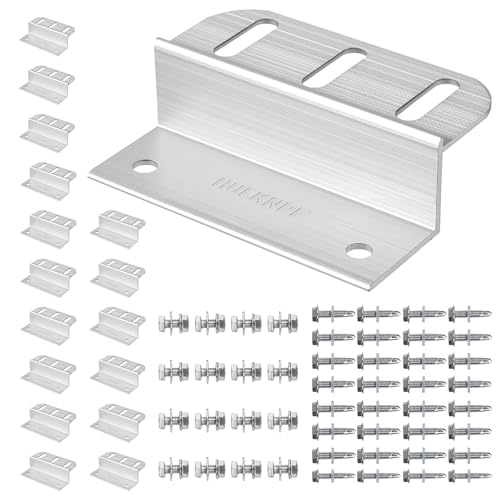
HULKNPE Z Brackets Solar Panel Mounting Kit (16 Pack) Heavy Duty Multi-Slot Aluminum Corrosion-Resistant for RV, Boat, Roof, Off-Grid & Solar Panel Hold Down
✅ Z BRACKETS for SOLAR PANELS: Made of marine-grade stainless steel, these brackets ensure secure mounting for long-term…
As an affiliate, we earn on qualifying purchases.
As an affiliate, we earn on qualifying purchases.
Frequently Asked Questions
How Do I Choose the Right Solar Panel Brand?
To choose the right solar panel brand, start by checking their reputation and customer reviews, ensuring they’re reliable and trusted. Focus on solar panel efficiency, which determines how well they convert sunlight into electricity. Look for brands with proven durability and good warranty coverage. Comparing these factors helps you pick a brand that offers high efficiency, long-term performance, and a solid reputation, ensuring your investment pays off.
What Is the Typical Lifespan of Roof-Mounted Solar Panels?
Think of your solar panels as long-lasting soldiers on your roof. Typically, they last about 25 to 30 years, thanks to their durability. Their lifespan depends on panel durability and how well they’re maintained. Most reputable brands offer warranty coverage of 25 years, giving you peace of mind. With proper care, your panels will keep working reliably, providing clean energy and savings for decades to come.
Are There Any Government Incentives for Installing Solar Panels?
Yes, you can benefit from government rebates and tax credits when installing solar panels. These incentives often cover a portion of your installation costs, making it more affordable. You should check federal, state, and local programs for available rebates and tax credits, as they can considerably reduce your upfront expenses and improve your return on investment. Take advantage of these incentives to save money and promote clean energy use.
How Do I Maintain and Clean My Solar Panels?
Did you know that regular cleaning can boost your solar panels’ efficiency by up to 25%? To keep them in top shape, follow a maintenance schedule of cleaning them every 6 months or after heavy storms. Use gentle cleaning tips like a soft brush and mild soap, avoiding abrasive materials. Check for dirt, debris, or shading regularly, and make certain all connections are secure to maximize your system’s performance.
Can Solar Panels Be Installed on a Flat Roof?
Yes, you can install solar panels on a flat roof. Flat roof options often include ballasted or mounted systems, which use different panel mounting techniques like tilt mounts or adjustable racks to optimize sunlight exposure. These methods guarantee your panels are securely positioned and efficient, even on flat surfaces. With proper mounting, you can maximize energy production and make the most of your roof space.

ECO-WORTHY Upgraded Solar Ground Mount Adjustable Multi-Pieces Solar Panel Mounting Brackets Kit System for 4pcs 200W/3pcs 300W/2pcs 400W Solar Panels for Ground,Open Space, Cabins and Backyard Sheds
[Strong Adaptability] ECO-WORTHY Mounting Bracket is 118"Lx39"W In. the front and rear pillars are 5.9 in higher, the…
As an affiliate, we earn on qualifying purchases.
As an affiliate, we earn on qualifying purchases.
Conclusion
Installing roof-mounted solar panels not only helps you save on energy costs but also reduces your carbon footprint. Did you know that a typical home solar system can cut carbon dioxide emissions by over 3,000 pounds annually? By choosing to install solar panels, you’re making a smart, eco-friendly investment that benefits both your wallet and the environment. Take the step today and enjoy cleaner energy for years to come!
solar panel load assessment tools
As an affiliate, we earn on qualifying purchases.
As an affiliate, we earn on qualifying purchases.

SUNMAK 8 units per set Solar Panel Mounting Z Brackets Lightweight Aluminum Corrosion-Free for solar panels installed on RVs, Trailers, Boats, Yachts, Wall, Cabins, Sheds, Garages&Other Off Gird Roofs
【SUPERIOR QUALITY】 Anodized Aluminum Z brackets, Stainless Steel Hex Bolts and Screws, service life up to 25 years,…
As an affiliate, we earn on qualifying purchases.
As an affiliate, we earn on qualifying purchases.