
To keep your small hydrogen setup safe and efficient, you should regularly inspect pipes, tanks, and fittings for damage or corrosion. Guarantee safety protocols are followed by wearing protective gear and checking for leaks. Clean equipment with recommended agents and replace filters or worn components as needed. Keep detailed maintenance records and stay updated on safety standards. Following proper procedures helps prevent accidents and prolongs your system’s lifespan—keep going to discover all essential maintenance tips.
Key Takeaways
- Regularly inspect storage tanks, pipes, valves, and regulators for corrosion, cracks, or damage.
- Clean equipment with manufacturer-recommended agents to prevent buildup and maintain efficiency.
- Check gauges and sensors to ensure accurate readings and proper system operation.
- Replace filters and service valves/regulators based on usage cycles to ensure optimal performance.
- Maintain detailed records of inspections, maintenance, and repairs for safety compliance and troubleshooting.
Are you guaranteeing your small hydrogen setup stays in top condition? Regular maintenance is essential to keep everything running smoothly and safely. The first step is to prioritize safety protocols; these are your foundation for a secure operation. Always wear appropriate protective gear, and make sure your workspace is well-ventilated. Before starting any maintenance, disconnect power sources and depressurize the system to prevent accidental releases. Handling hydrogen requires vigilance—leak detection is critical, so regularly check for signs of leaks using soapy water or specialized detectors. If you notice any hissing sounds or the smell of gas, stop immediately and address the issue before proceeding.
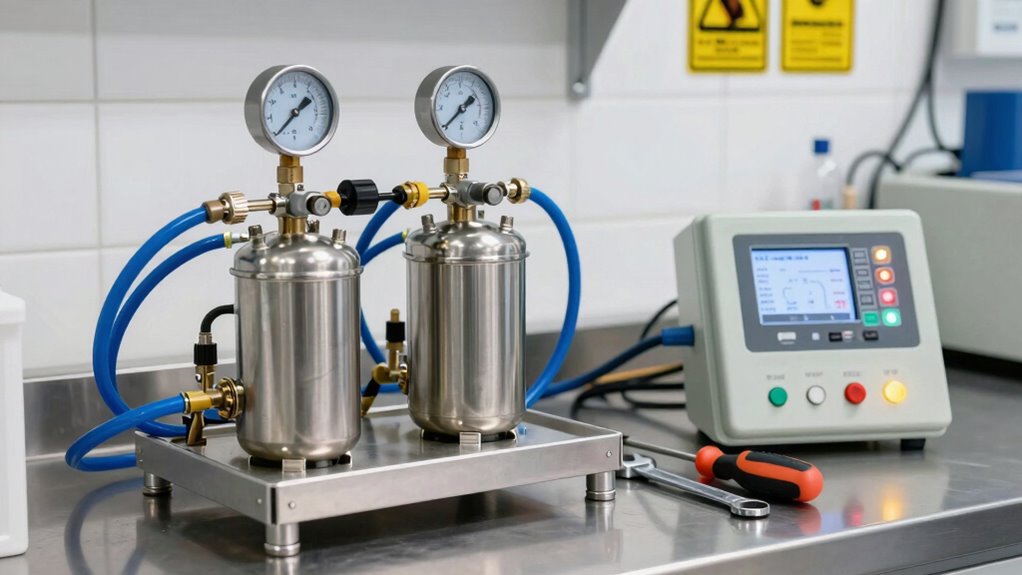
Equipment inspection plays a crucial role in maintaining safety and efficiency. Frequently examine your storage tanks, pipes, valves, and regulators for corrosion, cracks, or damage. Small hydrogen setups often involve components that are sensitive to wear and tear, so look for signs of deterioration. Tighten fittings as needed, but avoid overtightening, which can cause damage. Regularly verify that all gauges and sensors are functioning correctly; faulty readings can lead to unsafe situations. It’s also wise to check the integrity of electrical connections, ensuring there are no exposed wires or signs of overheating, which could cause sparks or fires. Maintaining clear, organized documentation of inspections helps you track issues over time and plan replacements proactively. Incorporating preventative maintenance practices can significantly extend the lifespan of your system. Additionally, understanding system components and their roles can help you identify potential issues early before they escalate. Staying informed about industry updates and new safety standards can further enhance your maintenance routines. Regular training on safety procedures also enhances your ability to respond effectively to emergencies.
Regularly inspect tanks, valves, and gauges; check electrical connections; keep detailed records for safe, efficient operation.
Cleaning and replacing parts are ongoing tasks that shouldn’t be neglected. Dust, dirt, and residues can compromise equipment performance and safety. Use appropriate cleaning agents and methods recommended by the manufacturer, avoiding harsh chemicals that could damage sensitive components. When filters become clogged or worn, replace them promptly to maintain proper airflow and filtration. Valves and regulators should be serviced or replaced based on their usage cycles, as faulty parts can lead to leaks or pressure fluctuations. Keep spare parts on hand to minimize downtime and ensure quick fixes when necessary. Staying current with industry best practices can also help you optimize maintenance routines and safety measures. Proper documentation of these activities ensures you have a detailed history for troubleshooting and compliance purposes.
Finally, stay informed about updates or recalls related to your equipment. Manufacturers often release guidelines or improvements that enhance safety and efficiency. Schedule routine maintenance checks, and don’t hesitate to consult professionals for complex inspections or repairs. By diligently following safety protocols and conducting thorough equipment inspections, you’ll guarantee your small hydrogen setup remains safe, reliable, and efficient for years to come.

ZYKYCX Hydrogen Gas Detector 0-1000 PPM, 0.1 PPM High Accuracy H2 Monitor with 3 Types Alarm, Rechargeable Hydrogen Meter, Portable H2 Air Quality Meters with Temperature Humidity Tester
- Detection Range: 0-1000 ppm with 0.1 ppm resolution
- Fast Response: 0.5 second real-time measurement
- Multi-Parameter Monitoring: Measures hydrogen, temperature, humidity
As an affiliate, we earn on qualifying purchases.
As an affiliate, we earn on qualifying purchases.
Frequently Asked Questions
How Often Should Hydrogen Storage Tanks Be Inspected?
You should inspect hydrogen storage tanks regularly, typically every 6 to 12 months, depending on the tank material and local safety regulations. The inspection frequency guarantees early detection of corrosion, leaks, or damage. For tanks made of steel or composite materials, follow manufacturer guidelines and safety standards. Regular inspections help maintain safety, prevent failures, and prolong the tank’s lifespan, so stay consistent with your maintenance schedule.
What Safety Protocols Are Essential During Maintenance?
During maintenance, you must prioritize safety by following strict emergency procedures and wearing protective gear. You’ll check for leaks, confirm proper ventilation, and handle components carefully, just like a firefighter prepares for a blaze. Always keep emergency shut-off tools accessible, wear gloves, goggles, and flame-resistant clothing. By doing so, you create a safe environment, respond swiftly to hazards, and protect yourself and your equipment from potential hydrogen-related dangers.
Can Maintenance Be Performed Without Specialized Training?
No, you shouldn’t perform maintenance on a small hydrogen setup without specialized training. Handling hydrogen safely requires understanding training requirements and certification standards. Without proper knowledge, you risk accidents, leaks, or damage. Always verify you’ve completed appropriate training and received certification before attempting maintenance. This helps you follow safety protocols, operate equipment correctly, and prevent dangerous situations, protecting both yourself and the system.
Are There Specific Tools Required for Upkeep?
You’ll need specific tools like pressure gauges, leak detectors, and cleaning brushes for upkeep. These tools help you check for hydrogen leaks and prevent corrosion, ensuring safety and efficiency. Regularly inspecting connections and valves with leak detection devices is vital. Using appropriate tools helps you spot issues early, maintain system integrity, and avoid safety hazards, especially from hydrogen leaks or corrosion, keeping your small hydrogen setup running smoothly.
What Signs Indicate a Need for System Repairs?
When your hydrogen setup whispers warnings, pay close attention. Signs like a hydrogen leak, which smells faintly of rotten eggs, indicate trouble brewing, while system corrosion can cause leaks or inefficiency. You might also notice unusual noises, decreased performance, or a sudden drop in hydrogen output. These signals act as alarm bells, urging you to inspect and repair promptly before small issues turn into costly problems.
Conclusion
As you tend to your small hydrogen setup, remember that maintenance is ongoing and essential. Over time, small issues can escalate, threatening your system’s safety and efficiency. Stay vigilant, keep an eye on potential signs of wear, and don’t ignore the subtle hints life gives you. The real challenge lies ahead—will you catch problems early enough to prevent a disaster? Your diligence now could mean the difference between smooth operation and unforeseen chaos. Are you ready?