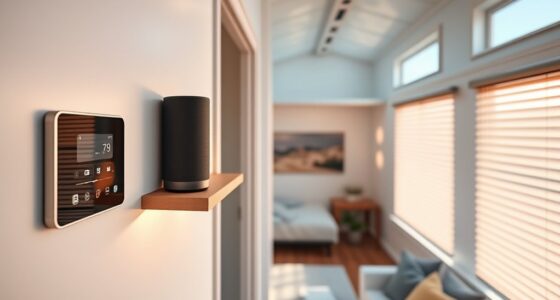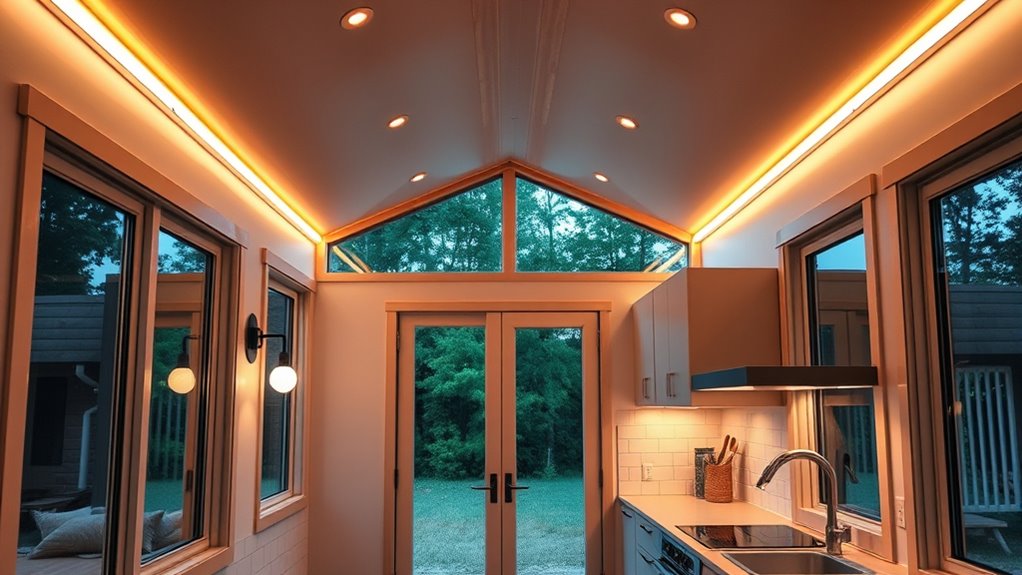

Modern tiny house lighting automation makes your space more convenient, energy-efficient, and personalized. You can control lights remotely via smartphone or voice commands, schedule them to match your routine, and adjust brightness or colors to set the perfect mood. Using motion sensors and timers helps save energy by turning lights off when not needed. If you want to discover how to optimize your tiny home’s lighting system further, there’s more to explore below.
Key Takeaways
- Integrate smart LED bulbs compatible with voice assistants and automation hubs for seamless control.
- Use motion sensors and timers to automatically turn lights on or off based on occupancy and time of day.
- Leverage natural light by opening curtains during the day and adjusting smart lighting accordingly.
- Program routines and schedules for energy-efficient lighting that aligns with daily habits.
- Enable remote control via smartphone apps for convenience, energy savings, and customized ambiance.
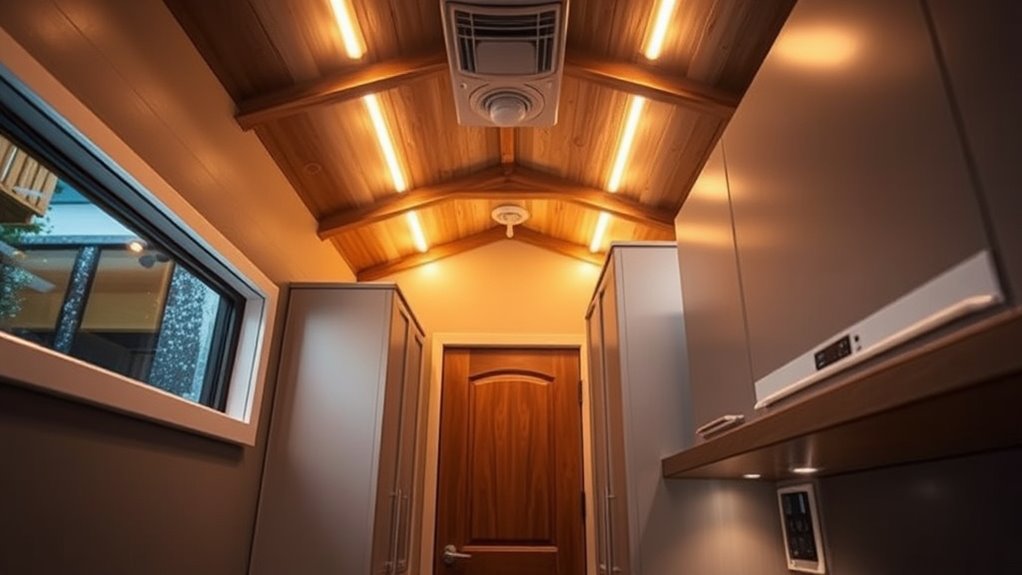
Lighting automation in tiny houses offers a simple way to enhance convenience, energy efficiency, and ambiance. When you choose to incorporate smart lighting, you gain the ability to control your lights remotely, set schedules, and create personalized moods with just a tap or voice command. The key to making this setup work seamlessly is smart bulb selection. You want bulbs that are compatible with your automation system, energy-efficient, and capable of producing the right light quality for your space. LED smart bulbs are usually the best choice because they consume less power, last longer, and come with a variety of color options and dimming features. Look for bulbs that support your preferred control platforms—whether that’s a dedicated app, voice assistants like Alexa or Google Assistant, or automation hubs.
Once you’ve selected the right smart bulbs, you can implement energy saving strategies that maximize your tiny house’s efficiency. For example, program your lights to turn off automatically when you’re not in a room or during daylight hours. Motion sensors can be integrated so lights switch on only when needed, reducing unnecessary power use. Dimming capabilities also help cut energy consumption, especially during evening hours when full brightness isn’t necessary. Incorporating timers or routines that gradually turn lights on and off can further optimize your energy use, ensuring you’re not wasting electricity while maintaining cozy lighting.
Another effective strategy is to use natural light whenever possible. During the day, keep curtains open to flood your space with sunlight, and set your smart lighting to adjust automatically based on the time of day. This reduces reliance on artificial lighting and saves energy. Additionally, consider placing smart bulbs in areas where you frequently change lighting settings, such as reading nooks or workspaces, so you can easily modify brightness and mood without wasting electricity. Employing smart controls for asset management can further enhance your energy efficiency by helping you monitor and adjust usage patterns over time.
Controlling your lighting remotely, whether through a smartphone app or voice command, not only adds convenience but also helps avoid leaving lights on unintentionally. This is especially useful in a tiny house, where energy conservation is vital. By carefully selecting smart bulbs and adopting energy-saving strategies, you create a sustainable, comfortable environment tailored to your lifestyle. The combination of intelligent control and mindful usage helps you enjoy a beautifully lit tiny home without compromising efficiency or your budget.
smart LED bulbs compatible with Alexa Google Assistant
As an affiliate, we earn on qualifying purchases.
As an affiliate, we earn on qualifying purchases.
Frequently Asked Questions
What Are the Best Energy-Efficient Lighting Options for Tiny Houses?
You should choose energy-efficient lighting options like LED strips, which consume minimal power and last long. Pair them with solar panels to harness renewable energy, reducing your reliance on grid power. LED strips are versatile and perfect for tiny houses, providing bright, customizable lighting. Combining solar panels and LED lighting not only saves energy but also makes your tiny house more eco-friendly and cost-effective in the long run.
How Do I Secure My Lighting Automation System From Hacking?
To secure your lighting automation system, you should use secure protocols like WPA3 and TLS encryption to protect data transmission. Enable strong user authentication methods, such as two-factor authentication and unique passwords, to prevent unauthorized access. Regularly update your system’s firmware and software, and disable remote access features when not needed. These steps help safeguard your tiny house lighting from hacking attempts effectively.
Can I Integrate Voice Control With My Tiny House Lighting System?
Yes, you can definitely integrate voice control with your tiny house lighting system. By choosing smart home-compatible devices, you enable voice command integration easily. Connect your smart lights to a voice assistant like Alexa or Google Assistant, ensuring compatibility. This way, you can control your lighting hands-free, making your tiny house even smarter and more convenient. Just verify that your devices support these integrations before purchasing.
What Is the Average Cost of Installing Lighting Automation?
The average cost of installing lighting automation ranges between $300 and $1,200. A thorough cost analysis shows that DIY installation can save you money, but professional help guarantees proper setup. The installation process varies depending on your chosen system, complexity, and existing wiring. Expect to spend more for advanced features like voice control or remote access. Balancing features and budget helps you create a smart, efficient tiny house lighting system.
How Do I Troubleshoot Common Issues With My Lighting Automation Setup?
To troubleshoot common issues with your lighting automation, start by checking for faulty wiring connections, ensuring all wires are secure and undamaged. Next, verify sensor calibration; if sensors aren’t properly calibrated, your lights may not respond correctly. Test your automation system’s settings and reset any devices if needed. If problems persist, consult the user manual or contact support to identify specific faults and resolve them effectively.
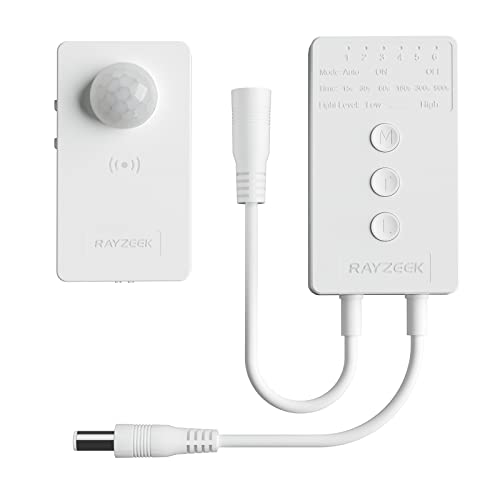
RAYZEEK Wireless Motion Sensor Controller Kit – No Wiring Mini PIR Sensor Switch 12/24VDC RF Wireless Control Led Strip Lights with Dimmable, Timer for Stairway
【Controller-Receiver RZ016A】It's the main controller, which is connected to the load whose input/output are DC12-24V. The RZ016A turns…
As an affiliate, we earn on qualifying purchases.
As an affiliate, we earn on qualifying purchases.
Conclusion
By automating your tiny house lighting, you create a space that’s both smart and serene—like a modern lighthouse guiding you home. With just a few simple setups, you’ll enjoy effortless comfort and energy savings, turning your tiny house into a haven of convenience. Embrace this tech-savvy approach and let your lighting do the work, so you can focus on what truly matters—your adventures, your peace, and your home sweet home.

DEWENWILS Wireless Light Switch and Receiver Kit, No in-Wall Wiring Required, Remote Control Switch Lighting Fixture for Ceiling Lights, Fans, Lamps,100 Ft RF Range, Programmable
【 Without Rewiring 】 Simple installation; wired between the power and lighting fixtures; no in-wall wiring needed; expand…
As an affiliate, we earn on qualifying purchases.
As an affiliate, we earn on qualifying purchases.

Linkind Smart Light Bulbs, Smart Bulb That Work with Alexa & Google Home, LED Light Bulbs Color Changing, 104 Preset Scene, Music Sync, A19 E26 2.4GHz RGBTW WiFi Bluetooth Light Bulb 60W, 800LM, 4Pack
【Alexa & Google Home Voice Control: Hands-Free Convenience】As smart bulbs that work with Alexa & Google Home, it…
As an affiliate, we earn on qualifying purchases.
As an affiliate, we earn on qualifying purchases.